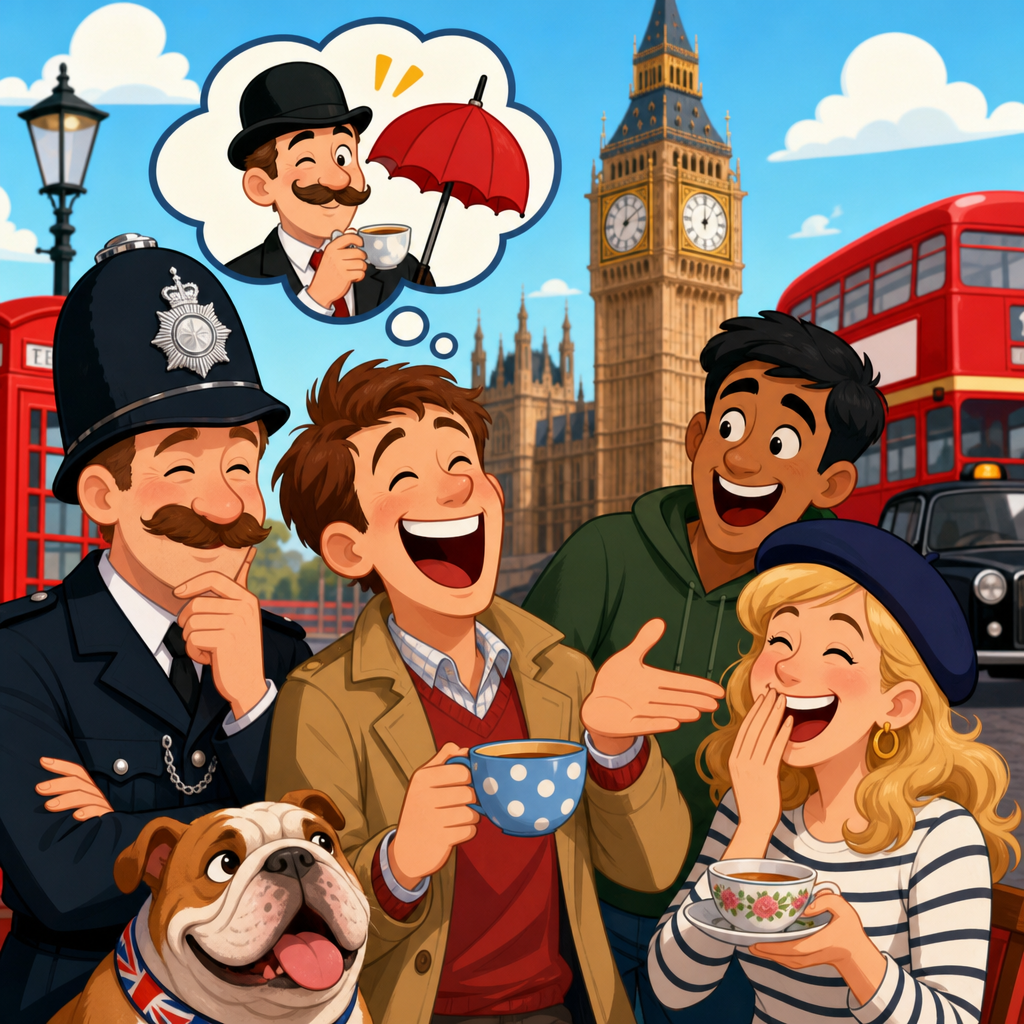
Common English jokes often confuse English learners because the words are easy but the meaning depends on culture, tone, timing, and shared assumptions. In everyday conversation, humor and sarcasm shape how people build friendships, soften criticism, handle awkward moments, and signal belonging. As an ESL teacher and curriculum writer, I have seen advanced learners understand news articles and business meetings yet still miss a simple joke at lunch. That gap matters because humor is not extra decoration in English. It is part of real-world usage, especially in workplaces, classrooms, online conversations, television, and casual social talk.
This hub article explains common English jokes and what they mean, with a focus on humor and sarcasm in practical settings. A joke is a statement, question, story, or comment designed to create amusement, often by surprise or contrast. Sarcasm is a sharper form of verbal irony in which a speaker says the opposite of what they really mean, usually to mock, criticize, or show frustration. Not all humor is sarcasm, and not all sarcasm is playful. That distinction is essential for learners, because misunderstanding sarcasm can cause embarrassment, while using it incorrectly can sound rude.
English humor includes puns, deadpan comments, self-deprecating jokes, exaggeration, understatement, observational humor, teasing, and sarcasm. In British and American English, these forms overlap, but the social rules can differ. British speakers often rely more on understatement and dry delivery. American speakers often use direct punchlines, irony, and exaggerated reactions. In both contexts, listeners need to notice stress, facial expression, and situation. The sentence “Great job” can be sincere praise, light teasing, or harsh sarcasm depending on tone and context. That is why learning common English jokes requires more than vocabulary study.
For ESL learners, the practical question is simple: what does the speaker really mean, and how should you respond? This article answers that question by breaking humor into recognizable patterns, explaining why each pattern works, and showing when it is safe to use. It also functions as a hub for the wider humor and sarcasm topic. If you are studying conversational English, workplace English, media English, or cultural fluency, mastering these patterns will help you follow real conversations more confidently and avoid taking every sentence literally.
Why English Jokes Are Hard to Understand
English jokes are difficult because they often depend on hidden knowledge. A speaker may assume you know a stereotype, a social rule, an idiom, or a typical situation. For example, “I’m on a seafood diet. I see food and I eat it” is funny because “seafood” normally refers to fish and shellfish, but the joke reinterprets it as “see food.” This is a pun, and if you do not hear the sound relationship, the sentence seems meaningless. Many jokes work this way: one phrase has two possible interpretations, and the humor comes from the switch.
Another challenge is timing. In spoken English, a tiny pause before the final word can signal that a punchline is coming. Sitcoms, stand-up comedy, and office conversations all use timing. I often tell learners to listen for contrast markers such as “so,” “and then,” “turns out,” or “yeah, right.” These words can announce that the speaker is moving from normal information to a comic twist. Without that signal, learners may process the sentence too literally and miss the intended effect.
Social relationship also matters. Friends can tease each other in ways strangers cannot. A colleague saying, “Well, that meeting could have been an email,” is using a common workplace joke to criticize wasted time without starting a direct conflict. The humor softens the complaint. But if a manager says the same thing after your presentation, the meaning may be more pointed. Understanding the power relationship helps you judge whether a joke is warm, neutral, or dangerous.
Types of Common English Jokes You Will Hear
Most everyday English humor falls into a few repeated categories. Once learners recognize these categories, jokes become easier to decode. Puns use similar sounds or double meanings. Observational jokes point out something ordinary but true, such as airport delays, bad coffee, or confusing software updates. Self-deprecating jokes make fun of the speaker, often to appear humble or approachable. Teasing jokes target another person lightly, usually within a friendly relationship. Sarcastic jokes say the opposite of the truth. Understatement makes something serious sound small, while exaggeration makes something small sound huge.
For example, if someone says, “My computer is a little slow,” after waiting ten minutes for a file to open, that is understatement. If they say, “This computer was built during the Roman Empire,” that is exaggeration. Both communicate frustration. In real conversations, native speakers mix categories. A sarcastic comment may also be an exaggeration. A self-deprecating joke may also be observational. Learners do not need to label every joke perfectly, but recognizing the mechanism helps them infer meaning quickly.
| Type | Example | What It Means | Typical Use |
|---|---|---|---|
| Pun | “I used to be a banker but I lost interest.” | “Interest” means curiosity and bank money earned. | Light wordplay |
| Self-deprecating | “I’m great at cooking if the goal is smoke.” | The speaker is joking about poor cooking skills. | Humility, friendliness |
| Observational | “Why does every online meeting start with ‘Can you hear me?’” | Shared frustration is funny because it is common. | Bonding over experience |
| Sarcasm | “Lovely weather,” said during a storm. | The speaker means the weather is bad. | Complaint, irony |
| Understatement | “That exam was not ideal.” | The exam was very difficult. | Dry humor |
| Exaggeration | “I’ve told you a million times.” | The speaker is emphasizing repetition, not counting literally. | Emotion, comic emphasis |
Common Joke Formats and Their Meanings
Many classic English jokes follow familiar structures. One structure is the question-and-answer joke: “Why did the scarecrow win an award? Because he was outstanding in his field.” The humor comes from the double meaning of “outstanding in his field.” It can mean excellent at his job, but literally a scarecrow stands outside in a field. Learners often find these jokes in children’s books, classrooms, greeting cards, and holiday events. They are useful because they teach double meaning clearly, even if they are not always very funny in adult conversation.
Another common format is the anti-joke, where the listener expects a punchline but receives a literal answer. For example: “Why did the chicken cross the road? To get to the other side.” That structure is famous because it refuses the playful surprise expected in a joke. Modern online humor often uses anti-jokes and absurd humor, especially on social media platforms such as Reddit, TikTok, and X. If a joke seems flat on purpose, that may be the point.
A third format is the callback, where a speaker repeats an earlier phrase in a new situation. In groups, callbacks create strong social bonding because they reward shared memory. If a friend once got lost in a parking lot and months later someone says, “Need help finding the car again?” that is a callback. Learners may miss these jokes because they do not know the backstory. When in doubt, ask, “Is that an inside joke?” Native speakers usually appreciate the question.
How Sarcasm Works in Real English
Sarcasm is one of the most important parts of humor and one of the riskiest for learners. The basic rule is that the literal sentence is not the intended meaning. If someone drops their papers in a puddle and says, “Perfect,” they mean the opposite. In speech, sarcasm is often marked by flat stress, exaggerated emphasis, a longer vowel, eye rolling, or a pause. In text, people may add markers such as “yeah, right,” “sure,” emojis, or punctuation, but written sarcasm is still easier to misread than spoken sarcasm.
Context decides whether sarcasm sounds playful or hostile. Among close friends, “Nice one” after a small mistake may be harmless. In a tense meeting, the same phrase can sound insulting. I advise learners to understand sarcasm long before trying to use it. Receptive skill should come first. The safest response when you hear sarcasm is usually a small smile, a short acknowledgment, or a practical reply. If someone says, “Fantastic, the printer is broken again,” you can respond, “I’ll call IT,” rather than joking back if you are unsure.
British English is strongly associated with dry sarcasm and understatement, while American English often uses more explicit irony and bigger emotional delivery. These are tendencies, not rules. Regional, class, age, and workplace culture all matter. A legal office, a construction site, and a university department may all joke differently. That is why learners should study humor in the specific communities where they use English, not only in textbooks.
What Native Speakers Usually Mean by Familiar Jokes
Some common English jokes appear so often that they function almost like social scripts. “Working hard or hardly working?” is a classic example. The speaker is making a light joke by reversing the words and questioning whether the other person is actually busy. The expected response is usually playful, such as “A bit of both.” Another common line is “Can’t complain,” which often means life is acceptable, not wonderful. It is mildly humorous because many people could complain, but choose not to.
Weather jokes are especially common in English-speaking cultures. “Lovely day for it,” said in terrible weather, is ironic and often specifically British in style. “If you don’t like the weather, wait five minutes” is a stock joke used in places with rapidly changing weather. These comments are less about comedy than about social connection. They make conversation easier with neighbors, coworkers, or strangers. Learners who recognize these lines can respond naturally instead of wondering whether the speaker truly likes the storm.
Workplace English has its own repeated jokes. “Living the dream” usually means the opposite: the speaker is tired, overworked, or mildly unhappy. “Another day, another dollar” means work is routine and not very exciting. “This meeting could have been an email” means the meeting was unnecessary. These expressions matter because they blend humor with complaint. Native speakers use them to express negative feelings indirectly, which can sound more acceptable than blunt criticism.
How to Respond Without Sounding Confused
You do not need to become funny overnight to handle English humor well. You need reliable response strategies. If a joke is clear, a short laugh and a brief comment are enough: “Good one,” “That’s true,” or “Seriously.” If you understand the idea but not every word, you can still respond to the feeling. If someone jokes about a slow internet connection, saying “It’s always like that here” keeps the conversation moving. Communication matters more than perfect analysis.
If you are unsure whether a speaker is serious, look for extra evidence before reacting. Tone, facial expression, and group response help. If everyone smiles, the comment was probably humorous. If nobody smiles and the speaker continues with details, they may be serious. It is also acceptable to ask simple clarifying questions: “Are you joking?” “You mean the opposite?” or “Is that sarcasm?” Many learners avoid these questions, but they are better than pretending to understand and responding inappropriately.
When using humor yourself, start with the safest forms: self-deprecating jokes, mild observational humor, and simple exaggeration. Avoid sarcasm with strangers, supervisors, clients, or formal emails. Also avoid jokes about politics, religion, appearance, age, race, gender, or disability unless you deeply understand the relationship and context. In international workplaces, even native speakers misjudge humor. Careful humor builds rapport; careless humor damages trust fast.
How to Learn Humor and Sarcasm Faster
The fastest way to learn common English jokes is to collect them by context rather than by vocabulary list. Keep a notebook or digital file with categories such as workplace, friendship, dating, classroom, customer service, and online chat. Write the exact sentence, the situation, and the real meaning. This method works because humor is pattern-based. After hearing “great,” “nice,” or “perfect” used sarcastically in enough negative situations, your brain starts recognizing the mismatch automatically.
Use authentic media, but choose it carefully. Sitcoms like The Office, panel shows, stand-up clips, podcasts, and workplace vlogs expose learners to natural timing and reaction. Turn on subtitles first, then watch again without them. Better yet, shadow short clips and imitate the intonation. Tools such as YouGlish can help you hear repeated phrases from different speakers, and corpora such as COCA can show how expressions appear in real usage. I have found that learners improve faster when they study ten recurring joke patterns deeply rather than watching random comedy for hours.
Finally, treat humor as cultural literacy, not just language play. Ask why a joke is funny, not only what the words mean. Is it mocking inefficiency, showing modesty, criticizing authority, or creating solidarity? That deeper analysis helps you transfer understanding across new situations. Common English jokes become easier when you learn the social purpose behind them. Start noticing them in daily conversation, save the ones you hear repeatedly, and practice interpreting them in context. The result is better listening, smoother relationships, and far more confidence in real English use.
Frequently Asked Questions
Why are common English jokes so hard for English learners to understand?
Common English jokes are difficult for many English learners because the challenge usually is not the vocabulary itself. In many cases, the words are simple, but the real meaning depends on context, tone of voice, timing, cultural expectations, and shared background knowledge. A learner may understand every word in a sentence and still miss the joke because the speaker is implying something rather than saying it directly. English humor often relies on double meanings, understatement, exaggeration, sarcasm, and playful contradiction. If you are trained to focus on literal meaning, jokes can feel confusing or even illogical.
Another reason is that humor is deeply social. People use jokes to show friendliness, reduce tension, tease gently, or create a sense of belonging. In a lunchroom, meeting, or family gathering, native speakers often assume everyone understands the social rules behind the joke. An advanced learner may do very well in formal English, such as presentations or news reading, but still struggle with casual humor because informal speech moves quickly and leaves many things unsaid. That is why learning jokes is not just about learning funny expressions. It is about learning how English speakers use language to build relationships and communicate attitudes indirectly.
What kinds of English jokes confuse learners most often?
The jokes that confuse learners most often are usually the ones that depend on something beyond direct meaning. Sarcasm is one of the biggest examples. When someone says, “Well, that went well,” after a clear mistake or disaster, the words sound positive, but the real meaning is negative. Without experience hearing that tone, a learner may misunderstand the speaker completely. Teasing is another common area of confusion. Friends may make small jokes about each other to show closeness, but to a learner, the comment may sound rude instead of playful.
Wordplay and puns are also especially difficult because they rely on multiple meanings or similar sounds. A joke may seem pointless unless you know both meanings of a word. Cultural references add another layer of difficulty. A joke about office life, dating, holidays, weather, or school may seem obvious to native speakers because they share the same assumptions, but learners may not have that background. Deadpan humor, where the speaker says something absurd in a serious voice, can be equally confusing because there may be no clear signal that the sentence is meant as a joke. In everyday English, the hardest jokes are usually not the most advanced ones. They are the ordinary, fast, social jokes that depend on shared understanding.
How can I tell whether someone is joking, being sarcastic, or speaking seriously?
The best way to tell is to listen for a combination of clues rather than searching for one perfect signal. Tone of voice is often the strongest clue. Sarcasm may come with a flatter, slower, or more exaggerated tone. Jokes may also be accompanied by a smile, raised eyebrows, a pause, or laughter from other people. Context matters just as much. If someone says something that does not fit the situation literally, there is a good chance humor is involved. For example, if a person spills coffee and a coworker says, “Perfect start to the day,” the mismatch between the words and the situation suggests irony or sarcasm.
Relationships are also important. Close friends often joke more directly with each other than strangers do. In some workplaces or families, teasing is normal and friendly, while in others it is less common. Paying attention to patterns helps. If a person often says the opposite of what they mean in a playful way, that is a strong sign of sarcasm. If you are unsure, it is completely acceptable to ask politely, especially in learning situations. You can say, “Was that a joke?” or “Do you mean that seriously?” Over time, your ability improves as you notice recurring phrases, tones, and situations. Understanding humor is less about memorizing rules and more about developing social listening skills.
Why does humor matter so much in everyday English communication?
Humor matters because it does much more than entertain. In everyday English, jokes and light sarcasm often help people manage social situations smoothly. They can soften criticism, reduce awkwardness, make conversation feel warmer, and signal that a relationship is friendly rather than strictly formal. When someone says something humorous after a small mistake, they may be trying to lower tension and make everyone feel comfortable. In many English-speaking environments, especially informal ones, humor is part of how people create trust and connection.
This is why missing humor can have a real effect on communication. If you do not recognize a joke, you may respond too seriously and feel left out of the group dynamic. You may also miss important emotional meaning. A sentence that sounds like simple information may actually be a way of showing affection, criticism, embarrassment, or group membership. In that sense, humor is not an extra skill added after grammar and vocabulary. It is part of how meaning works in real life. For English learners, improving humor comprehension can strengthen listening, cultural understanding, confidence, and social participation in ways that formal language study alone often cannot.
How can English learners get better at understanding common jokes and using humor naturally?
The most effective approach is to treat humor as a learnable communication skill rather than a mystery. Start by noticing common patterns in real conversations. Watch sitcoms, interviews, podcasts, and workplace conversations where people joke naturally, and pay attention to when others laugh and why. Do not focus only on the joke itself. Notice the situation before the joke, the speaker’s tone, facial expression, and the listener’s reaction. Keeping a notebook of phrases such as “Yeah, right,” “Nice one,” “Good luck with that,” or “That’s just what I needed” can help you identify sarcasm and irony in context.
It also helps to ask native speakers or teachers to explain jokes line by line, including what cultural assumption makes the joke funny. Practice with short, common examples before trying to use humor yourself. Learners often do best when they begin with recognizing humor, then responding to it, and only later producing it naturally. Safe responses include smiling, laughing lightly, or saying, “I see what you mean,” if you understand the intention. If you want to use humor, start with gentle self-deprecating jokes or light observations rather than sarcasm aimed at other people. Most importantly, be patient with yourself. Even very advanced learners can understand complex English and still miss a simple lunch-table joke. That does not mean your English is weak. It means you are learning one of the most culture-rich and socially subtle parts of the language.