Learning English through movies and TV shows is one of the most effective ways to build real-world listening, vocabulary, pronunciation, and cultural understanding at the same time. In language teaching, this approach sits inside what many learners call Pop Culture English: the everyday words, expressions, humor, tone, and references people absorb from entertainment media and then use in ordinary conversation. I have used film clips, sitcom scenes, trailers, interviews, and subtitles with ESL learners at beginner, intermediate, and advanced levels, and the pattern is consistent: students become more motivated, remember phrases longer, and start noticing how English actually sounds outside textbooks. That matters because classroom English and lived English are not always the same. Native and fluent speakers shorten words, overlap each other, use slang, shift register quickly, and depend on cultural context. Movies and TV shows expose learners to those patterns in a way that textbooks rarely can. They also create a practical bridge to related skills like small talk, storytelling, sarcasm detection, accent awareness, and confidence in speaking with fast speakers. As a hub topic, Pop Culture English includes slang, idioms, humor, celebrity interviews, reality shows, workplace dialogue, regional accents, and social references, but movies and TV shows are the starting point because they bring all of those elements together in one format.
Used well, screen-based learning is not passive entertainment. It is structured input. A learner can hear connected speech, see facial expressions, match tone to meaning, and review the same moment several times. That combination supports comprehension better than audio alone. It also helps with memory because scenes provide emotional and visual cues. When a learner remembers a detective saying “Let’s back up” during an investigation or a friend in a sitcom saying “I’m kidding,” the phrase stays attached to a context, not an isolated vocabulary list. This is why teachers often recommend short, repeatable scenes rather than random binge-watching. The goal is not simply to understand a plot. The goal is to notice language features, test meaning, and reuse useful expressions accurately. For learners in the broader ESL Cultural English & Real-World Usage path, this article serves as the main guide to choosing content, studying effectively, avoiding common mistakes, and turning entertainment into measurable language growth.
Why movies and TV shows work for English learning
Movies and TV shows help learners because they deliver authentic, high-context English. Authentic does not mean every line is spontaneous; scripts are written and edited. It means the language is designed to sound natural within a social situation. Learners hear greetings, interruptions, disagreement, persuasion, apologies, jokes, and emotional reactions in realistic sequences. In my experience, this is especially valuable for understanding pragmatics, the study of how meaning changes with situation, tone, and relationship. For example, “Sure” can signal agreement, impatience, or skepticism depending on intonation and facial expression. A transcript alone rarely teaches that well.
Different genres train different skills. Sitcoms are excellent for conversational rhythm, common phrasal verbs, and humor. Dramas often provide stronger emotional language, conflict, and narrative summaries. Reality shows expose learners to less controlled speech, interruptions, filler words, and regional variation. Documentaries are useful for clear narration and topic-specific vocabulary. News satire can be advanced but powerful for cultural literacy because it mixes current events with irony. Animation is often underrated; many animated series have clean sound, expressive dialogue, and repeated character patterns that help learners predict meaning.
Regular exposure also improves listening segmentation, the ability to hear where one word ends and the next begins. Learners often know the words on paper but cannot recognize them in fast speech. A line like “What are you doing?” may sound closer to “Whaddaya doing?” Connected speech, weak forms, reductions, and assimilation are easier to notice when learners replay short scenes. Over time, this reduces the shock of natural conversation and increases speaking confidence because learners begin to imitate whole chunks, not isolated words.
How to choose the right content for your level and goals
The best movie or show is not the most famous one. It is the one that matches your current listening level, learning goals, and tolerance for slang density. Beginners usually progress faster with short episodes, family-friendly dramas, workplace comedies, cooking shows, or documentaries with clear narration. Advanced crime series full of sarcasm, mumbled dialogue, and heavy regional accents can be motivating, but they often overwhelm lower-level learners and produce passive viewing instead of active study.
A simple selection rule works well: choose content where you can follow the main story and catch some repeated phrases without understanding every line. If comprehension is below that threshold, the material is too difficult for study. If everything is perfectly easy, it may be useful for fluency and enjoyment but less effective for growth. I typically advise learners to start with one series rather than many. Repeated characters, settings, and relationships create predictable language patterns. That repetition is useful. A medical drama may reinforce symptom language and urgent instructions. A workplace comedy may reinforce requests, deadlines, and informal disagreement.
Subtitles should be used strategically. English subtitles can support noticing and spelling, especially for intermediate learners. Subtitles in the learner’s first language may help with plot at the beginning, but they often pull attention away from English sound. A practical sequence is to watch a short clip first with English subtitles, then again without subtitles, and finally to shadow one or two key lines aloud. Tools like Language Reactor, YouGlish, Netflix subtitle controls, and transcript sites can support this process, but the method matters more than the platform.
| Goal | Best content type | Why it helps | Recommended method |
|---|---|---|---|
| Basic listening | Family series, documentaries, animation | Clearer pronunciation and simpler plot structure | 10-minute clips with English subtitles first |
| Conversation skills | Sitcoms, workplace shows, teen dramas | Frequent everyday dialogue and repeated social situations | Pause for useful phrases and role-play scenes |
| Pronunciation | Interview shows, dialogue-heavy series | Natural rhythm, stress, and reductions | Shadow short lines and record yourself |
| Cultural literacy | Popular series, award-winning films, late-night clips | References, humor, social norms, and current topics | Keep a notebook of references and reactions |
| Advanced slang | Crime dramas, reality TV, stand-up excerpts | Dense informal language and shifting register | Study selected scenes, not whole episodes casually |
A practical study method that turns watching into learning
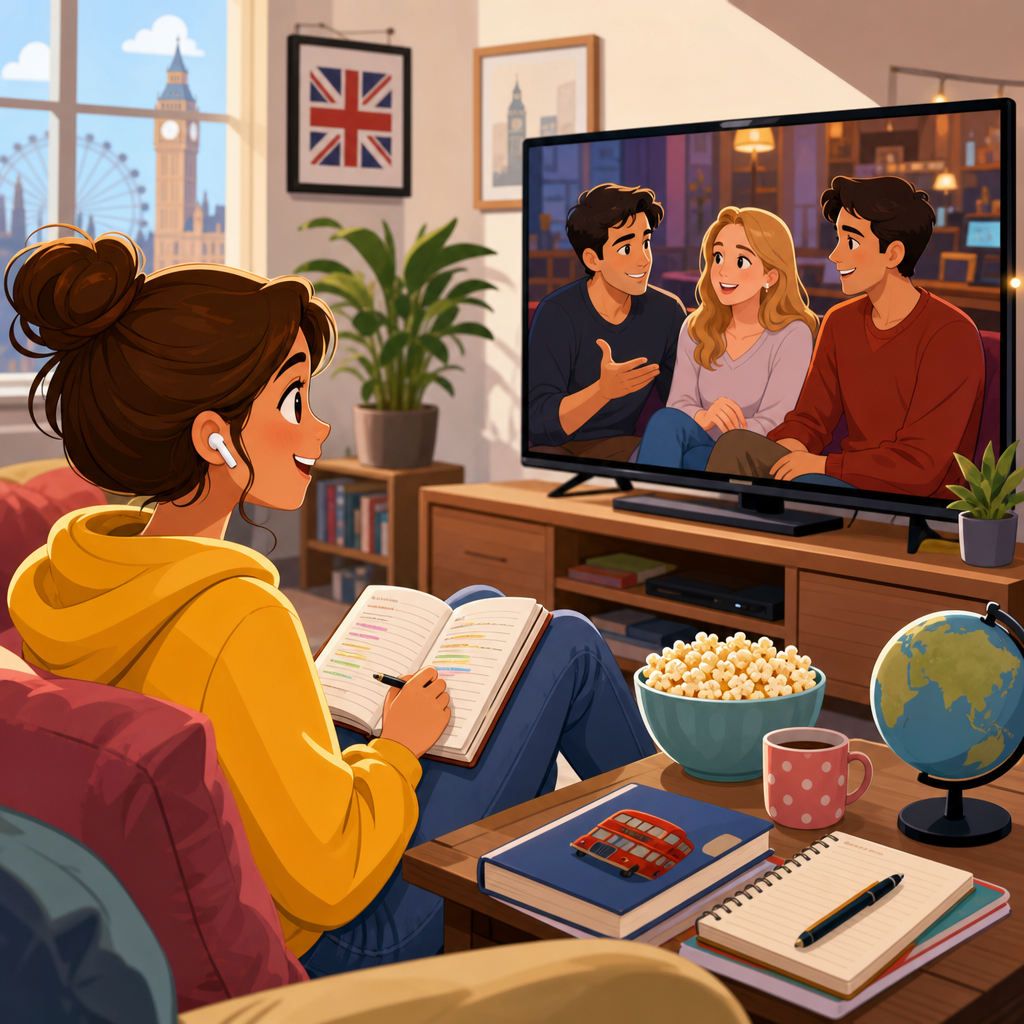
The most effective routine I have seen is short, repeatable, and output-based. Start with a clip of one to three minutes. Watch once for general meaning. Watch again and write down words or phrases you notice. Look up only the items that seem useful or repeated. Watch a third time and focus on pronunciation, intonation, and emotion. Then speak. Repeat key lines, summarize the scene, or role-play it with a partner. Without that final output step, learners often overestimate progress because recognition feels like mastery.
Keep a phrase notebook instead of a single-word notebook. Pop Culture English is built from chunks such as “You’ve got to be kidding,” “That’s not the point,” “I’m just saying,” or “Give me a second.” Chunks are easier to recall and more natural to use because they carry grammar, tone, and rhythm together. Include a short note about context. Was the phrase friendly, rude, joking, defensive, or formal? Context prevents misuse. A learner who copies a sarcastic line from a sitcom and uses it seriously in a workplace meeting can create confusion quickly.
Spacing and repetition matter. Rewatch the same scene on different days. This is consistent with retrieval practice and spaced repetition research: memory strengthens when learners pull information back after a delay, not only when they reread or rewatch immediately. If you study five clips a week, review two old ones before adding a new one. Over a month, that creates a usable bank of expressions instead of a long list of forgotten vocabulary.
What learners gain beyond vocabulary
The biggest benefit of learning English through movies and TV shows is not just more words. It is better judgment about how English works socially. Learners begin to hear differences between direct and indirect requests, sincere and sarcastic agreement, playful teasing and real criticism. This is essential for real-world communication. Many misunderstandings happen not because a learner lacks vocabulary, but because the learner misreads tone, distance, status, or humor.
Entertainment media also builds cultural reference knowledge. When people mention superheroes, award shows, dating apps, courtroom scenes, high school stereotypes, office politics, or holiday traditions, they often assume shared background knowledge. A learner who has watched mainstream shows understands more of that hidden context. This supports conversation, social belonging, and even professional communication because small talk often includes popular series, streaming trends, or familiar movie scenes. In multinational workplaces, these references function as social glue.
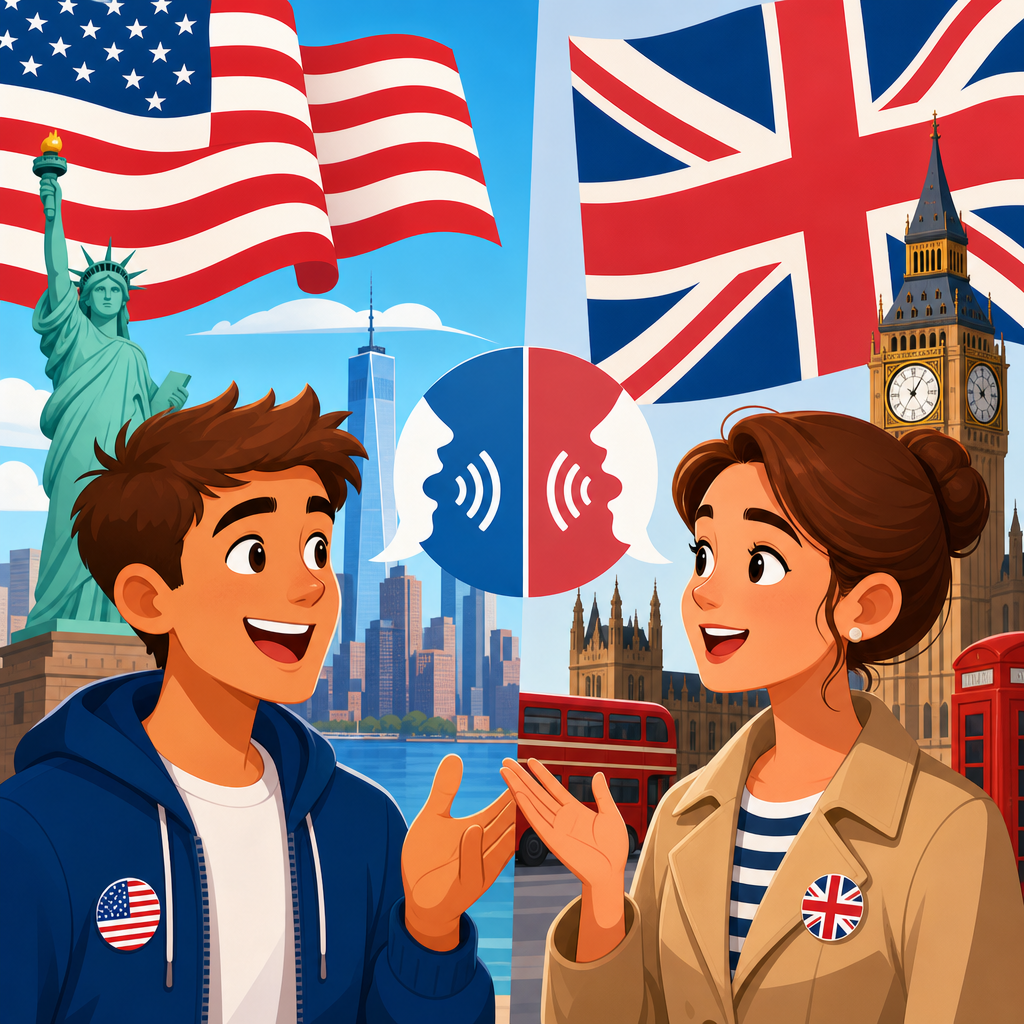
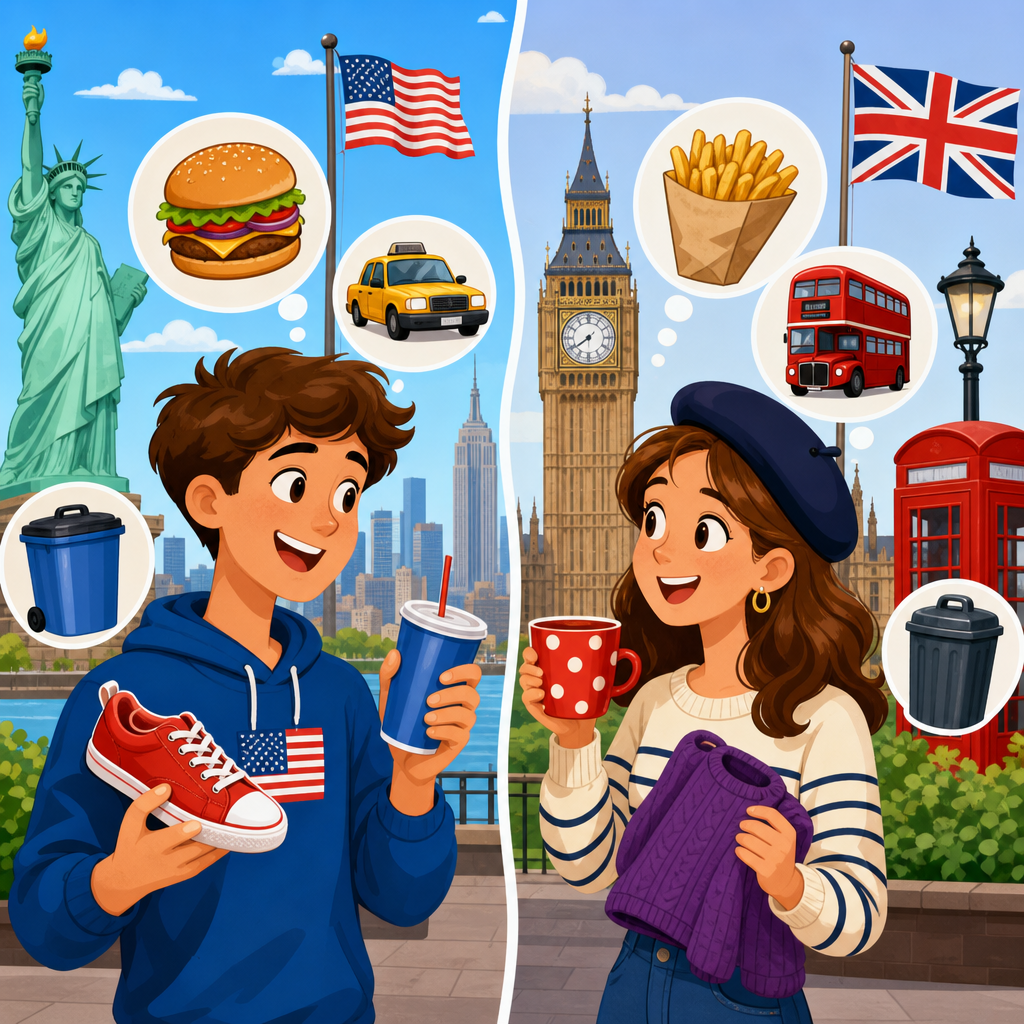
Another gain is accent flexibility. Learners can compare General American, Received Pronunciation, Estuary English, Australian English, and other varieties through carefully chosen clips. The goal is not to imitate every accent. It is to become less surprised by variation. Exposure to multiple voices helps learners separate core meaning from accent features, which is a major step toward confident listening in travel, study, and international work settings.
Common mistakes and how to avoid them
The most common mistake is treating entertainment as automatic learning. Hours of watching can improve familiarity with sound, but progress is slow if learners never pause, review, or speak. Another mistake is choosing content based only on excitement. A brilliant historical drama may be enjoyable while teaching little everyday English. Likewise, some learners chase slang too early. Slang changes quickly, is often age-specific, and can sound unnatural if copied without social awareness.
Overreliance on subtitles is another problem. If eyes stay on text the entire time, ears do less work. Reduce support gradually. Start with English subtitles, then remove them for a second viewing, or cover parts of the screen during familiar scenes. Also be careful with quoted language online. Meme pages and fan accounts often repeat lines without context, and context determines meaning. “Fine” can mean acceptance, irritation, or refusal depending on delivery.
Finally, remember that scripted media contains exaggeration. Sitcom arguments, police interrogations, and teen drama confrontations are not models for every conversation. Use media to observe patterns, then test those patterns against real interviews, podcasts, classroom feedback, and live conversation. Balanced input leads to better judgment than any single source.
Building a complete Pop Culture English learning path
As the central hub for Pop Culture English, this topic should connect to several related study areas. After movies and TV shows, learners should explore music lyrics for pronunciation and figurative language, celebrity interviews for spontaneous speech, social media clips for trends and informal reactions, stand-up comedy for timing and cultural assumptions, news entertainment for current references, and fan communities for written interaction. Each format teaches a different slice of living English.
A strong learning path also includes measurable goals. Track how many phrases you can reuse, how many accents you can follow comfortably, and how well you can summarize a scene without subtitles. If possible, record yourself retelling an episode, then compare your speaking after six weeks. Improvement is usually clear in speed, confidence, and phrasing. The point is not to sound like a character. The point is to understand more, respond faster, and participate naturally when English appears in the real world.
Learning English through movies and TV shows works because it combines authentic dialogue, emotional context, repeatable input, and cultural knowledge in one accessible format. When learners choose level-appropriate content, use subtitles carefully, study short scenes, collect phrase chunks, and practice speaking after watching, entertainment becomes a serious language tool. It strengthens listening, pronunciation, vocabulary, social awareness, and confidence together. As the foundation of Pop Culture English, this method also opens the door to related skills such as understanding humor, following trends, and joining everyday conversations about what people watch, quote, and share. If you want English that feels usable outside the classroom, start with one good series, one short scene, and one notebook of real expressions. Then build from there consistently. The results compound faster than most learners expect, and they carry directly into daily conversation, study, travel, and work.
Frequently Asked Questions
1. Why is learning English through movies and TV shows so effective?
Learning English through movies and TV shows is effective because it combines several essential language skills at the same time. Instead of studying vocabulary, pronunciation, listening, and cultural context separately, learners experience them together in a natural setting. Entertainment media exposes you to real spoken English, including connected speech, contractions, intonation, humor, emotion, and everyday expressions that are often missing from traditional textbooks. This helps learners understand how English is actually used in conversations, not just how it is presented in formal lessons.
Another major advantage is motivation. Many learners struggle to stay consistent with repetitive drills, but films, sitcoms, and series are engaging and memorable. When you enjoy what you are watching, you pay closer attention, remember phrases more easily, and build stronger associations between words and situations. For example, hearing a phrase during a funny or dramatic scene makes it easier to recall later in real conversation. This is especially useful within Pop Culture English, where learners pick up current vocabulary, informal expressions, tone, and references that native speakers use every day.
Movies and TV also build cultural understanding, which is a crucial part of language fluency. Learners begin to notice how people greet each other, make jokes, disagree politely, show sarcasm, express frustration, or shift their tone depending on the situation. That kind of awareness improves not only comprehension but also speaking confidence. In short, this method works because it is immersive, practical, emotionally engaging, and closely connected to real-world communication.
2. What types of movies and TV shows are best for English learners?
The best content depends on your current level, your goals, and the variety of English you want to understand. For beginners, it is usually better to start with shows that have clear pronunciation, everyday situations, and predictable context. Sitcoms, family series, light dramas, reality programs, and scripted educational content are often more accessible than fast-paced crime shows, historical dramas, or films with heavy slang and regional accents. Programs with repeated settings and recurring characters are especially useful because learners become familiar with the voices, personalities, and common vocabulary over time.
For intermediate learners, sitcoms, workplace dramas, interviews, talk shows, and romantic comedies can be excellent choices. These formats provide useful conversational English, common idioms, and realistic social interactions. They are also rich in Pop Culture English, which means learners can hear the expressions and references that often appear in casual conversation. Advanced learners can challenge themselves with documentaries, stand-up comedy, legal dramas, action films, or content featuring different accents, faster speech, and more complex humor.
It is also smart to choose content you genuinely enjoy. If you like the subject matter, you will watch more consistently and absorb more language. A learner interested in business might benefit from office-based series or interviews, while someone interested in travel or lifestyle may learn more from vlogs, cooking shows, or travel documentaries. The ideal choice is not simply “easy English,” but content that is understandable enough to follow while still introducing new language naturally. That balance keeps learning productive without becoming overwhelming.
3. Should I use subtitles when watching movies and TV shows to learn English?
Yes, subtitles can be extremely helpful, but the way you use them matters. For many learners, English subtitles are one of the best tools for connecting spoken language with written language. They help you catch words that seem to disappear in fast speech, notice pronunciation patterns, and identify expressions you might otherwise miss. This is especially useful because spoken English often sounds very different from isolated textbook words. Native speakers link sounds together, reduce vowels, and shorten common phrases, so subtitles can make listening more transparent.
However, your first goal should be to use subtitles strategically, not depend on them completely. If you always watch with subtitles in your native language, you may focus more on translation than on English listening. That can slow down the development of direct comprehension. A stronger approach is to match subtitle use to your level. Beginners may start with native-language subtitles occasionally, then move to English subtitles as soon as possible. Intermediate learners often benefit most from watching first with English subtitles and then rewatching key scenes without them. Advanced learners can use subtitles selectively, especially when the dialogue is fast, unclear, or culturally dense.
One of the most effective methods is repeated viewing. Watch a short clip once for general meaning, a second time with English subtitles to catch details, and a third time without subtitles to test your listening. You can also pause and record useful expressions, pronunciation features, or slang. Used properly, subtitles are not a shortcut; they are a bridge that helps learners move from supported listening to independent understanding.
4. How can I actively study English from a movie or TV scene instead of just watching passively?
To learn effectively from entertainment media, it helps to turn watching into a structured language activity. Passive viewing may improve familiarity and confidence, but active study leads to faster, more measurable progress. A good method is to work with short scenes rather than full movies at first. Choose a clip of one to three minutes with clear dialogue and a situation you understand. Watch it once without stopping to get the main idea. Then watch it again and focus on specific language features such as vocabulary, pronunciation, tone, or expressions used in context.
After that, pause and note phrases that seem useful for real conversation. Do not just write down isolated words; record complete chunks such as “Are you serious?”, “I’m just kidding,” “That makes sense,” or “What do you mean by that?” Learning phrases in context makes them easier to remember and use naturally. Next, replay the line and imitate it aloud. This technique, often called shadowing, helps improve rhythm, stress, connected speech, and confidence. Pay attention not only to the words, but also to how the speaker sounds emotionally. Are they being polite, annoyed, sarcastic, surprised, or relaxed? That is a major part of communicative competence.
You can deepen the exercise by summarizing the scene in your own words, role-playing the dialogue, or rewriting it using different vocabulary. Teachers and self-learners also often use film clips, trailers, interviews, and sitcom scenes to practice prediction, listening for detail, discussion, and speaking fluency. The key is interaction. When you pause, repeat, analyze, and reuse the language, you move from entertainment to true language training.
5. Can movies and TV shows help with pronunciation, vocabulary, and cultural understanding at the same time?
Absolutely. One of the biggest strengths of learning English through movies and TV shows is that these areas develop together rather than in isolation. Vocabulary becomes more memorable because it is attached to characters, emotions, and specific situations. Instead of memorizing a list of words, you hear language used in meaningful exchanges. For example, you may learn how a phrase like “Give me a break,” “No worries,” or “I’m not buying it” functions in tone and context, which makes it easier to understand and use appropriately later.
Pronunciation also improves because learners are exposed to authentic speech patterns. This includes stress, rhythm, reductions, intonation, and the way words connect in fast spoken English. Repeating lines from shows can help learners sound more natural and understand native speakers more easily. Importantly, movies and television expose you to different speaking styles, from casual conversation to professional dialogue, as well as variations in accent, speed, and formality. This makes listening skills more flexible and realistic.
Cultural understanding grows at the same time because language always reflects social behavior. Through entertainment media, learners see how people apologize, flirt, argue, joke, make requests, show respect, or react in uncomfortable situations. They also encounter references, humor, and everyday assumptions that are part of Pop Culture English. That knowledge is valuable because fluency is not only about grammar accuracy; it is about knowing what sounds natural, appropriate, and culturally aware. When learners use movies and TV thoughtfully, they are not just studying English words. They are learning how English works in real life.