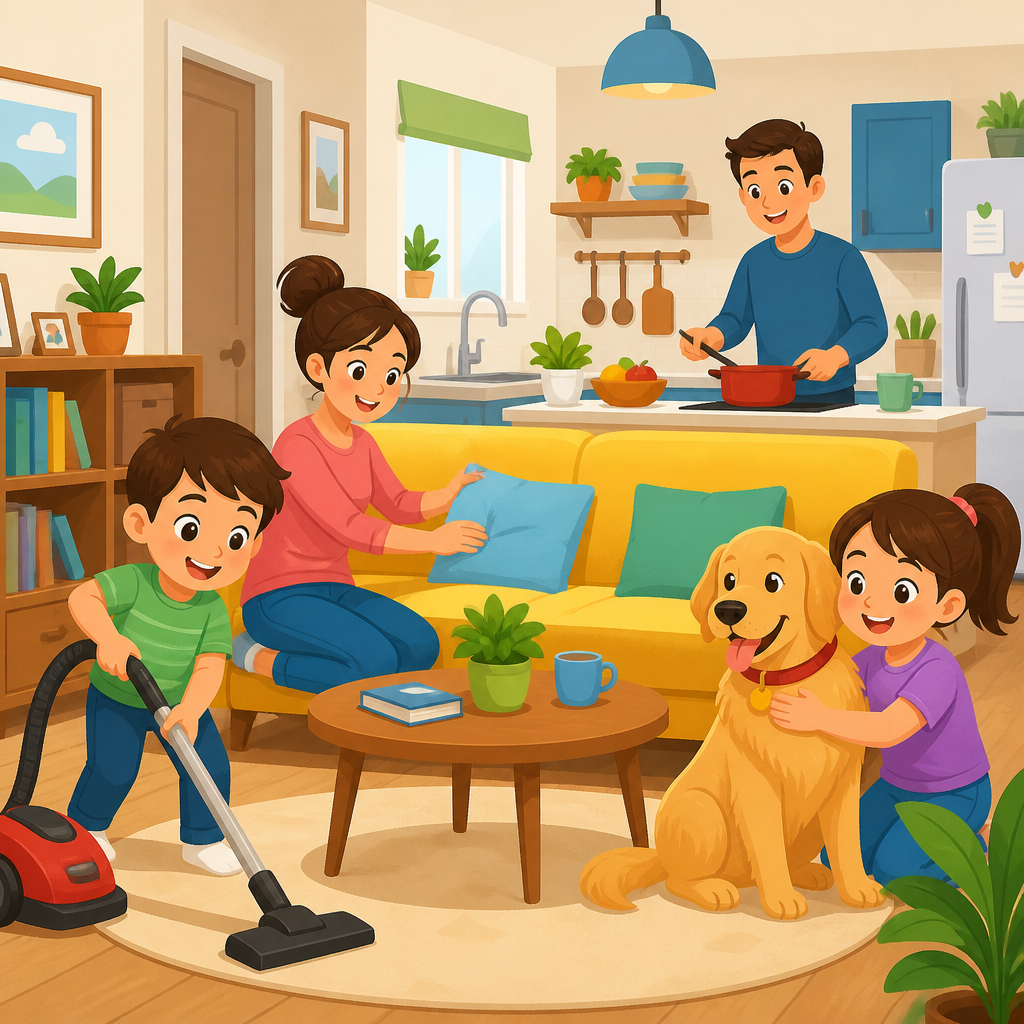
Common English words used at home form the foundation of daily communication for English learners, because home is where routines, objects, requests, and relationships appear again and again. In ESL vocabulary building, daily life vocabulary means the practical words people need to describe rooms, furniture, chores, meals, feelings, and simple actions such as open, clean, cook, fold, and rest. I have taught this vocabulary in beginner and intermediate classes, and the pattern is consistent: students remember words faster when they can point to real objects in their own homes and use them in short, repeated sentences. That matters because home vocabulary is not just a school topic. It is the language learners use with family, roommates, landlords, caregivers, delivery workers, and guests. It also supports listening, reading, and speaking in wider contexts, from appliance instructions to text messages about dinner. A strong home word bank gives learners confidence, reduces hesitation, and creates the base for more advanced grammar and conversation.
For many learners, the first useful question is simple: what English words do people actually use at home every day? The answer includes nouns for places and things, verbs for routines and chores, adjectives for condition and comfort, and common phrases for requests and problems. Instead of memorizing long random lists, learners should organize vocabulary by situation: bedroom, kitchen, bathroom, living room, laundry, cleaning, family routines, and household safety. This approach mirrors how the brain retrieves language in real life. When someone is cooking, kitchen words come together naturally. When someone is getting ready for bed, bedroom and bathroom words appear together. A hub article on daily life vocabulary should therefore connect these groups clearly, show how they are used in plain sentences, and help learners notice patterns such as countable nouns, collocations, and verb-object pairs. Once those patterns are clear, learners can build practical fluency much faster and use English naturally at home every single day.
Rooms and essential household nouns
The most common English words used at home begin with the names of rooms and the objects inside them. Core room words include house, apartment, home, room, bedroom, bathroom, kitchen, living room, dining room, hallway, balcony, yard, garage, and closet. In many ESL classes, learners know the big categories but not the smaller everyday nouns that make speech natural. For example, in a bedroom, common words include bed, pillow, blanket, sheet, mattress, lamp, alarm clock, drawer, wardrobe, and hanger. In a living room, learners often need sofa, couch, chair, coffee table, shelf, rug, remote, television, curtain, and window. In a bathroom, the highest-value words are sink, mirror, soap, towel, toothbrush, toothpaste, shower, bathtub, toilet, faucet, and toilet paper.
Accuracy matters because many objects have near-synonyms with regional differences. In American English, apartment is common, while flat is more common in British English. Faucet is common in North America, while tap is common in other varieties. Couch and sofa are both standard, though couch is more conversational in many contexts. I usually teach learners the most widely understood term first, then the regional variant second. That keeps communication clear while preparing students for real-world listening. Another useful strategy is to teach noun phrases instead of single words: front door, kitchen sink, bedside lamp, shower curtain, laundry basket. These chunks reflect how native speakers actually speak, and they reduce the burden of sentence building during conversation.
Kitchen vocabulary for cooking, eating, and storage
The kitchen is one of the richest areas for daily life vocabulary because it combines rooms, tools, actions, and routines. High-frequency kitchen nouns include stove, oven, microwave, refrigerator, freezer, dishwasher, kettle, toaster, pan, pot, knife, spoon, fork, plate, bowl, cup, mug, cutting board, counter, cabinet, and trash can. Learners also need food-storage words such as container, lid, bottle, jar, bag, and leftovers. These are not specialty terms. They appear in ordinary speech: “The leftovers are in the container on the top shelf,” or “Please put the cups back in the cabinet.”
Kitchen verbs are just as important as the objects. The most useful include cook, boil, fry, bake, heat, wash, rinse, chop, cut, stir, pour, serve, eat, drink, store, and clean up. In my experience, students become more fluent when they learn verb-object pairs together: wash dishes, boil water, cut vegetables, set the table, clear the table, wipe the counter, load the dishwasher, and take out the trash. These combinations are memorable because they match real routines. They also teach natural collocation. Native speakers usually say make breakfast, do the dishes, and put away groceries, not create breakfast, wash up plates only, or place groceries inside storage. Those subtle patterns make speech sound normal and easier to understand.
| Area | Common words | Example sentence |
|---|---|---|
| Bedroom | bed, pillow, blanket, lamp, drawer | I put the clean blanket in the top drawer. |
| Kitchen | stove, sink, plate, knife, refrigerator | Please put the milk back in the refrigerator. |
| Bathroom | towel, soap, mirror, shower, toilet | There is a clean towel next to the shower. |
| Living room | sofa, rug, shelf, remote, curtain | The remote is under the sofa cushion. |
| Laundry | washing machine, dryer, basket, detergent, hanger | Add detergent before you start the washing machine. |
Bathroom, laundry, and cleaning words people use every day
Bathroom and laundry vocabulary is essential because it appears in routines, instructions, and household problem-solving. In the bathroom, learners need not only object names but also hygiene actions: brush your teeth, wash your face, take a shower, dry your hands, flush the toilet, and hang up the towel. These phrases are basic, but they carry a lot of communicative value. A learner who can say “The sink is clogged,” “We need more soap,” or “The shower is leaking” can handle real home situations immediately. Useful problem words include wet, dry, dirty, clean, full, empty, broken, slippery, blocked, and out of. “We are out of shampoo” is a perfect example of practical home English.
Laundry words deserve focused study because many learners confuse them. Common nouns include washing machine, dryer, detergent, fabric softener, laundry basket, clothespin, hanger, load, stain, and cycle. Important verbs include wash, dry, fold, hang, iron, sort, and stain-remove. Learners also need clothing categories because laundry talk often mixes home and clothing vocabulary: socks, shirt, pants, towel, sheets, and underwear. I have found that simple sequence language helps retention: sort the clothes, start the machine, move the clothes to the dryer, fold the towels, hang the shirts. This sequence-based approach mirrors task-based teaching and helps students use words in a real order rather than as isolated items.
Verbs, adjectives, and collocations that make speech natural
If nouns identify things, verbs make home vocabulary useful. The most common English words used at home include daily action verbs such as wake up, get up, make the bed, open the window, close the door, turn on the light, turn off the fan, sit down, lie down, pick up, put down, put away, and tidy up. Phrasal verbs matter here because home English relies on them heavily. Learners who know put away or clean up sound much more natural than learners who only know store or clean. The same is true for take out, wipe down, warm up, and throw away. These forms are extremely common in spoken English and should be taught early.
Adjectives add description and help learners explain comfort, condition, and preference. High-frequency examples include comfortable, cozy, soft, hard, bright, dark, noisy, quiet, messy, tidy, clean, dirty, warm, cold, heavy, light, full, and empty. These words often pair with specific nouns, creating useful collocations: a messy room, a clean kitchen, a noisy washing machine, a soft pillow, a bright lamp, a cold floor. Students also benefit from simple contrast sets, because opposites are easier to remember together. Warm and cold, clean and dirty, full and empty, open and closed, safe and dangerous are all productive pairs. Once learners can combine adjectives with home nouns, they can express real needs clearly: “My room is too dark,” “The towels are still wet,” or “The freezer is full.”
Useful phrases for family routines, requests, and house problems
Vocabulary becomes communication only when learners can use it in complete phrases. At home, the most valuable phrases usually involve routines, polite requests, and common problems. Routine expressions include It’s time for breakfast, I’m making coffee, Please set the table, We’re cleaning the house, I need to do the laundry, and Don’t forget to lock the door. These phrases show how vocabulary connects to time, obligation, and shared tasks. For families with children, additional high-frequency phrases include put on your shoes, wash your hands, finish your homework, and go to bed. For adults sharing space, practical lines include Whose dishes are these, Can you empty the trash, and The rent is due on Friday.
Home problem vocabulary is especially important because learners often need it under pressure. Common issues include the light is not working, the sink is leaking, the toilet is clogged, the power is out, the Wi-Fi is down, the door is stuck, and the food has gone bad. These phrases support communication with relatives, neighbors, landlords, and maintenance staff. I always recommend that learners practice short problem-report structures: “There is a leak under the sink,” “The washing machine won’t start,” “The room smells bad,” and “We need more batteries.” This style is clear, direct, and easy to expand. It also prepares learners for phone calls, text messages, and maintenance forms, where concise language works best.
How to learn and retain daily life vocabulary at home
The fastest way to learn common English words used at home is to connect vocabulary to visible reality and repeat it in context. Labeling household objects works well for beginners: mirror, fridge, door, shelf, and kettle become active words when learners see them every day. For stronger retention, say each word in a sentence while touching or using the object. Evidence from vocabulary research consistently shows that retrieval practice is more effective than passive review, so learners should test themselves: “What is this called?” “What do I do with it?” and “Where do I keep it?” Spaced repetition tools such as Anki or Quizlet can help, but the strongest memory often comes from using words during real tasks such as cooking, cleaning, or organizing a room.
Another proven method is to build vocabulary by micro-topic and sentence pattern. Learn ten kitchen words, then use one frame repeatedly: “I use the ___ to ___.” For example, “I use the kettle to boil water” or “I use the sponge to clean the sink.” This approach strengthens both grammar and vocabulary. Learners should also listen for home language in beginner podcasts, graded readers, and video tours of houses or apartments. Keeping a daily language notebook helps too. Write three sentences every evening about what you did at home: “I folded the laundry,” “I wiped the table,” “I took a long shower.” Over time, these ordinary sentences create durable fluency. If you are building your ESL vocabulary, start with your home today, practice room by room, and turn familiar objects into confident English.
Frequently Asked Questions
1. What are the most common English words used at home for beginners?
The most common English words used at home usually fall into a few practical categories: rooms, furniture, daily actions, household objects, and basic feelings. For rooms, beginners should learn words such as kitchen, bedroom, bathroom, living room, dining room, door, wall, floor, and window. For furniture and objects, useful words include table, chair, bed, sofa, lamp, blanket, pillow, plate, cup, spoon, fridge, stove, and sink. These are the words learners see and use every day, so they are easier to remember and immediately useful in conversation.
Action words are just as important. Common verbs used at home include open, close, sit, stand, eat, drink, cook, wash, clean, fold, sleep, wake up, rest, and put away. These help learners describe routines like “I wake up at six,” “She is cooking in the kitchen,” or “Please close the window.” Simple feeling words also matter in home conversations, such as tired, hungry, thirsty, sleepy, comfortable, cold, and warm. When learners combine home nouns, verbs, and adjectives, they can begin to communicate naturally about daily life instead of memorizing vocabulary with no real context.
2. Why is home vocabulary so important for English learners?
Home vocabulary is important because it supports the kind of English learners use most often in real life. Before students can handle advanced discussions, they need the language to talk about their routine, surroundings, and needs. The home is where people ask for help, describe problems, give instructions, talk about meals, explain chores, and express comfort or discomfort. That means home vocabulary is not just basic vocabulary; it is high-frequency vocabulary that appears again and again in everyday communication.
It also builds confidence quickly. When learners know how to say things like “The keys are on the table,” “I need to clean my room,” or “The baby is sleeping,” they feel immediate progress because they can use those sentences at once. In ESL learning, that practical success matters. It helps students connect vocabulary to action, memory, and daily repetition. Since home life includes repeated routines such as cooking, cleaning, getting dressed, eating, and resting, learners naturally review the same words many times. That repetition makes retention stronger and gives students a solid foundation for more complex grammar and conversation later.
3. How can I practice common English words used at home every day?
The best way to practice home vocabulary is to connect the words directly to your daily routine. Start by labeling objects in your home with their English names, such as mirror, closet, shelf, towel, sink, refrigerator, and microwave. Then say the words out loud whenever you use them. For example, you might say, “I am opening the fridge,” “I am washing the dishes,” or “I am folding the clothes.” This kind of active speaking turns passive vocabulary into real working language.
Another effective method is to create short daily speaking habits. In the morning, describe what you are doing: “I wake up, make the bed, brush my teeth, and go to the kitchen.” At night, review your day with simple sentences: “I cooked dinner, cleaned the table, and took a shower.” Learners can also practice with family members by using simple requests such as “Please pass the spoon,” “Close the door,” or “Put the bag on the chair.” If speaking with others is not possible, recording yourself is still very useful. The key is not to study long word lists in isolation, but to use the vocabulary in meaningful, repeated home situations so that the words become natural and automatic.
4. What kinds of home-related words should intermediate learners study after the basics?
After learning the basic words for rooms, furniture, and everyday actions, intermediate learners should expand into more specific and descriptive home vocabulary. This includes words for organization and storage, such as drawer, cabinet, counter, basket, laundry hamper, and shelf. It also includes household maintenance words like repair, leak, sweep, mop, vacuum, wipe, organize, and decorate. These terms allow learners to talk about more detailed situations, such as cleaning routines, minor problems in the house, or how a room looks and functions.
Intermediate learners should also focus on useful phrases and collocations, not just single words. For example, English speakers often say make the bed, do the laundry, wash the dishes, take out the trash, set the table, put away groceries, and tidy up the room. These combinations are essential because they sound natural and are commonly used in everyday speech. In addition, learners benefit from studying language for family interaction at home, such as “Could you help me with dinner?” “The living room is a mess,” or “I need a quiet place to rest.” This level of vocabulary helps students move from naming objects to describing routines, giving explanations, and managing real household communication with greater fluency.
5. How can teachers and parents help students learn English words used at home more effectively?
Teachers and parents can make home vocabulary much more effective by teaching it in context instead of as disconnected lists. Rather than presenting only isolated words like chair, plate, or bed, they should build simple but realistic phrases and sentences around them. For example, “The plate is on the table,” “Please sit on the chair,” or “The blanket is on the bed.” This helps learners understand not only what a word means, but also how it is used naturally in real communication. Visual support is especially helpful, so picture cards, real objects, short demonstrations, and role-play activities can make the vocabulary more memorable.
Consistency and repetition are also critical. Teachers can create mini routines in class around household vocabulary, while parents can reinforce the same words during everyday tasks at home. A child or adult learner may hear and use phrases like “Wash your hands,” “Open the window,” “Put the cup in the sink,” or “Time to clean your room” many times a week. That repeated exposure is one of the strongest tools in vocabulary development. It is also helpful to group words by theme, such as kitchen words, bedroom words, or cleaning verbs, because organized vocabulary is easier to review and retrieve. Most importantly, learners should be encouraged to speak without fear of small mistakes. Frequent, practical use in real home situations is what turns simple vocabulary into confident communication.