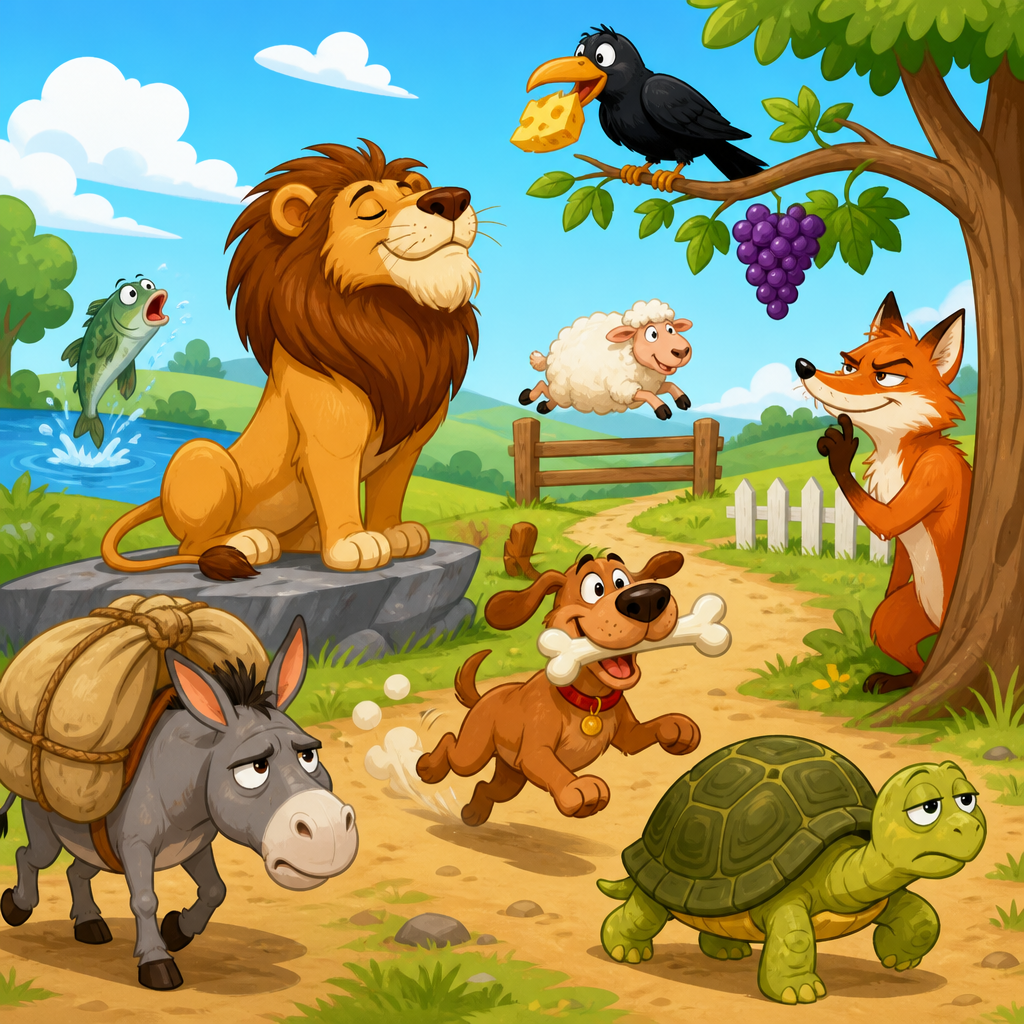
Animal idioms in English are some of the most vivid and useful expressions learners meet when building natural vocabulary. An idiom is a fixed phrase whose meaning cannot be understood by reading the individual words literally. When someone says a coworker is the black sheep of the family, no actual sheep is involved; the phrase means one person is seen as different or troublesome within a group. In everyday English, animal idioms appear in conversation, films, news headlines, business meetings, and classrooms, so mastering them is an important part of ESL vocabulary building.
I have taught and edited English for multilingual learners long enough to see the same pattern: students with strong grammar still sound overly literal until they understand common idioms and expressions. Animal idioms help bridge that gap because they are memorable, image-based, and tied to cultural patterns that repeat across contexts. They also raise practical questions learners ask immediately: Which idioms are common now? Which are informal? Which are safe in work email, presentations, or exams? A good hub page must answer those questions directly while giving a clear structure for further study.
Animal idioms matter for three reasons. First, they improve listening comprehension because native and proficient speakers use them to summarize behavior, personality, risk, speed, and emotion. Second, they strengthen speaking and writing by giving learners compact ways to express complex ideas. Third, they reveal tone. Saying a plan is a long shot is different from saying it is a pig in a poke; one sounds neutral, the other warns about buying something without checking it. Understanding tone prevents awkward mistakes and makes communication more precise.
This hub article covers animal idioms in English as part of idioms and expressions within ESL vocabulary building. It explains what animal idioms are, how to interpret them, where they are commonly used, which examples every learner should know, and how to study them efficiently. It also points to the broader skill behind idiom mastery: learning chunks, noticing collocations, and connecting meaning with context rather than translation alone. If you want to sound more natural and understand spoken English faster, animal idioms are a practical place to start.
What animal idioms are and how they work
Animal idioms are fixed or semi-fixed expressions that use animals to describe human behavior, situations, or judgments. English has hundreds of them because animals have long been used symbolically in stories, farming, religion, and popular culture. Foxes suggest cleverness, lions suggest bravery, owls suggest wisdom, and chickens often suggest fear. These associations are not universal across all cultures, which is why direct translation can mislead ESL learners. The key rule is simple: learn the phrase as a unit, then learn its usual tone and grammar pattern.
Most animal idioms work through metaphor. Busy as a bee means very busy because bees are associated with nonstop activity. Let the cat out of the bag means reveal a secret, probably from an older market image involving deception. A fish out of water describes someone uncomfortable in an unfamiliar setting because fish cannot function outside water. In class, I advise learners to ask three questions for every idiom: What does it mean? When is it used? Is it positive, negative, or neutral? Those questions prevent memorizing phrases without understanding their social effect.
Another important point is frequency. Some animal idioms are common in daily conversation, such as copycat, dark horse, eager beaver, and top dog. Others are understood but less frequent, more literary, or regionally preferred. Learners should focus first on high-frequency idioms that appear across media and speech. Corpus tools such as the Corpus of Contemporary American English, the British National Corpus, and learner dictionaries from Cambridge, Oxford, and Longman help confirm whether an expression is current and how it is typically used. That kind of source checking saves time and prevents dated vocabulary choices.
Core animal idioms every ESL learner should know
The most useful animal idioms are those that appear often and transfer easily across situations. White elephant means something expensive or difficult to maintain but not very useful. A dark horse is a person whose abilities or chances are not widely known. The lion’s share means the largest part. Until the cows come home means for a very long time. Hold your horses means wait or slow down. Smell a rat means suspect dishonesty. These idioms appear in conversation, journalism, and workplace speech because they compress meaning efficiently.
Other essential idioms describe personality and behavior. An eager beaver is someone energetic and hardworking, often with a slightly playful tone. A copycat imitates other people. A social butterfly moves comfortably between many people and social groups. A lone wolf prefers acting independently. A scaredy-cat is easily frightened. Stubborn as a mule describes someone unwilling to change position. These are useful because they fit common speaking tasks in ESL courses, including describing friends, colleagues, family dynamics, and classroom behavior. They are also highly memorable because the imagery is strong.
| Idiom | Meaning | Typical tone | Example |
|---|---|---|---|
| the black sheep | the person seen as different or troublesome in a group | negative or sympathetic | He was the black sheep of the family after leaving the business. |
| fish out of water | someone uncomfortable in an unfamiliar situation | neutral | I felt like a fish out of water at my first legal conference. |
| let the cat out of the bag | reveal a secret | informal | She let the cat out of the bag about the surprise party. |
| busy as a bee | very busy | positive or neutral | The support team was busy as a bee before the product launch. |
| top dog | the most powerful or successful person | informal | After the merger, their firm became the top dog in the region. |
| straight from the horse’s mouth | from the original or most reliable source | neutral | I heard the policy change straight from the horse’s mouth. |
Notice how these idioms often function as noun phrases, adjectives, or whole clauses. That grammatical behavior matters. You can say She is a social butterfly, but not usually She social butterflies at parties. You can say We heard it straight from the horse’s mouth as a complete phrase. You can say He felt like a fish out of water after moving abroad. Learning the frame around the idiom is as important as learning the meaning. That is why example sentences are not optional; they are the fastest route to accurate use.
Meaning groups that make animal idioms easier to remember
Grouping idioms by meaning is one of the most effective ways to study them. In my experience, learners retain expressions better when they connect each idiom to a communication purpose instead of an animal category alone. For example, for secrecy and honesty, learn let the cat out of the bag, smell a rat, and straight from the horse’s mouth together. For effort and speed, learn busy as a bee, at a snail’s pace, and dog-tired. For social behavior, learn social butterfly, lone wolf, and copycat. This method reflects how the brain retrieves language in real communication.
Some groups are especially productive. For conflict and hierarchy, top dog, underdog, and dog-eat-dog appear often in business and sports. In one startup workshop I led, founders immediately understood dog-eat-dog competition because the phrase captures an aggressive market environment more vividly than merely saying highly competitive. For caution and patience, hold your horses and look before you leap often appear together in advice. For rarity and value, hen’s teeth and cash cow are useful contrasts: one means extremely rare, the other means a reliable source of profit. Meaning clusters also help learners notice subtle differences in register and intent.
Contrast is another memory tool. If a student learns dark horse and eager beaver side by side, the first suggests hidden potential while the second suggests visible effort. If they learn black sheep and teacher’s pet together, both identify someone within a group, but one is excluded while the other is favored. These contrasts create stronger mental links than isolated flashcards. Teachers designing lessons on idioms and expressions often use semantic sets for this reason, then reinforce them through dialogues, short reading passages, and discussion prompts where students describe real people and situations.
How to use animal idioms naturally in speaking and writing
Natural use depends on moderation, context, and audience. One well-chosen idiom can make speech sound fluent; five idioms in one paragraph can sound forced. In professional settings, choose transparent expressions that educated listeners are likely to know, such as dark horse, lion’s share, top dog, or straight from the horse’s mouth. Avoid stacking colorful idioms in formal reports unless your workplace culture welcomes that style. In academic writing, idioms are usually limited, but in presentations, meetings, email to familiar colleagues, or interviews, a carefully selected idiom can sound confident and natural.
Context also controls meaning. Calling someone a lone wolf may praise independence in one situation and criticize poor teamwork in another. Social butterfly can be complimentary at a networking event but dismissive if used to suggest superficiality. Even apparently simple idioms have pragmatic weight. I encourage learners to listen for who says the expression, to whom, and in what situation. Television transcripts, podcasts, and workplace videos are useful because they show intonation and reaction. Idioms are not only vocabulary items; they are social signals, and social signals need context to be interpreted accurately.
For writing, the safest strategy is to use idioms where they increase clarity rather than decorate the sentence. Compare These rumors came from the CEO directly with We heard the rumors straight from the horse’s mouth. The second version is more vivid and still clear. Compare The project was useless and expensive with The project became a white elephant. The idiom is shorter and more memorable. However, if your readers are beginners or come from mixed language backgrounds, plain English may be better. Strong communicators know when figurative language helps and when direct wording serves the message better.
Common learner mistakes and how to avoid them
The most common mistake is translating literally from the first language. Many languages have animal idioms, but the same animal may carry different meanings. A phrase that sounds natural in Spanish, Arabic, Mandarin, or Russian may sound odd or unintelligible in English. The fix is to learn English idioms from context-rich examples, not word-for-word equivalents. Another common error is changing the wording inside a fixed phrase. Learners may say reveal the cat from the bag or hear it from the horse mouth. Because idioms are formulaic, small changes can make them sound incorrect immediately.
A second problem is register mismatch. Scaredy-cat is common in family or casual conversation, but it can sound childish in a serious workplace discussion. Pigheaded is understandable, yet it is sharper and more insulting than stubborn as a mule. Calling a colleague a copycat may be fine jokingly but risky in feedback unless tone is carefully managed. I have seen advanced learners lose nuance here, not because they lacked vocabulary but because they chose an idiom without checking how direct it sounded. Good dictionaries label phrases as informal, humorous, old-fashioned, or disapproving for exactly this reason.
Pronunciation and listening can also interfere with mastery. Learners may know an idiom on paper but miss it in fast speech. Reduced pronunciation in connected speech can hide function words, especially in phrases like out of, as a, or from the. Repetition with audio helps. So does shadowing short clips and recording your own examples. To retain idioms long term, use spaced repetition, but do not memorize only definitions. Store each idiom with a sample sentence, a context label, and one personal example. That method moves the phrase from passive recognition to active, accurate use.
A practical study plan for building an animal idiom vocabulary
A reliable study plan starts small and recycles often. Choose ten high-frequency animal idioms, learn their meanings, and write one realistic sentence for each based on your life, job, or studies. Next, sort them by function: describing people, describing situations, giving advice, or talking about business and competition. Then review them through listening and speaking, not only reading. In my classes, learners improve fastest when they meet the same idioms in three modes within a week: a short article, a dialogue, and a discussion task. Repeated exposure in varied contexts turns memorized phrases into usable language.
Use reputable tools. Cambridge Dictionary, Oxford Learner’s Dictionaries, Longman Dictionary of Contemporary English, and Macmillan all provide definitions, examples, and usage notes. YouGlish lets you hear expressions in authentic video clips. Anki or Quizlet can support spaced review if your cards include example sentences and tone labels. Keep a notebook section just for idioms and expressions, and add cross-references to related topics such as phrasal verbs, collocations, and conversation strategies. If this page is your hub for ESL vocabulary building, those links matter because idioms become easier when they are studied as part of a wider language system.
Finally, test yourself with production tasks. Describe a difficult first day at work using fish out of water. Explain a highly competitive market using dog-eat-dog. Talk about a reliable product line using cash cow. Summarize a rumor confirmed by a manager using straight from the horse’s mouth. When learners can do that without reading notes, the idioms are becoming active vocabulary. Progress does not come from collecting long lists. It comes from mastering useful expressions deeply enough to recognize them instantly and use them naturally when real communication demands them.
Animal idioms in English give ESL learners a direct path toward more natural, confident communication. They appear across conversation, media, business, and social life because they express ideas quickly and memorably. As this hub article has shown, the key is not memorizing random phrases. It is understanding meaning, grammar pattern, tone, frequency, and context. Start with common idioms such as black sheep, fish out of water, dark horse, busy as a bee, top dog, and straight from the horse’s mouth, then organize them into meaning groups you can actually use.
The main benefit of learning animal idioms is practical fluency. You understand native-level input faster, you speak with more precision, and you write with greater impact when the audience and situation allow it. Just as important, you avoid common errors by checking register, using trusted dictionaries, and learning each idiom in a full sentence. That combination of clarity and naturalness is what separates textbook knowledge from usable English. For anyone working through idioms and expressions under the broader ESL vocabulary building topic, animal idioms are one of the highest-value categories to study carefully.
Build your next study session around ten core expressions, review them with audio, and use them in your own speaking and writing this week. Then continue to the related pages in this idioms and expressions hub to expand into body idioms, color idioms, business expressions, and everyday conversational phrases. Step by step, those linked topics will turn isolated vocabulary into real communicative skill.
Frequently Asked Questions
What are animal idioms in English?
Animal idioms are fixed English expressions that include the name of an animal but have a meaning that is not literal. In other words, the phrase cannot be understood by translating each word one by one. For example, if someone says a person is the black sheep of the family, they do not mean that person is actually a sheep. They mean the person is seen as different, unconventional, or sometimes a source of trouble within the group. This is what makes idioms so important: their real meaning comes from common usage, not from the dictionary meaning of each individual word.
Animal idioms are especially common because animals are easy for people to visualize, and that makes these expressions vivid, memorable, and emotionally strong. English speakers use them in casual conversations, workplace discussions, films, journalism, and even headlines because they communicate an idea quickly. Phrases like let the cat out of the bag, hold your horses, copycat, or the elephant in the room add color and personality to communication. For learners, understanding animal idioms is a major step toward sounding more natural and recognizing what native speakers really mean in context.
Why are animal idioms so common in everyday English?
Animal idioms are common in everyday English because they are expressive, efficient, and deeply rooted in culture. People often explain human behavior by comparing it to animals because those comparisons are easy to understand. Calling someone a busy bee immediately suggests energy and constant activity. Saying a person is as sly as a fox creates a quick image of cleverness or craftiness. These phrases work well because they turn abstract ideas into strong mental pictures.
Another reason they are so widespread is that many animal idioms have been used for generations. Over time, they became part of normal speech and moved into many types of communication, from informal chat to professional settings. In business, someone may say a company wants to get the lion’s share of the market. In the news, a journalist may describe a political issue as the elephant in the room. In family life, a child might be told to hold your horses. Because they are short, memorable, and flexible, animal idioms continue to survive and remain useful across different situations.
How can I understand the meaning of animal idioms without translating them literally?
The best way to understand animal idioms is to focus on context rather than literal word meaning. Since idioms are fixed expressions, a direct translation usually causes confusion. If you hear someone say, we need to address the elephant in the room, the surrounding situation will usually tell you that they mean an obvious problem everyone is avoiding, not an actual elephant. Context, tone of voice, topic, and the relationship between the speakers all help reveal the intended meaning.
It also helps to learn idioms as complete phrases, not as separate words. Instead of memorizing only cat, horse, or wolf, learn full examples such as let the cat out of the bag, hold your horses, and cry wolf. Then study them in realistic sentences. For example: Don’t let the cat out of the bag about the surprise party or He cried wolf so many times that no one believed him. This method trains your brain to connect the idiom with a real communicative purpose. Reading articles, watching films, and listening to conversations are also effective because they show how idioms function naturally in modern English.
Which animal idioms are most useful for English learners to know first?
English learners should start with animal idioms that appear often in conversation and media. A practical group includes the black sheep, which refers to a person seen as different from the rest of a family or group; let the cat out of the bag, meaning reveal a secret; hold your horses, meaning wait or be patient; the elephant in the room, meaning an obvious issue people avoid discussing; and cry wolf, meaning give false warnings so often that people stop believing you. These idioms are common, useful, and likely to appear in many real-life situations.
It is also smart to learn idioms connected to common personal and professional communication. Expressions like busy bee, eager beaver, top dog, work like a dog, and get the lion’s share often come up when talking about work, effort, leadership, or fairness. Learners do not need to memorize dozens at once. A better approach is to choose five to ten high-frequency idioms, learn their meanings, write example sentences, and notice when native speakers use them. That kind of focused learning produces much better long-term results than trying to memorize long lists without context.
How can I use animal idioms naturally and correctly in conversation?
To use animal idioms naturally, first make sure you fully understand both the meaning and the tone of the expression. Some idioms are friendly and casual, while others may sound critical or humorous. For example, calling someone a copycat is common and informal, but describing a relative as the black sheep can sound more personal or judgmental depending on the situation. Natural use depends not only on correct meaning, but also on choosing the right moment, audience, and level of formality.
A strong strategy is to begin by using animal idioms in familiar, low-pressure contexts. You might say, Hold your horses, I’m almost ready with friends, or We should talk about the elephant in the room in a meeting if the atmosphere is appropriate. Listening to how native speakers use these expressions will help you judge frequency and tone. It is also important not to overuse idioms. Using one well-chosen idiom can make your English sound fluent and natural, but using too many in every sentence can sound forced. The goal is balance: understand them clearly, practice them in real examples, and use them when they fit the conversation naturally.