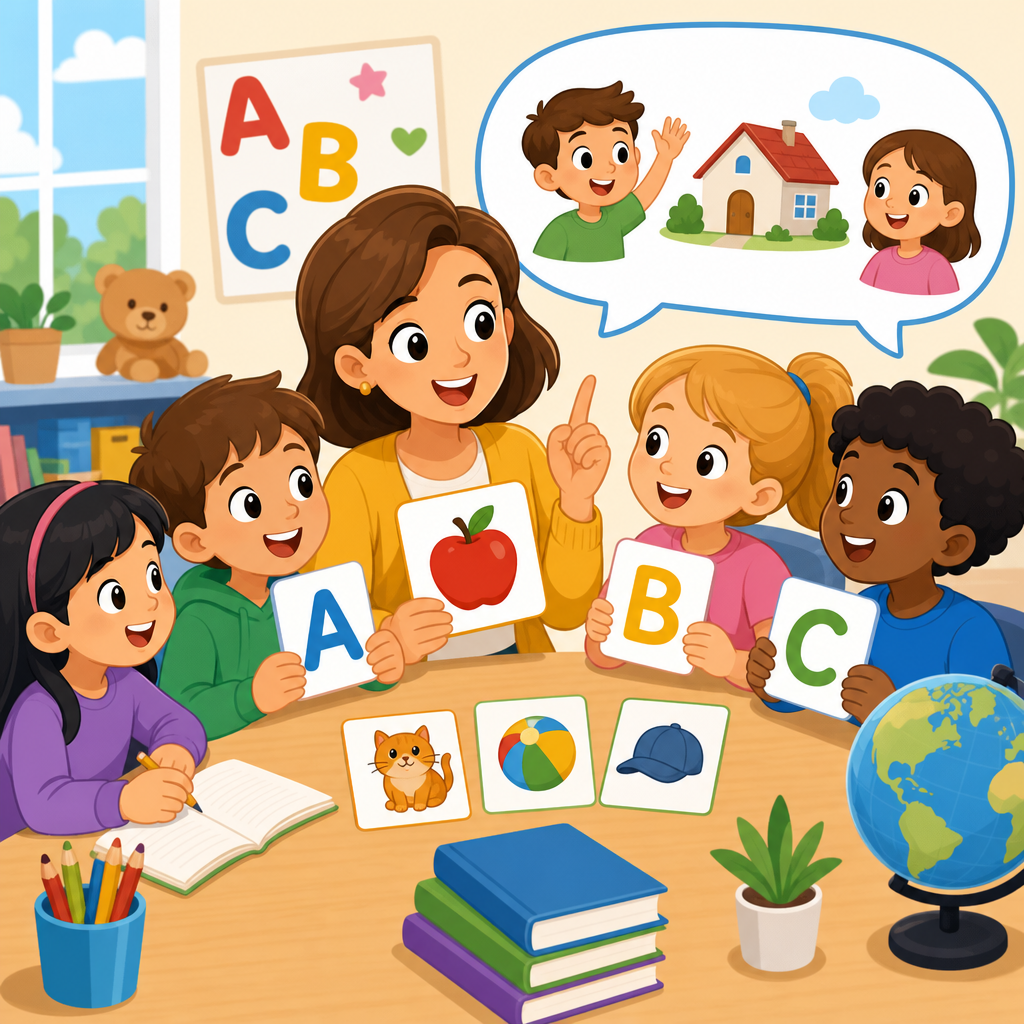
A beginner ESL course gives new English learners a structured path from recognizing the alphabet to building basic sentences they can use in everyday life. ESL means English as a Second Language, and in practice it covers learners who need English for work, school, immigration, travel, or daily communication. I have worked with beginner classes where students started by tracing letters and ended the term introducing themselves, asking simple questions, and understanding classroom instructions. That progression is not accidental. A strong beginner ESL course follows a sequence: sounds, letters, core vocabulary, grammar patterns, listening practice, speaking drills, reading support, and short writing tasks. When that sequence is clear, students gain confidence faster and avoid common early mistakes that become hard to correct later.
The phrase alphabet to basic sentences describes the most important foundation stage in English learning. At this level, students are not studying advanced rules or idioms. They are learning how English letters relate to sounds, how common words function in simple contexts, and how sentence patterns carry meaning. For example, learners move from A, B, C to practical expressions like “My name is Ana,” “I live in Boston,” and “I need water.” These are small sentences, but they unlock real communication. A beginner ESL course matters because it shapes pronunciation habits, listening accuracy, vocabulary retention, and grammar awareness from day one. If the first course is well designed, every later step in the broader ESL learning path becomes easier, whether the learner continues into conversation, workplace English, test preparation, or academic study.
What a beginner ESL course should include
A complete beginner ESL course should cover five core building blocks: the alphabet, phonics or sound-letter relationships, essential vocabulary, basic grammar, and controlled communication practice. In my experience, many courses fail because they teach long word lists before learners can reliably hear and produce key sounds. English has twenty-six letters, but far more than twenty-six sounds, so students need explicit help with contrasts such as /b/ and /v/, short and long vowels, and common ending sounds like -s and -ed. Without that support, students may memorize words visually but struggle to understand spoken English or be understood themselves.
Vocabulary at this level should focus on high-frequency categories: greetings, numbers, days, colors, family members, classroom objects, food, jobs, places, and basic verbs such as be, have, go, like, need, and want. Grammar should stay practical. Learners need pronouns, articles, singular and plural nouns, simple present tense, there is and there are, basic prepositions, yes-no questions, wh- questions, and short answers. Reading materials should be decodable where possible and supported by pictures. Writing should begin with copying, labeling, filling blanks, and progressing to short original sentences. Listening and speaking activities should not be optional extras; they are the center of a good beginner ESL course because language is learned through use, not just explanation.
From alphabet recognition to sound awareness
The alphabet is the first visible entry point for many learners, especially those whose first language uses a different script. However, alphabet instruction should go beyond naming letters. Students need to identify uppercase and lowercase forms, write them legibly, and connect them to common sounds. For example, learners should know that the letter C can sound like /k/ in “cat” and /s/ in “city.” They should also meet common letter combinations early, including sh, ch, th, ee, and oo, because real English texts contain them constantly. A beginner ESL course that treats the alphabet as a memorization drill without sound training leaves students underprepared.
I have found that multisensory practice works best at this stage. Students say the letter, trace it, hear a keyword, and use it in a tiny phrase. “B, ball, blue ball” is more memorable than “B is for ball” repeated in isolation. Teachers also need to address the gap between letter names and letter sounds. A learner may know the name of W but still not hear the difference between “wine” and “vine.” That is why simple minimal-pair exercises, dictation, and repetition are essential. By the end of this stage, students should be able to recognize letters quickly, read simple phonetic words, spell basic personal information, and understand that English spelling is patterned, even when it is not perfectly regular.
Core vocabulary and the first grammar patterns
Once learners can work with letters and basic sounds, the next step is controlled language that appears in daily life. The best beginner ESL course teaches vocabulary and grammar together instead of as separate subjects. If students learn pronouns and the verb be, they can immediately create useful sentences: “I am tired,” “She is my sister,” “They are students.” If they learn numbers and dates, they can say, “My phone number is…” or “My class is on Monday.” This integration helps memory because every new word has a function.
At this level, grammar should be taught through patterns, substitution, and repetition. Beginners do not need long theoretical explanations about morphology or clause structure. They need clear models. A teacher writes, “I live in ___,” and students replace the city name. Then the pattern expands: “He lives in ___.” “Do you live in ___?” This sequence teaches meaning, form, and pronunciation at the same time. Articles are another early challenge. Learners need repeated exposure to “a book,” “an apple,” and “the teacher” in context, not only rules. The same is true for plural endings, possessives, and prepositions such as in, on, under, next to, and between. These small items carry a lot of meaning in basic sentences.
| Course Stage | Main Focus | Example Language | Expected Outcome |
|---|---|---|---|
| Alphabet and sounds | Letter recognition, phonics, spelling | A, B, C; cat, pen, ship | Read and spell simple words |
| Survival vocabulary | Greetings, numbers, classroom words | Hello, pencil, twenty, Monday | Handle basic daily interactions |
| Sentence patterns | Pronouns, be, simple present | I am ready. She likes tea. | Create short correct statements |
| Question forms | Yes-no and wh- questions | Where do you live? Do you work? | Ask and answer simple questions |
| Integrated practice | Listening, reading, speaking, writing | Short dialogues and guided writing | Use English with basic confidence |
Listening and speaking in a true beginner ESL course
Many new learners believe they should wait to speak until their grammar is stronger. That delay usually slows progress. In a well-built beginner ESL course, speaking starts immediately, but it starts with realistic expectations. Students repeat key phrases, answer predictable questions, and practice short exchanges with strong teacher support. This matters because spoken English includes reduced forms, linking, and stress patterns that are difficult to infer from a textbook page. A learner who can read “What do you do?” may not recognize it in natural speech until they have heard and practiced it many times.
Listening tasks for beginners should be short, slow enough to process, and linked to a clear purpose. Good examples include identifying a phone number, choosing the correct picture, following one-step instructions, or matching a speaker to a name. As learners improve, tasks can expand to short dialogues about family, schedules, shopping, and routines. Speaking activities should mirror those topics. Role-plays like “buying food,” “introducing a classmate,” and “asking for directions in a building” are especially effective because they combine vocabulary, grammar, and pronunciation in one task. Tools such as the Oxford Picture Dictionary, the Cambridge English Empower series, and digital platforms like Quizlet or Learning Chocolate can reinforce this practice, but they work best when paired with live production and immediate feedback.
Reading and writing from words to basic sentences
Reading and writing should develop early, but in a manageable sequence. First, learners copy letters and common words. Next, they label pictures and complete sentence frames. Then they read and write simple original sentences. This progression reduces cognitive overload. Asking a learner to write a paragraph before they can form a clear sentence creates frustration, not growth. In beginner classes I have taught, the most effective writing tasks were highly practical: filling out a form, writing a short self-introduction, listing family members, or describing a daily routine using time expressions.
Reading materials should be short and predictable. A beginner text might say, “This is Maria. She is from Peru. She lives in Miami. She works at a hotel.” That kind of passage allows students to notice pronouns, the verb be, simple present forms, and basic punctuation. Teachers can then ask direct comprehension questions: “Where is she from?” “Where does she work?” This builds confidence while training learners to extract meaning from complete sentences. It is also important to teach sentence mechanics early. Students should practice capital letters, periods, question marks, spacing, and word order. English relies heavily on subject-verb-object order, so learners benefit from frequent reordering tasks such as turning “tea / like / I” into “I like tea.”
How to choose the right beginner ESL course
The right beginner ESL course depends on a learner’s goal, schedule, literacy background, and need for teacher support. A complete beginner who has limited formal schooling usually needs a course with explicit phonics, slower pacing, and more guided writing. A learner who is literate in another language but new to English may progress faster and benefit from a communicative class with strong listening practice. Adults preparing for work often need modules on schedules, job titles, workplace instructions, and polite requests. Parents may need school-related language such as “homework,” “teacher conference,” and “permission slip.” The course should match these needs rather than offer generic content only.
When evaluating options, look for a clear syllabus, regular review, level-appropriate assessments, and opportunities to practice all four skills. Good programs use placement checks, attendance expectations, and measurable outcomes, such as “can introduce self,” “can ask for prices,” or “can write five simple sentences about daily routine.” Community colleges, adult education centers, public libraries, and accredited online schools often provide stronger structure than random video playlists. Free resources can help, but they rarely create a complete beginner ESL course on their own. If possible, choose a program that includes feedback on pronunciation and writing, because beginners often cannot hear or see their own errors accurately without outside correction.
Where this course fits in the wider ESL learning path
A beginner ESL course is the hub stage that supports every later English goal. After learners can understand basic instructions, ask common questions, and write simple sentences, they are ready to move into more focused study. That may include elementary conversation, workplace English, grammar foundations, reading development, citizenship preparation, or academic English. In curriculum terms, this beginner level often aligns with pre-A1 to A1 outcomes on the CEFR scale, though exact placement varies by institution. The key point is that learners need a stable base before they can manage connected speech, longer texts, or more abstract grammar.
This is why hub content for the broader ESL Courses and Learning Paths topic should connect beginners to the next logical steps. A student who completes the alphabet-to-basic-sentences stage often asks, “What should I study next?” The answer depends on goals, but the common priorities are expanded vocabulary, present and past time expressions, more question forms, functional conversation, and short paragraph writing. If you are building an English study plan, treat the beginner ESL course as nonnegotiable groundwork. Mastering this level does not mean knowing every rule. It means being able to participate in simple life situations with growing independence. That is the real benchmark, and it is the reason a carefully sequenced beginner course produces better long-term results than fast, unfocused exposure.
A beginner ESL course works best when it teaches English as a usable system, not as disconnected facts. Learners need to move in order from alphabet awareness to sound recognition, from high-frequency vocabulary to basic grammar patterns, and from controlled practice to simple real communication. The strongest courses include speaking, listening, reading, and writing from the start, with each skill reinforcing the others. They also stay practical. Students should leave each lesson able to do something concrete: spell a name, ask a question, describe a routine, read a short text, or write a few correct sentences.
For anyone planning an English learning path, this course is the essential starting point and the central hub for future progress. It builds confidence, corrects errors early, and creates habits that make later study faster and more effective. Choose a program with a clear sequence, skilled feedback, and real-world language outcomes. Then commit to steady practice. If you are ready to learn English step by step, start with a beginner ESL course that takes you from the alphabet to basic sentences and gives you a foundation you can use every day.
Frequently Asked Questions
What will I learn in a beginner ESL course from alphabet to basic sentences?
A beginner ESL course usually starts with the foundation of English: letter recognition, letter sounds, and basic pronunciation. New learners often begin by identifying uppercase and lowercase letters, tracing them, writing them correctly, and connecting letters to common vocabulary words. This stage is important because it helps students feel comfortable with the English writing system before moving into reading and speaking tasks. Many beginners also practice listening to simple sounds and repeating them, which builds confidence early in the course.
After the alphabet, students typically move into essential vocabulary and everyday expressions. This includes greetings, numbers, days of the week, colors, family words, classroom language, and common action verbs. Learners also begin understanding how simple English sentences are built. For example, they may practice patterns such as “I am Maria,” “This is a book,” or “He is my friend.” These sentence frames help students communicate quickly while they are still learning grammar.
As the course continues, students usually develop practical skills they can use in real life. They learn how to introduce themselves, ask and answer basic questions, follow classroom instructions, and talk about familiar topics such as home, work, food, and daily routines. A strong beginner course does not try to teach everything at once. Instead, it gives learners a clear, structured path so they can move from recognizing letters to building short, meaningful sentences they can actually use in everyday situations.
Who is a beginner ESL course designed for?
A beginner ESL course is designed for people who are new to English or who have only a very limited ability to read, write, speak, or understand it. This includes adults and teens who need English as a Second Language for work, school, immigration, travel, or daily communication. Some students may already know a few words in English but still need help forming sentences, understanding spoken instructions, or reading basic materials. Others may be true beginners who need to start with the alphabet and the sounds of English.
These courses are especially helpful for learners who need step-by-step instruction and plenty of guided practice. In many beginner classrooms, students arrive with very different backgrounds. Some have strong literacy skills in their first language, while others may be learning classroom routines and study skills at the same time they are learning English. A well-designed beginner ESL course meets learners where they are and introduces English in manageable parts, rather than assuming prior knowledge.
Beginner ESL is also a good fit for learners who want practical results quickly. Many students are not looking for advanced academic English right away. They want to be able to say their name, understand simple directions, ask for help, fill out basic information, and communicate in common daily situations. That is why a beginner course focuses on useful language first, helping students build real confidence from the beginning.
How long does it take to go from learning the alphabet to making basic English sentences?
The timeline can vary depending on the learner, the class schedule, and the amount of practice outside the classroom. Some students begin making very simple sentences within the first few lessons, especially if they are practicing sentence patterns such as “My name is…,” “I live in…,” or “I like….” Even when learners are just starting with the alphabet, many teachers introduce speaking activities early so students can use functional English right away. This helps keep the course motivating and practical.
In a structured beginner ESL program, learners often make noticeable progress over a term or a few months. During that time, they usually move from tracing letters and recognizing basic words to reading short phrases, answering simple questions, and producing basic sentences independently. However, progress is not always perfectly linear. Some students develop speaking confidence before reading and writing, while others can read basic words before they feel comfortable speaking out loud. This is normal in language learning.
The most important factor is consistency. Students who attend regularly, review vocabulary, practice pronunciation, and use English outside class tend to progress faster. Even short daily practice can make a major difference. A realistic goal for beginners is not perfect grammar right away, but the ability to communicate simple ideas clearly. With steady instruction and repetition, learners can often move from alphabet study to useful sentence-building much sooner than they expect.
What teaching methods work best for absolute beginners in ESL?
The most effective teaching methods for absolute beginners are clear, visual, repetitive, and highly practical. Beginners learn best when lessons include modeling, guided practice, pictures, gestures, real-life examples, and predictable routines. Teachers often say a word, show it, write it, and use it in a sentence so students can connect listening, speaking, reading, and writing. This multi-skill approach is especially useful at the beginning level because it reinforces language from several directions at once.
Repetition is essential, but it should be meaningful rather than mechanical. For example, students may practice the alphabet by tracing letters, saying the sounds, identifying beginning letters in vocabulary words, and using those words in mini-conversations. They may repeat sentence frames such as “This is a pen” or “I am a student,” but then personalize them with their own information. That kind of controlled practice helps learners gain accuracy while still feeling that the language is relevant to their lives.
Good beginner instruction also includes lots of review, short tasks, and immediate success points. Absolute beginners can become overwhelmed if too much language is introduced at once. Strong teachers break lessons into small, manageable steps and revisit key vocabulary and structures often. Pair work, listening practice, pronunciation drills, classroom commands, and simple question-and-answer activities all help students become active users of English. The best methods are not complicated; they are consistent, supportive, and focused on communication learners can use right away.
How can I practice beginner English at home between classes?
Home practice is one of the best ways to speed up progress in a beginner ESL course. Start with short, daily study sessions instead of long, occasional ones. Review the alphabet, letter sounds, and basic vocabulary for just 10 to 20 minutes a day. Read words out loud, copy them into a notebook, and say simple sentences using the new language. Beginners benefit from seeing and hearing the same words many times, so regular repetition at home strengthens what was taught in class.
It also helps to practice English in real-life ways. Label common items in your home with English words, such as “door,” “table,” “chair,” or “window.” Practice introducing yourself, saying your phone number, spelling your name, and answering basic questions about where you live or what you do each day. Listening to slow English audio, beginner videos, or classroom recordings can improve comprehension and pronunciation. Even if you do not understand every word, regular listening helps your ear become more familiar with the rhythm and sounds of English.
Another effective strategy is to keep a small personal English notebook. Write useful words, classroom phrases, and simple sentence models you can reuse, such as “I need help,” “How do you spell that?” or “I am from….” Then practice saying them aloud. If possible, speak English with a classmate, tutor, family member, or language partner. The goal is not perfection. The goal is consistent use. When beginners practice a little every day, they build confidence faster and come to class better prepared to learn the next step.