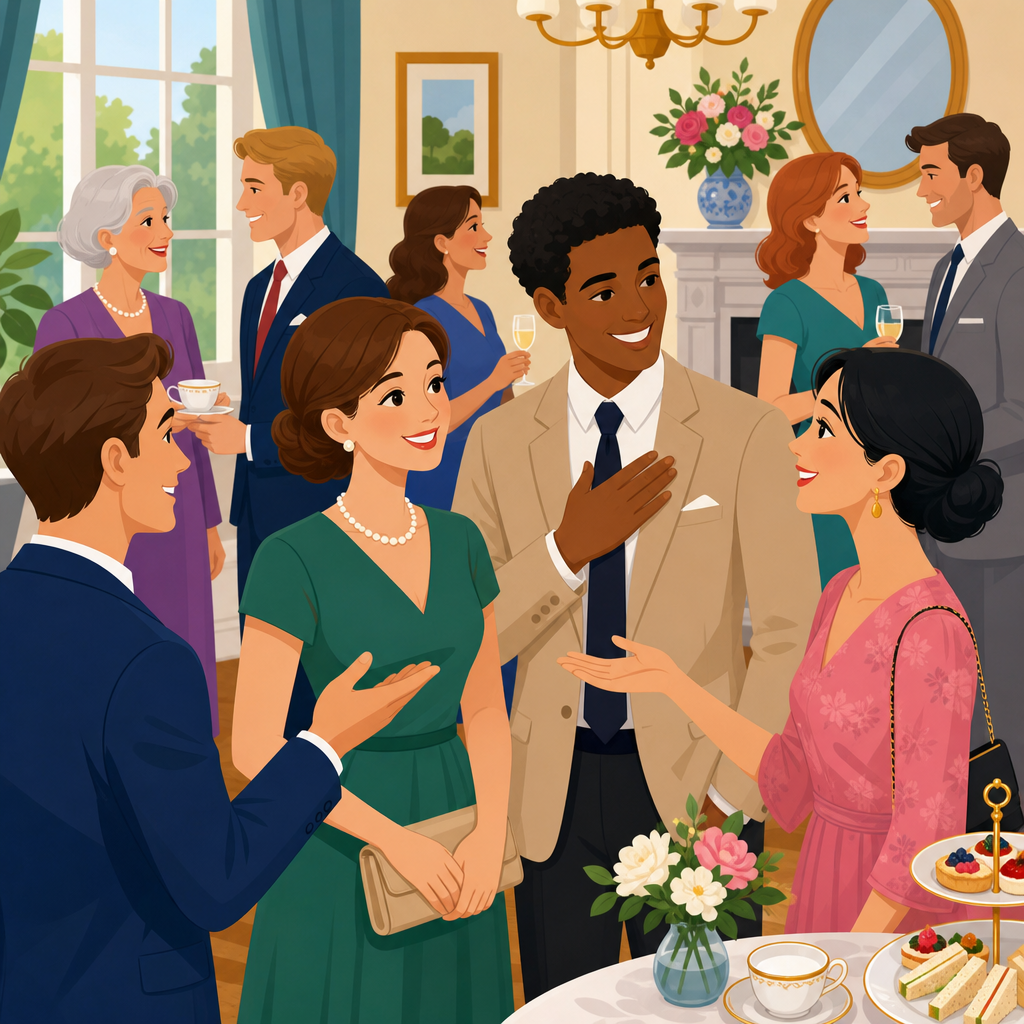
English etiquette for social situations is the practical set of language habits, politeness norms, and cultural expectations that help people interact smoothly in everyday life. For English learners, cultural etiquette matters as much as grammar because successful communication depends on more than correct vocabulary. It includes how to greet people, make small talk, join conversations, disagree politely, apologize, give thanks, respect personal space, and read social cues that are not always stated directly. I have worked with international students, customer-facing teams, and newly relocated professionals, and one pattern is consistent: most misunderstandings come from tone, timing, and expectation, not from major language errors.
In English-speaking environments, etiquette is shaped by context. A friendly exchange at a café follows different rules than a work dinner, neighborhood gathering, classroom discussion, or online group chat. Even within the same country, age, region, profession, and community background affect what feels polite. British, American, Canadian, Australian, Irish, and other English-speaking cultures share broad patterns, yet they differ in directness, humor, turn-taking, punctuality, and acceptable topics. That is why learners need a flexible framework rather than a list of rigid scripts. Good etiquette means noticing the setting, matching the level of formality, and showing respect in ways local speakers recognize.
This hub article covers cultural etiquette across the social situations learners face most often. It defines the core principles behind polite behavior, explains common expressions, and highlights differences that can cause friction. It also connects to the wider topic of ESL Cultural English & Real-World Usage by treating language as social action. When learners understand etiquette, they build trust faster, avoid unintended rudeness, and participate more confidently. In practical terms, strong social etiquette helps with friendships, dating, travel, networking, school, shared housing, and community life. It is not about pretending to be someone else. It is about communicating warmth, awareness, and consideration in ways that fit the culture around you.
Core principles of English-speaking social etiquette
The foundation of cultural etiquette in English is respect made visible through language and behavior. In most social situations, people expect brief acknowledgment, clear but moderate friendliness, and attention to boundaries. Common markers include “please,” “thank you,” “sorry,” “excuse me,” and softening phrases such as “Would you mind,” “Could I,” “I was wondering if,” or “That sounds great, but.” These expressions do more than decorate sentences. They reduce pressure, signal cooperation, and help others save face. Learners sometimes underestimate how often native speakers use these forms in ordinary exchanges, especially when requesting help or interrupting politely.
Another core principle is indirectness in sensitive moments. English speakers, particularly in Britain and many professional settings, often avoid blunt refusals or direct criticism. Instead of saying “No, that is wrong,” a speaker may say “I am not sure that works,” “Maybe we could try another approach,” or “I see what you mean, but.” In the United States, communication can be more direct, but politeness still requires positive framing and emotional awareness. In my experience coaching workplace and community communication, learners improve fastest when they stop translating etiquette literally and start listening for function. A phrase like “We should get coffee sometime” may express friendliness, not a concrete invitation. Understanding this prevents confusion.
Nonverbal etiquette matters too. Eye contact should usually be present but not intense. Smiles are common in service encounters and introductions. Personal space is often wider than in many cultures, and touching is more limited unless people know each other well. Queueing, turn-taking, and punctuality carry strong moral meaning in many English-speaking societies because they signal fairness and reliability. If you cut in line, arrive very late, or dominate a conversation, people may judge you as inconsiderate even if your words are polite. Cultural etiquette is therefore a combination of language, timing, body language, and awareness of what others expect.
Greetings, introductions, and first impressions
First impressions in English-speaking social situations are built quickly. A standard greeting often includes a smile, eye contact, a simple “Hi,” “Hello,” or “Nice to meet you,” and sometimes a handshake depending on the setting. In casual contexts, first names are used early, especially in North America and Australia. In more formal situations, titles such as Mr., Ms., Dr., or Professor may be appropriate until the other person invites first-name use. A safe approach is to mirror the level of formality you hear. If someone says, “I am Jennifer, please call me Jen,” use Jen. If a teacher signs emails as Professor Lee, keep that form unless told otherwise.
Introductions usually include limited personal information at first. Good opening topics are work, studies, travel, food, the event you are attending, or general local observations. Strong etiquette means avoiding intrusive questions too soon. In many English-speaking cultures, asking a new acquaintance about age, salary, weight, relationship status, religion, or political preference can feel too personal unless the setting clearly invites it. I often tell learners to imagine concentric circles: strangers get light topics, acquaintances get moderate topics, and close friends get personal ones. This simple model prevents many awkward moments.
People also notice how long greetings last. In a shop or elevator, politeness is brief. At a party, the greeting may expand into small talk. Overexplaining can feel intense; saying almost nothing can seem cold. Listen for rhythm. A host might say, “So glad you could make it. Can I get you something to drink?” The expected response is short and warm, not a long life story. Matching social energy is a practical etiquette skill that improves with observation and repeated exposure.
Small talk, conversation flow, and polite disagreement
Small talk is not meaningless. It is a trust-building tool that allows people to test tone, friendliness, and shared interests before moving deeper. In English-speaking cultures, common small-talk topics include weather, weekend plans, commuting, sports, entertainment, local events, and food. In workplaces, people often begin meetings or informal chats with a minute of light conversation before discussing business. Learners who skip this stage may sound abrupt, while those who speak too personally too soon may seem intrusive. Effective small talk relies on follow-up questions, active listening, and balanced turn-taking.
A useful rule is to contribute, ask, and connect. Contribute one sentence about yourself, ask one question, and connect your response to what the other person said. For example: “I finally tried that new café downtown. Have you been? I liked it because it was quiet enough to talk.” This pattern keeps the exchange moving naturally. It also helps avoid monologues, which native speakers often interpret as poor social awareness. Interrupting lightly with “Sorry, can I add something?” may be acceptable, but frequent interruption is usually judged negatively.
Polite disagreement is another major part of cultural etiquette. In discussion-heavy environments such as universities, offices, or community groups, disagreement is normal, but the style matters. English speakers often separate the idea from the person. Phrases like “I see your point,” “That is one way to look at it,” “I am not convinced yet,” or “My concern is” lower conflict and keep the relationship intact. Humor can soften disagreement, but it is risky across cultures because sarcasm and irony do not always transfer well. When in doubt, choose clarity over cleverness. A respectful tone is more important than sounding impressive.
| Situation | Safer etiquette choice | Why it works |
|---|---|---|
| Meeting someone new | Use a brief greeting, smile, and neutral topic | Creates comfort without invading privacy |
| Joining a group conversation | Wait for a pause and say, “Mind if I join you?” | Shows respect for turn-taking |
| Disagreeing | Start with acknowledgment before your point | Reduces defensiveness and sounds collaborative |
| Leaving early | Thank the host and give a short reason | Signals appreciation and avoids seeming rude |
| Declining an invitation | Say no clearly but warmly, with brief thanks | Protects the relationship while setting a boundary |
Invitations, hosting, gifts, and shared social rules
Invitations carry hidden expectations, so learners benefit from paying attention to wording. “Would you like to come over for dinner on Saturday at seven?” is specific and usually genuine. “We should have dinner sometime” is often friendly but noncommittal. If you receive an invitation, respond promptly. In many English-speaking settings, a direct yes or no is appreciated more than a vague answer. If you need time, say when you will confirm. For example, “Thanks for inviting me. Let me check my schedule, and I will tell you by tomorrow.” This signals reliability.
When visiting someone’s home, ask small practical questions if you are unsure. “Should I take my shoes off?” is appropriate because household rules vary. Arriving exactly on time or within about ten minutes is usually safe for informal gatherings; for formal meals, punctuality matters more. Bringing a modest gift, such as flowers, dessert, or a drink, is often appreciated, though not always required. In my experience, hosts care less about price than thoughtfulness and ease. A giant gift can create discomfort because it changes the balance of the occasion. If food is involved, mention dietary restrictions early rather than at the table.
Hosting etiquette focuses on making guests comfortable without forcing them. Good hosts offer basic choices, introduce people to each other, and notice whether anyone is left out of conversation. Good guests help by expressing thanks, participating, and not overstaying. One of the most common intercultural problems is departure timing. In some cultures, long visits show warmth. In many English-speaking contexts, staying long after the event has clearly ended can feel inconsiderate unless the host actively extends the evening. Leaving gracefully with “Thank you, I had a lovely time” is both polite and clear. A short follow-up message the next day is a strong social habit that people remember positively.
Apologies, gratitude, boundaries, and sensitive situations
Apologizing in English is both frequent and nuanced. Speakers use “sorry” for real mistakes, minor inconvenience, empathy, and social smoothing. Saying “Sorry, could you repeat that?” or “Sorry, is this seat taken?” does not necessarily mean guilt; it often signals consideration. At the same time, serious apologies need more than the word itself. The standard structure is acknowledgment, responsibility, repair, and change: “I am sorry I was late. I should have texted. I know that affected your plans. It will not happen again.” This format works because it addresses impact, not just intention.
Gratitude is equally important. A simple thank-you after small favors, invitations, advice, or hospitality is expected in most English-speaking communities. Written thank-you notes are less common than in the past, but follow-up texts or emails remain good practice after dinners, interviews, or meaningful help. Public appreciation can also strengthen relationships in group settings. For example, in volunteer organizations, saying “Thanks for organizing everything” acknowledges effort and supports group morale. Learners sometimes worry about sounding repetitive, yet native speakers rarely view sincere thanks as excessive.
Boundaries are a central part of cultural etiquette. Many English speakers value consent, privacy, and personal choice very strongly. That affects how people discuss touch, time, money, childcare, diet, alcohol, and personal beliefs. Pressuring someone to eat more, stay longer, drink alcohol, reveal private information, or accept unwanted help may be seen as disrespectful even if your intention is generous. The polite approach is to offer once or twice, then accept the answer. Phrases such as “No worries at all,” “Only if you are comfortable,” and “Feel free to say no” are useful because they remove pressure. This is especially important in mixed-cultural groups where assumptions differ.
Digital etiquette and how norms vary across English-speaking cultures
Social etiquette now extends well beyond face-to-face contact. Messaging, email, social media, and group chats each have their own expectations. In personal messaging, short replies are usually acceptable, but tone can be misread easily. A message without greeting or punctuation may seem efficient to one person and cold to another. In general, opening with “Hi” or the person’s name, keeping requests clear, and avoiding repeated follow-up messages within a short time are safe habits. Voice notes may be welcome among friends but inconvenient in professional or mixed groups. Before adding someone to a group chat, inviting them first is more respectful.
Cultural variation also matters. Americans often use friendly enthusiasm and positive language, even with people they do not know well. British speakers may rely more on understatement and softening. Canadians are often associated with frequent verbal politeness markers, though this stereotype should not replace individual judgment. Australians may sound informal quickly, while still expecting respect for personal boundaries. Irish conversation often values warmth and sociability, including humor and storytelling. These patterns are real enough to notice but never absolute. Age, class, ethnicity, and local community shape etiquette too. Urban professional norms can differ sharply from family or regional norms within the same country.
The best strategy is observation followed by adaptation. Notice how local speakers greet each other, how directly they make requests, how often they say thank you, what topics they avoid, and how they close conversations. If you are unsure, ask low-risk questions such as “Is it normal to bring something?” or “How formal is this event?” People usually appreciate the effort. Cultural etiquette is not about perfect imitation. It is about reducing friction, showing respect, and making others feel at ease while remaining yourself. Use this hub as your starting point, then practice each skill in real conversations, reflect on what works, and keep refining your English for social situations every day.
Frequently Asked Questions
1. Why is English etiquette for social situations important, especially for English learners?
English etiquette matters because successful communication is not only about using correct grammar or vocabulary. In real social situations, people also pay attention to tone, timing, body language, politeness, and the way a message is delivered. An English learner may form a grammatically correct sentence, but if it sounds too direct, too informal, or out of place for the situation, it can create discomfort or misunderstanding. Social etiquette helps bridge that gap by showing learners how English is actually used in everyday life.
In many English-speaking environments, people value friendliness, respect for personal boundaries, and indirect politeness in certain situations. For example, saying “Could you help me when you have a moment?” often sounds more socially appropriate than “Help me now,” even if the second sentence is technically understandable. Etiquette also affects how people greet one another, how they enter group conversations, how they show interest, and how they end interactions politely. These habits can make someone seem approachable, respectful, confident, and culturally aware.
For learners, understanding etiquette builds trust and reduces anxiety. It becomes easier to make friends, participate in group settings, and avoid unintentionally sounding rude. It also helps with reading the emotional meaning behind what others say. For instance, phrases such as “Maybe,” “I’ll think about it,” or “That might be difficult” can sometimes be polite ways of expressing reluctance or disagreement rather than clear agreement. In short, English etiquette is essential because it turns language knowledge into effective, natural, and socially appropriate communication.
2. What are the basic rules for greeting people and making a good first impression in English-speaking social settings?
A good first impression usually begins with a simple, polite greeting that matches the level of formality in the situation. In casual settings, “Hi,” “Hello,” “Nice to meet you,” or “How are you?” are common and appropriate. In more formal or professional situations, people may prefer “It’s a pleasure to meet you,” “Good morning,” or “How do you do?” depending on the region and context. Tone of voice is important: warm, calm, and friendly is usually best. A smile, eye contact, and a relaxed posture also support a positive first impression.
One important rule is to pay attention to context. The way you greet a close friend is different from the way you greet a host, a teacher, a colleague, or someone older whom you have just met. In many English-speaking cultures, using a person’s name can help create a polite and welcoming tone, such as “Nice to meet you, Sarah.” At the same time, it is wise not to be overly familiar too quickly. For example, asking very personal questions immediately after meeting someone may feel intrusive. Safer opening topics include the event, the weather, work, travel, or shared surroundings.
First impressions are also shaped by small behaviors that show respect. Arriving on time, listening carefully, not interrupting, and avoiding overly strong opinions at the beginning of a conversation all help. If you do not understand what someone said, polite clarification is better than pretending. Phrases like “Sorry, could you say that again?” or “I’m still learning English, so I may need you to repeat that” are completely acceptable. Overall, making a good first impression in English is less about being impressive and more about being respectful, attentive, and easy to talk to.
3. How can I make small talk in English without feeling awkward or running out of things to say?
Small talk is one of the most useful social skills in English because it helps people create comfort before moving into deeper conversation. Its purpose is not to exchange important information but to establish friendliness and connection. Common small-talk topics include the weather, weekend plans, food, travel, hobbies, movies, local events, work in general terms, and the setting you are currently in. For example, at a gathering you might say, “How do you know the host?” or “This is a great event, have you been here before?” These kinds of questions are easy, polite, and not too personal.
To avoid awkwardness, focus on showing interest rather than trying to be entertaining. You do not need perfect jokes or brilliant stories. A good small-talk rhythm often follows a simple pattern: ask an open question, listen to the answer, respond with a short comment, and ask a related follow-up question. If someone says, “I just got back from a trip,” you can reply, “That sounds nice. Where did you go?” and then continue naturally from there. This keeps the conversation moving and shows engagement.
It also helps to have a few reliable phrases ready. Expressions such as “That sounds interesting,” “Really?”, “How was that?”, “I’ve heard a lot about that,” or “I’ve never tried that before” can help you respond naturally while giving the other person room to speak. If the conversation slows down, you can smoothly change topics with phrases like “By the way,” “Speaking of that,” or “Have you got any plans for the weekend?” At the same time, be aware of topics that may be too personal too soon, such as salary, age, religion, or politics, unless the situation clearly welcomes those subjects.
Finally, remember that pauses are normal and small talk is a shared responsibility. You are not expected to carry the entire conversation alone. If you are nervous, keeping your questions simple and your tone relaxed is usually enough. The goal is not perfection. The goal is to create ease, warmth, and a sense of polite social connection.
4. What is the polite way to join, continue, or disagree in a conversation in English?
Joining a conversation politely usually means entering at the right moment and signaling respect for the group. If two or more people are already speaking, it is best to listen briefly first so you understand the topic and tone. Then you can enter with a soft, natural phrase such as “Sorry to jump in, but…,” “Can I add something here?” or “That reminds me of….” These expressions help avoid sounding abrupt. In social settings, people generally appreciate contributions that are relevant, concise, and not overpowering.
Continuing a conversation politely requires active listening. This means responding to what others actually say instead of waiting only for your turn to speak. Helpful conversational signals include “I see,” “That makes sense,” “Exactly,” “Interesting point,” and “What happened next?” These show that you are engaged. It is also polite to help include others by asking, “What do you think?” or “Have you had a similar experience?” Good etiquette in English often involves balancing your own participation with awareness of the group.
Disagreeing politely is especially important because direct disagreement can sound stronger in English than learners expect. Instead of saying “You’re wrong,” people often soften disagreement with phrases such as “I’m not sure I see it that way,” “I understand your point, but…,” “That’s interesting, although I think…,” or “I can see why you’d say that.” These expressions allow you to express a different opinion without sounding hostile. The tone should remain calm and respectful, and it often helps to acknowledge part of the other person’s view before presenting your own.
When a topic becomes sensitive, social etiquette also means knowing when not to push. If someone seems uncomfortable, changes the subject, gives very short answers, or avoids eye contact, that may be a sign to step back. In English-speaking social contexts, maintaining harmony often matters as much as expressing a personal opinion. A polite communicator knows how to contribute, disagree thoughtfully, and recognize when it is better to move on.
5. How do apologies, thanks, personal space, and nonverbal cues affect English etiquette in everyday social situations?
These elements are central to English etiquette because much of social meaning is communicated indirectly. Apologies and expressions of thanks are used frequently in everyday English, often more often than learners initially expect. People commonly say “sorry” not only for serious mistakes but also for small inconveniences, such as bumping into someone, interrupting, arriving slightly late, or asking for repetition. Similarly, “thank you,” “thanks,” and “I appreciate it” are used regularly to acknowledge help, kindness, time, or effort. These expressions help maintain a respectful and cooperative social atmosphere.
Personal space is another important part of etiquette. In many English-speaking cultures, people prefer a moderate physical distance during conversation, especially with strangers, colleagues, or new acquaintances. Standing too close may feel uncomfortable, while standing too far away can seem distant. Physical contact also varies by culture, but in general it is best not to assume that hugging, touching, or other familiar gestures are appropriate unless the relationship clearly allows it. A handshake may be acceptable in some contexts, while a simple smile and verbal greeting may be more suitable in others.
Nonverbal cues often communicate as much as words. Eye contact usually shows attention and confidence, although staring can feel aggressive. Smiling can signal friendliness. Nodding can show listening and understanding. On the other hand, crossed arms, repeated glances at a phone, lack of response, or stepping back may suggest discomfort, distraction, or a desire to end the conversation. English learners benefit greatly from watching these