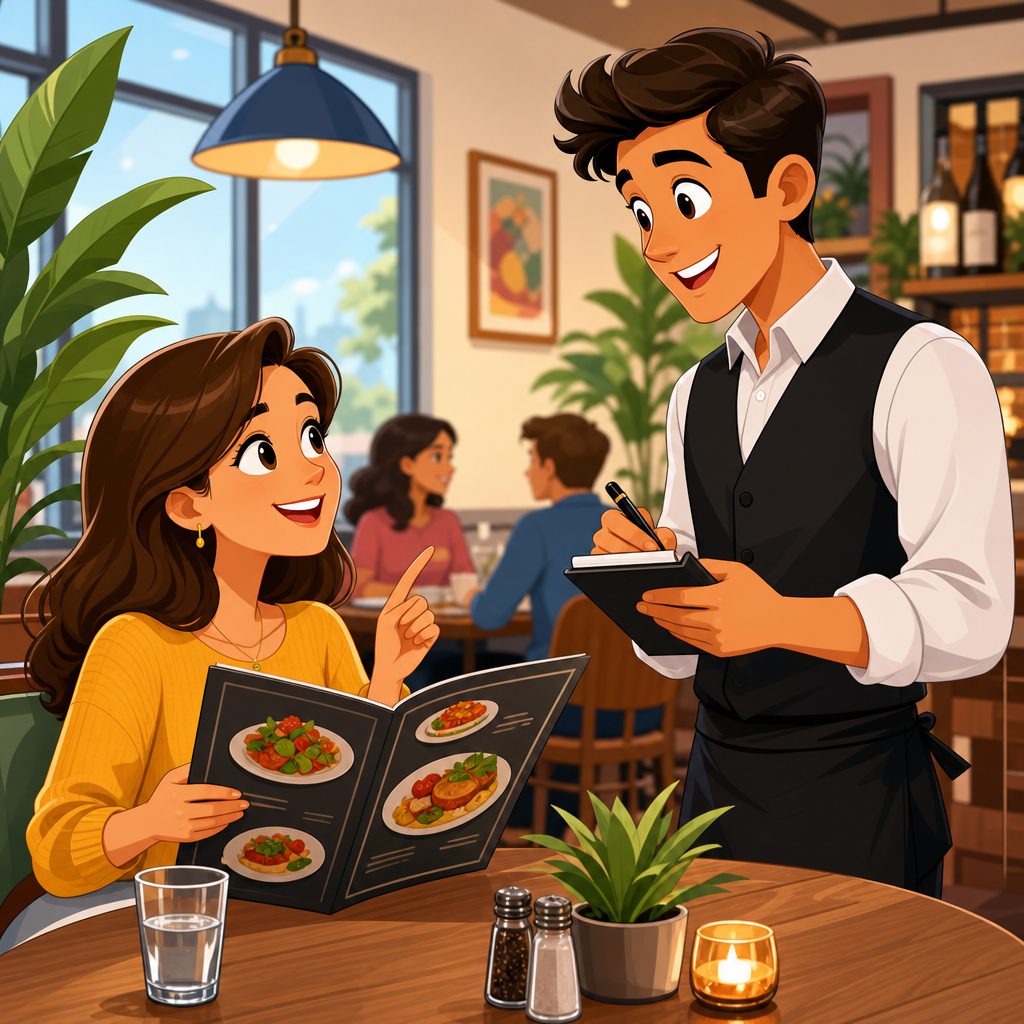
English for ordering food at restaurants is one of the most practical parts of English for travel because meals create repeated, real-world conversations that affect comfort, budget, health, and confidence. For English learners, this skill is not just about memorizing “I want a burger.” It includes understanding menus, asking about ingredients, handling reservations, speaking politely to servers, checking bills, and solving problems when an order is wrong. In travel settings, restaurant English often overlaps with hotel English, shopping English, transportation English, and emergency English, which is why it belongs at the center of a broader English for travel learning plan.
When I have coached travelers preparing for trips to the United States, Canada, the United Kingdom, Australia, and Singapore, restaurant situations consistently produce the highest anxiety. Learners worry about speed, accents, unfamiliar food vocabulary, and cultural expectations such as tipping or splitting the bill. They also face practical questions: What is the difference between “dine in” and “take away”? How do you ask for a vegetarian option? What should you say if you have a food allergy? These are not small details. A missed phrase can lead to the wrong meal, unnecessary expense, or even a health risk.
This hub article explains the full language system behind ordering food at restaurants while connecting it to the larger topic of English for travel. You will learn the essential phrases, the logic behind common exchanges, and the cultural patterns that make conversations smoother. You will also see how restaurant English fits into airport English, hotel check-in language, asking for directions, shopping, sightseeing, and travel problem-solving. If you want a strong foundation in English for travel, restaurant communication is one of the best places to start because it combines listening, speaking, reading, and decision-making in a single everyday activity.
Restaurant English matters because eating out is rarely optional during travel. Even travelers staying with friends usually buy coffee, snacks, or meals at some point. Every order requires micro-skills: greeting staff, asking questions, confirming details, understanding time expressions, and responding politely under pressure. Those same micro-skills transfer directly to other travel situations. If you can confidently say, “Could you recommend something without dairy?” you are also building the confidence to say, “Could you tell me which train goes downtown?” That is why this article serves as a hub page: it teaches ordering food at restaurants in depth while giving you a roadmap for mastering English for travel as a complete practical goal.
Core Restaurant English Every Traveler Needs
The most useful restaurant English starts with predictable stages. In a sit-down restaurant, the sequence is usually arrival, seating, menu review, ordering drinks, ordering food, checking on the meal, asking for extras, requesting the bill, and paying. In a fast-food restaurant or café, the sequence is shorter: greeting, choosing items, customizing the order, paying, and collecting the food. If you learn the language of each stage, you reduce stress because the conversation becomes structured instead of random.
Key expressions should be short, clear, and polite. For arrival, use “Table for two, please,” “Do you have any seats available?” or “I have a reservation under Chen.” When reviewing the menu, ask “What do you recommend?” “What comes with this?” or “Is this spicy?” To order, say “I’d like the grilled chicken, please,” “Can I get this without onions?” or “Could I have sparkling water?” To finish, use “Could we have the bill, please?” or “Can I pay by card?” These phrases work in most English-speaking travel destinations.
Pronunciation matters because restaurant environments are noisy. I train learners to stress the key noun in the sentence: “table,” “reservation,” “chicken,” “bill,” “card.” This helps staff catch the important information even if your grammar is not perfect. It also helps to avoid very long sentences. “I have a nut allergy” is better than an overcomplicated explanation. Clarity beats complexity in travel English.
How to Read Menus and Understand Food Vocabulary
Many restaurant problems begin before speaking. Travelers often recognize basic foods but struggle with menu structure. In English menus, categories commonly include appetizers or starters, mains or entrées, sides, desserts, beverages, and specials. In American English, “entrée” usually means the main course. In some other contexts, especially influenced by French, it can refer to a starter. That difference confuses travelers, so it is worth learning before a trip.
Descriptive cooking terms are equally important. “Grilled” means cooked over direct heat, “roasted” means cooked in dry heat, “fried” means cooked in oil, “steamed” means cooked with steam, and “baked” usually means cooked in an oven. Menu adjectives like “crispy,” “tender,” “creamy,” “smoked,” and “seasonal” tell you texture or preparation, not always ingredients. If you are unsure, ask directly. “What is in the sauce?” is a strong travel phrase because sauces often contain allergens, alcohol, dairy, or meat stock.
Travelers should also know service words. “Set menu” means a fixed selection, often at one price. “À la carte” means each item is ordered separately. “House special” is a featured item. “Sold out” means unavailable. “Refill” is another serving of a drink, though free refills are common in some countries and uncommon in others. In my experience, learners gain confidence quickly when they realize menus follow patterns. Once you understand categories and cooking terms, even unfamiliar cuisine becomes easier to navigate.
Useful Phrases for Different Dining Situations
Travel English changes by setting. In a café, you may hear “For here or to go?” In the United Kingdom, you are more likely to hear “Eat in or take away?” In a casual restaurant, staff may ask “Are you ready to order?” In a more formal place, they may say “May I take your order?” Learning these variations helps listening comprehension because the function is the same even when the wording changes.
For breakfast, useful phrases include “Could I have eggs scrambled?” “Is toast included?” and “Do you have decaf coffee?” In street food settings, speed matters more than formality, so short requests work well: “One chicken wrap, please,” “No sauce,” or “How spicy is this?” For bars or pubs serving food, you may need to order at the counter rather than from a server. Watch what local customers do. Observation is part of successful travel communication.
When dining with others, social language matters too. You may need “Are you ready to order?” “Would you like to share?” or “Let’s split a dessert.” These are restaurant phrases, but they also build general conversational fluency for travel. Meals are often where travelers make friends, speak with hosts, or practice English in a low-stakes environment. That social side is one reason restaurant English is a gateway skill for broader English for travel development.
Special Diets, Allergies, and Health-Safe Communication
If you have dietary restrictions, direct language is essential. Do not rely on hints. Say “I’m vegetarian,” “I’m vegan,” “I can’t eat pork,” or “I have a severe shellfish allergy.” The word “severe” is useful because it signals risk. In many countries, restaurant staff are used to preference-based requests such as “no cheese,” but allergy language needs stronger clarity. Follow up with a practical question: “Does this contain nuts?” “Was this cooked with butter?” or “Can you prepare it separately?”
Travelers sometimes use the phrase “I’m allergic” when they actually mean “I don’t like it.” That is a mistake. Allergy statements must be accurate because kitchens treat them differently. In professional food service, allergy procedures may involve ingredient checks, glove changes, and separate utensils, but standards vary by country and by restaurant. That is why plain, repeated confirmation is smart. If the answer seems uncertain, choose another dish.
| Situation | Best phrase | Why it works |
|---|---|---|
| Vegetarian diet | Do you have any vegetarian options? | Clear and common in most restaurants |
| Food allergy | I have a severe peanut allergy. | Signals medical importance immediately |
| Religious restriction | Does this contain pork? | Direct ingredient check avoids confusion |
| Lactose avoidance | Can this be made without dairy? | Asks about modification, not just ingredients |
| Spice level | Is this very spicy or mild? | Useful in unfamiliar cuisines |
These phrases connect directly to the wider English for travel framework. The same directness helps in pharmacies, clinics, and travel insurance calls. If you can describe a food restriction clearly, you are also practicing the precision needed for any health-related travel conversation.
Politeness, Culture, and Common Restaurant Expectations
Politeness in restaurant English is less about complicated grammar and more about tone and modal verbs. “Can I have…?” is acceptable in many settings, but “Could I have…?” or “I’d like…” usually sounds softer. Adding “please” matters, especially when making several requests. In North America, servers often check in with “How is everything?” A short response such as “Everything’s great, thank you” is normal. In some countries, repeated check-ins are standard service; in others, less interruption is considered polite.
Tipping is a major travel issue. In the United States, tipping around 15 to 20 percent in full-service restaurants is standard because service staff income often depends on it. In the United Kingdom, a service charge may already be included. In Japan, tipping is generally not expected and can create awkwardness. English for travel is not only vocabulary; it is understanding what action fits the words. Knowing how local restaurant systems work prevents embarrassment and helps you interpret the language correctly.
Another common issue is water. In some places, tap water is free and normal to request. In others, bottled still or sparkling water is the default. If cost matters, ask “Is tap water available?” Splitting the bill also varies by culture. “Can we split the bill?” is common in many English-speaking countries, but some restaurants prefer one payment. If you need separate payments, ask before ordering, not after the meal.
Handling Problems, Mistakes, and Payment Smoothly
Even fluent speakers face restaurant problems while traveling. The important skill is calm correction. If the order is wrong, say “I’m sorry, I ordered the vegetarian pasta, not the chicken,” or “Excuse me, this was supposed to be without nuts.” Lead with the fact, not anger. Staff are more likely to solve the issue quickly when the message is specific and respectful. If the food is delayed, ask “Could you check on our order, please?” If an item is missing from takeout, say “I think the salad was left out.”
Payment language is equally important. “Could I have the bill, please?” is standard in many places because the bill is not automatically brought until requested. In American restaurants, “check” is more common than “bill,” but both are understood. If you want to pay by card, say “Can I pay by card?” or “Do you accept contactless payment?” Digital wallets are widely accepted in some cities but not everywhere, especially in smaller towns or markets.
Review the receipt before paying. Travelers should recognize “subtotal,” “tax,” “service charge,” and “gratuity.” A service charge is added by the restaurant. A gratuity is a tip, often added automatically for large groups. If something seems incorrect, ask “Could you explain this charge?” That phrase is direct without sounding accusatory. The same practical approach applies across English for travel situations, from hotel invoices to train ticket corrections.
How Restaurant English Connects to the Full English for Travel Hub
This article is about ordering food at restaurants, but it also functions as a hub for English for travel because meal situations combine nearly every travel communication skill. Before you even sit down, you may need transportation English to find the restaurant, direction phrases to locate the entrance, and phone English to modify a reservation. During the meal, you use listening strategies, question forms, numbers, money vocabulary, and social English. Afterward, you may ask for nearby attractions, call a taxi, or review the place online.
That is why learners should treat restaurant English as one part of an integrated study plan. Build outward from this topic into airport check-in language, hotel requests, shopping expressions, emergency phrases, sightseeing vocabulary, and public transportation English. In my teaching work, learners who master restaurants first often progress faster elsewhere because they become comfortable with turn-taking, fast listening, and short functional requests. Those are the backbone skills of travel communication.
To make this hub useful, practice with realistic materials. Read actual menus from restaurant websites, watch travel vlogs with subtitles, and role-play common exchanges out loud. Use Google Maps listings to study menu photos and reviews. If you are traveling soon, create a personal phrase list based on your diet, budget, and destination. Restaurant English becomes durable when it is tailored to your real trip, not studied as isolated textbook dialogue.
English for ordering food at restaurants gives travelers an immediate, practical win, but its value goes much further. It teaches how to ask clear questions, interpret everyday vocabulary, manage money, express preferences, and solve small problems politely. Those are the exact capabilities that make English for travel useful in the real world. If you can order a meal confidently, you are already building the communication habits needed for airports, hotels, shops, tours, and transit.
The key takeaways are simple. Learn the stages of a restaurant interaction. Memorize flexible phrases instead of long scripts. Understand menu categories and cooking terms. Speak directly about allergies and dietary restrictions. Pay attention to local expectations around tipping, water, and payment. When something goes wrong, correct it calmly and specifically. These are high-frequency travel skills, and they improve quickly with deliberate practice.
As a hub within ESL for Specific Goals, this page should guide your broader English for travel study. Use it as a starting point, then continue with linked subtopics such as airport English, hotel English, transportation English, shopping English, and travel emergencies. Practice the phrases before your trip, not during it. The more prepared you are, the more energy you can spend enjoying the experience instead of worrying about language. Start with your next meal: choose ten restaurant phrases, say them aloud, and make them part of your travel English toolkit today.
Frequently Asked Questions
1. What basic English phrases should I know to order food at a restaurant confidently?
To order food confidently in English, focus on a small group of practical phrases that work in most restaurant situations. Start with polite openings such as “Could I see the menu, please?” “I’d like to order,” and “Could I have…?” These sound more natural and polite than using only “I want.” When you are ready to order, you can say, “I’d like the grilled chicken, please,” or “Could I have a coffee and a sandwich?” If you need time, say, “Could I have a few more minutes?”
You should also learn useful follow-up questions. For example: “What do you recommend?” “What comes with this dish?” “Is this spicy?” “Does this contain nuts, dairy, or gluten?” and “Can I make a small change?” These questions help you understand the menu and avoid ordering something you do not want or cannot eat. If you are ordering a drink, you might say, “Still or sparkling water?” if asked, or answer with “Still, please.”
At the end of the meal, important phrases include “Could we have the bill, please?” “Can I pay by card?” and “Could we split the bill?” If there is a problem, clear and polite English is especially helpful: “I’m sorry, I ordered the vegetarian pasta, not the chicken pasta,” or “Excuse me, this isn’t what I ordered.” These expressions are simple, respectful, and effective. The goal is not perfect English. The goal is to communicate clearly, politely, and comfortably in a real restaurant setting.
2. How can I understand an English menu more easily when traveling?
Understanding a menu is an important part of restaurant English because ordering starts long before you speak to the server. Menus often include category words such as “starters,” “appetizers,” “mains,” “sides,” “desserts,” and “beverages.” Learning these common sections helps you quickly understand how the meal is organized. You should also recognize cooking words like “grilled,” “fried,” “roasted,” “steamed,” “baked,” and “served with,” because these describe how food is prepared.
It is also useful to notice words that describe ingredients and flavor. For example, “beef broth,” “creamy,” “smoked,” “herb sauce,” “spicy,” and “seasonal vegetables” give clues about taste and texture. If a menu says “contains shellfish,” “may contain nuts,” or “gluten-free option available,” that information is especially important for health and dietary reasons. Many travelers feel nervous because they think they must understand every word, but in reality, you only need to understand the parts that affect your decision.
If something is unclear, ask direct questions. Good examples include: “What is this dish?” “How is it cooked?” “What does it come with?” “Is this portion large?” and “Which dish is most popular?” You can also ask, “Could you explain this item?” or “Is there a photo menu?” in more casual places. In tourist areas, staff are often used to these questions. Reading menus becomes easier when you build a core vocabulary of food words and practice asking for clarification instead of guessing. That habit can save money, prevent mistakes, and make dining much more enjoyable.
3. How do I ask about ingredients, allergies, or dietary restrictions in English?
When food affects your health, asking clearly is essential. If you have an allergy, do not use vague language. Say it directly: “I have a nut allergy,” “I’m allergic to shellfish,” or “I can’t eat dairy.” If your restriction is a preference or part of your diet, you can say, “I’m vegetarian,” “I’m vegan,” “I don’t eat pork,” or “Do you have any gluten-free options?” These phrases are common and easy for restaurant staff to understand.
After explaining the restriction, ask a specific follow-up question. For example: “Does this dish contain peanuts?” “Is there cheese in the sauce?” “Is the soup made with meat stock?” or “Can this be made without eggs?” Specific questions are better than general ones because they reduce misunderstandings. If your allergy is serious, make that clear by saying, “It’s an allergy, not just a preference,” or “Even a small amount is a problem.” This tells the server that extra care may be needed in the kitchen.
You can also ask about substitutions in a polite way: “Can I have the salad without cheese?” “Could you replace the fries with vegetables?” or “Is it possible to make this without sauce?” Sometimes the answer will be yes, and sometimes the dish cannot be changed, but asking politely gives you the best chance of getting a safe and suitable meal. In restaurant English, clarity matters more than advanced grammar. Short, direct sentences are often the most effective, especially in busy travel situations where background noise, accents, and time pressure can make communication harder.
4. What should I say in English if there is a problem with my order or service?
Problems happen in restaurants, and knowing how to handle them in English can protect both your comfort and your budget. The key is to stay calm, polite, and specific. Start with a soft opener such as “Excuse me” or “I’m sorry, but…” Then explain the issue clearly: “I ordered the fish, but this is chicken,” “My food is cold,” “This drink isn’t what I asked for,” or “We’ve been waiting a long time for our order.” Clear information helps staff solve the problem faster.
If the mistake is about ingredients, especially with dietary restrictions, say so immediately. For example: “I asked for no cheese because of an allergy,” or “I ordered the vegetarian option, but this has meat.” In these cases, being direct is appropriate because the issue may affect your health. If you want the problem corrected, say, “Could you change it, please?” “Could I get the correct dish?” or “Would it be possible to remake this?” These phrases are polite but firm.
You may also need English for service or billing problems. Useful examples include: “I think there may be a mistake on the bill,” “I don’t think we ordered this item,” “We asked for tap water, not bottled water,” or “Could you check this, please?” In most restaurants, staff respond better when you sound respectful rather than angry. Good restaurant English is not only about ordering successfully. It is also about solving mistakes confidently so that one communication problem does not ruin the whole dining experience.
5. How can I sound polite and natural when speaking to servers in English?
Politeness is a major part of restaurant English because dining involves short but important social interactions. Even simple grammar choices can change how natural you sound. For example, “Could I have the soup, please?” sounds more polite than “Give me the soup.” “I’d like a table for two” sounds smoother than “Table for two.” Adding “please,” “thank you,” and “excuse me” makes your English feel more respectful immediately, even if your vocabulary is basic.
It also helps to understand the rhythm of a restaurant conversation. When you arrive, you may say, “Hi, do you have a table for two?” or “I have a reservation under Maria Silva.” When ordering, you can say, “I’d like the pasta, please,” “For my drink, I’ll have iced tea,” or “What would you recommend?” During the meal, natural phrases include “Could we get some more water?” “Can I have an extra napkin?” and “Everything is great, thank you.” At the end, you might say, “Could we have the bill, please?” or “Do we pay here or at the counter?”
Sounding natural does not mean using difficult English. It means choosing common expressions that fit the situation. In fact, short and polite sentences often sound the most fluent in restaurants because they are what native and non-native speakers both use every day. If you make a grammar mistake but your tone is respectful and your message is clear, communication usually goes well. For travelers, this skill builds confidence quickly because restaurant conversations happen often, repeat many of the same patterns, and give immediate real-world practice with useful English.