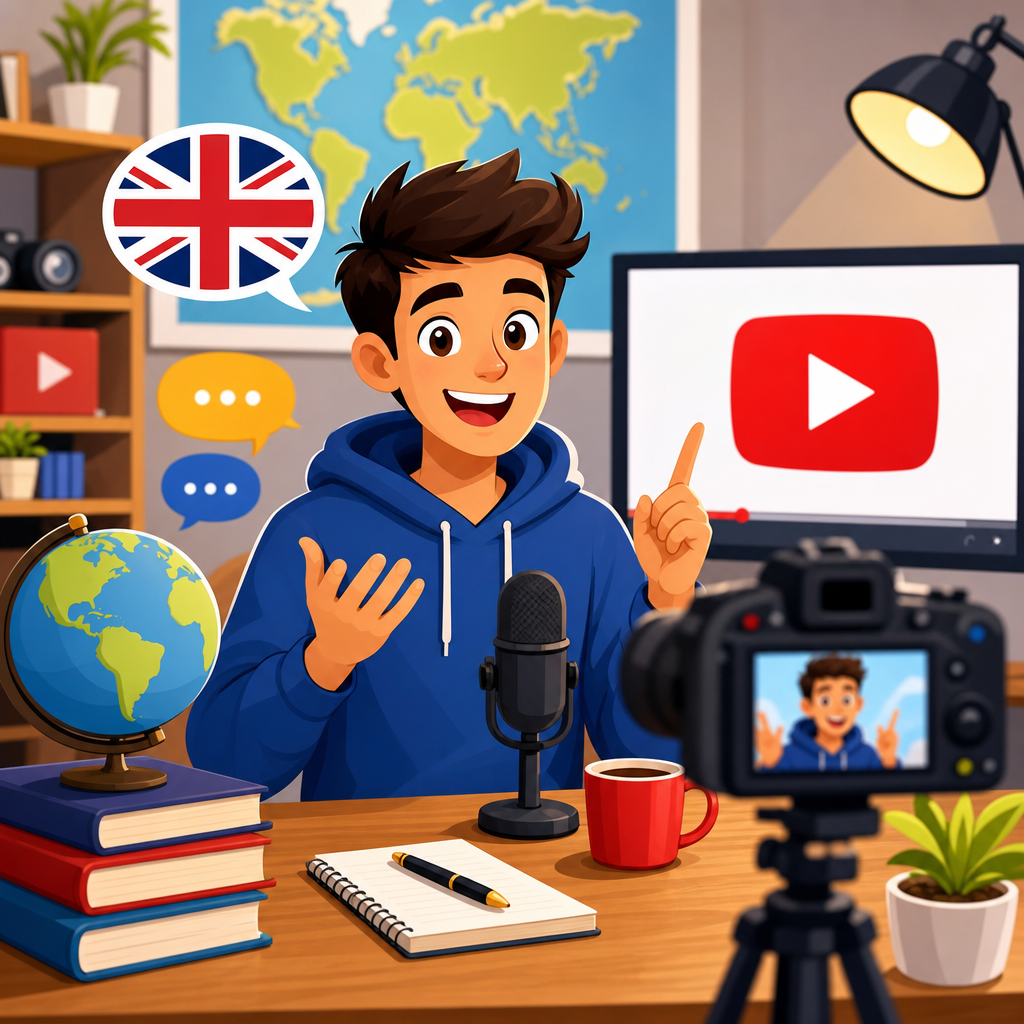
English used in YouTube videos and content shapes how millions of learners hear, imitate, and eventually use modern spoken language in everyday life. Within the broader area of pop culture English, YouTube matters because it combines conversation, performance, commentary, humor, advertising, and community interaction in one place. That mix exposes viewers to the kind of English people actually use outside classrooms: fast speech, catchphrases, reaction language, internet slang, persuasive language, storytelling patterns, and highly visual explanations. When I have coached ESL learners using real media, YouTube has consistently been one of the most effective tools because it gives immediate context for words, tone, and intention. A learner does not just hear “That’s wild” or “I’m obsessed”; they see the facial expression, pacing, and situation that make the meaning clear.
To study this topic well, it helps to define a few terms. “Pop culture English” means the vocabulary, expressions, references, and speaking styles that spread through entertainment, social media, influencers, fandoms, and online communities. “YouTube English” is not one fixed dialect. It is a range of styles shaped by creator type, audience, and platform norms. A beauty creator may speak in upbeat recommendation language, a gamer may use fast reaction phrases, and an educational channel may use structured signposting such as “First,” “Let’s break this down,” and “Here’s the key point.” The comments section adds another layer, where short written English includes emojis, abbreviations, memes, and community in-jokes.
This matters for learners because YouTube now functions like a global speaking environment. It influences pronunciation goals, listening habits, cultural understanding, and vocabulary choices. It also creates risks. Some phrases are highly informal, some are dated quickly, and some are appropriate only in specific communities. A solid guide to English used in YouTube videos and content should therefore do two things at once: explain how the language works and show how to use it wisely. As a hub for pop culture English, this article maps the major patterns learners need to notice, practice, and evaluate so they can understand creators better and communicate more naturally themselves.
Why YouTube English matters in pop culture
YouTube is one of the most important engines of contemporary English because it distributes spoken language at scale across borders, ages, and interests. Traditional media once filtered most public English through broadcasters, studios, and journalists. YouTube changed that by letting ordinary speakers become public voices. As a result, learners hear more accents, more informal grammar, and more niche vocabulary than they would in a textbook or scripted TV segment. That variety is a strength. It helps learners understand that real English is flexible, identity-based, and context-sensitive.
In practice, YouTube also trains pragmatic competence, not just vocabulary. Pragmatic competence means knowing what language choice fits which situation. For example, “What’s up, guys?” works as an opening for a casual audience, but it may sound too informal in a work presentation. “Smash that like button” is recognizable creator language, yet almost no one says it in normal conversation. Learners who watch enough content begin to separate platform conventions from transferable everyday English. That distinction is essential for sounding natural rather than copied.
Another reason YouTube matters is repeatability. Learners can slow playback, turn captions on and off, replay difficult sections, and compare creators. In my experience, this makes YouTube better than many live listening sources for focused skill building. A five-minute reaction clip can become a lesson in intonation, discourse markers, and emotional vocabulary. A vlog can teach sequencing language such as “So basically,” “Then we headed over,” and “Long story short.” A commentary channel can model argument structure with phrases like “The issue here is,” “To be fair,” and “That said.”
Main types of English used in YouTube videos
The language changes by format, and learners improve faster when they can identify the format they are hearing. Vlogs usually feature narrative English, daily-life vocabulary, and spontaneous transitions. Creators talk through events in order, often using casual markers such as “Anyway,” “So yeah,” and “At this point.” Tutorials rely on instructional English, including imperatives, sequencing, and explanation: “Start by,” “Make sure you,” “The reason this works is.” Reactions use emotional and evaluative language: “No way,” “That’s insane,” “I can’t believe this,” “That was actually good.” Commentary channels combine opinion, evidence, and contrast: “On the one hand,” “The problem is,” “Here’s where it gets complicated.”
Gaming channels often contain rapid turn-taking, slang, and immediate response language because the speaker is reacting live. Beauty and fashion channels use descriptive adjectives, recommendation structures, and comparison language. Tech review channels depend on feature-based analysis, hedging, and verdict language such as “In my testing,” “Battery life is solid,” and “I wouldn’t recommend this for everyone.” Educational channels usually speak more clearly and use stronger structure, which makes them useful for intermediate learners building comprehension confidence.
| Channel type | Common English features | Typical example |
|---|---|---|
| Vlog | Storytelling, transitions, daily-life vocabulary | “We grabbed coffee, then headed downtown.” |
| Tutorial | Instructions, sequencing, cause and effect | “First, open the file, then adjust the settings.” |
| Reaction | Emotion words, surprise, evaluation | “That plot twist was wild.” |
| Commentary | Argument, contrast, evidence language | “That sounds reasonable, but the data says otherwise.” |
| Gaming | Fast reactions, slang, commands | “Watch out, I’m pushing left.” |
Recognizing these categories helps learners predict what they will hear. Prediction reduces listening fatigue because the brain expects certain structures. It also helps with active note-taking. If you know a video is a tutorial, listen for steps. If it is commentary, listen for claims and supporting examples. If it is a vlog, track time markers and event order. That single habit turns passive watching into language study.
Core language patterns: openings, transitions, reactions, and closings
Many YouTube creators rely on repeatable speech patterns that make videos easy to follow. Openings often establish tone, audience relationship, and topic quickly: “Hey everyone, welcome back,” “If you’re new here,” or “Today we’re talking about.” These are useful because they model direct, efficient introductions. Transitions keep momentum: “With that said,” “Moving on,” “The next thing,” and “Before we get into that.” Learners who adopt a few neutral transitions immediately sound more organized in spoken English.
Reaction phrases are especially common in pop culture English because YouTube rewards personality. Creators use concise language to show stance: “I’m not gonna lie,” “Low-key,” “Honestly,” “That’s fair,” “I’m here for it,” and “This ain’t it.” Some of these travel well into casual conversation; others are trend-dependent. “Honestly” and “That’s fair” are broadly useful. “I’m here for it” is natural in informal settings when supporting an idea. “This ain’t it” signals strong disapproval and is much more casual.
Closings also matter because they reveal platform-specific persuasion. Phrases such as “Let me know in the comments,” “Don’t forget to subscribe,” and “See you in the next one” are common creator formulas. Learners should understand them, but not mistake them for general-purpose conversation. More transferable closing language includes “That’s my take,” “Thanks for watching,” and “Let me know what you think.” The key is to separate creator branding from everyday communicative value.
Slang, memes, and internet expressions: what to learn and what to filter
One of the biggest attractions of YouTube is exposure to current slang, but slang needs careful handling. Good slang study starts with frequency, clarity, and social range. Expressions like “cringe,” “iconic,” “relatable,” “ghosting,” and “viral” have become widely understood in online and offline English. Others, such as short-lived meme phrases, may disappear within months or sound strange outside specific communities. I usually advise learners to focus first on slang they can recognize, then on slang they can safely use.
Context decides appropriateness. “This song is a bop” is casual and common in entertainment spaces. “I’m dead” means “That is extremely funny” in internet speech, but it should be avoided in serious contexts because the literal meaning can confuse listeners. “No cap” means “I’m serious” or “I’m not lying,” yet it is strongly tied to informal youth speech and may sound forced if used unnaturally. Strong learners observe who says a phrase, to whom, and in what tone before trying it themselves.
Meme language also spreads through reference rather than direct meaning. A creator might say “That escalated quickly” or “Main character energy,” assuming the audience shares cultural background. This is where pop culture English overlaps with cultural literacy. Understanding the phrase often requires knowing the movie line, trend, or social media pattern behind it. Learners do not need every reference, but they do need the habit of checking whether a phrase is literal, sarcastic, or community-based before adopting it.
Pronunciation, speed, captions, and accent variation
YouTube is valuable because it exposes learners to connected speech, the way words change when spoken naturally together. In fast speech, “going to” becomes “gonna,” “want to” becomes “wanna,” and “did you” may sound like “didja.” Creators also reduce unstressed words, blend sounds, and use rising or falling intonation to signal attitude. Learners who only study dictionary pronunciation often struggle here, even when they know every individual word. Repeated listening to authentic videos closes that gap.
Accent variation is another major benefit. English on YouTube may be American, British, Canadian, Australian, Indian, Nigerian, Singaporean, or mixed through international collaboration. This matters because global English is not one accent standard. For learners, the practical goal is intelligibility: understanding many speakers and being understood clearly. Channels with accurate captions can help, but captions are not perfect. Auto-generated subtitles often mishear names, slang, and reduced speech. Use them as support, not as unquestioned transcripts.
A useful method is three-pass listening. First, watch without captions to get the main idea. Second, watch with captions and note unclear phrases. Third, replay key moments and shadow the speaker, copying rhythm and stress. This works especially well with short YouTube segments because the language is dense but manageable. Over time, learners stop hearing speech as isolated words and start hearing chunks such as “kind of,” “at the end of the day,” and “you know what I mean.” That shift significantly improves fluency.
Comments, community posts, and creator-audience interaction
English used in YouTube content is not limited to the video itself. Comments sections teach short-form written English, praise formulas, disagreement strategies, humor, and fandom language. Common positive comments include “You nailed it,” “This deserves more views,” and “I’ve been waiting for this.” Viewers also use timestamp language such as “3:42 is the best part” and participatory phrases like “Who else is watching in 2025?” These are simple, but they show how online communities build belonging through repeated language patterns.
There is also educational value in studying disagreement. Productive comments often soften criticism: “I see your point, but,” “Respectfully, I disagree,” or “I think you missed.” Unproductive comments tend to be absolute, insulting, or context-free. That contrast is important for learners navigating digital spaces in English. Good online communication is not only about vocabulary; it is about tone control, evidence, and audience awareness. Watching how skilled creators respond to questions can teach concise clarification and polite boundary-setting.
Community posts, live chats, and pinned comments add another layer. They often use more compressed English than the videos, with abbreviations, announcements, polls, and callouts. This means learners should study YouTube as a full ecosystem: spoken introductions, visual text on screen, descriptions, comments, and creator replies. Together, these parts show how modern English shifts across speech and writing while staying tied to one brand voice.
How ESL learners can study YouTube English effectively
The best way to learn from YouTube is to study deliberately rather than binge passively. Start by choosing channels that match your level and goals. If you need clear structure, begin with educational explainers or tech reviewers. If you want everyday conversation, choose vlogs or interviews. If your goal is pop culture fluency, mix commentary, reaction, and entertainment channels, but keep a notebook of expressions you hear repeatedly across creators. Repetition across sources is a strong sign that a phrase is useful.
Build a simple study routine. Pick a clip of two to five minutes. Write down five new expressions, one pronunciation feature, and one cultural reference. Then create your own sentences with the expressions. For example, after hearing “That’s fair,” “I’m not sold,” and “It lives up to the hype,” use them in your own opinions about music, food, or apps. This transfer step matters because recognition alone does not create speaking ability.
It is also smart to organize expressions by function, not alphabetically. Make categories like agreement, disagreement, surprise, recommendation, storytelling, and explanation. That mirrors real conversation. Finally, compare YouTube English with other real-world sources such as podcasts, interviews, movies, and workplace communication. If an expression appears across several contexts, it is probably safe and valuable. If it appears only in trend-heavy content, understand it but use it selectively. For learners exploring pop culture English, YouTube is the best hub because it captures language change in real time. Use it actively: follow creators, replay short clips, notice patterns, and practice what transfers to real conversation.
Frequently Asked Questions
Why is YouTube so important for learning modern English?
YouTube is important for learning modern English because it exposes viewers to the kind of language people actually use in daily life, not just the carefully structured English often found in textbooks. On YouTube, learners hear casual conversation, storytelling, interviews, reactions, tutorials, comedy, debates, and live commentary. Each of these formats presents English in a slightly different way, which helps learners understand how tone, speed, and vocabulary change depending on context. This is especially valuable for anyone trying to understand pop culture English, since YouTube reflects current trends, shared references, and widely used expressions much faster than traditional learning materials do.
Another reason YouTube matters is that it combines spoken language with visuals, captions, facial expressions, and context clues. That makes meaning easier to follow, even when the speech is fast or informal. Viewers can pause, rewind, replay, and compare different creators, which gives them far more control over their listening practice than they would have in a live conversation. Over time, this helps learners become more comfortable with authentic pronunciation, reduced speech, connected speech, and common reaction phrases such as “That makes sense,” “No way,” “I’m not gonna lie,” or “Let’s be real.” In practical terms, YouTube helps bridge the gap between classroom English and the living language people use online and offline.
What kinds of English do people commonly hear in YouTube videos and content?
The English used on YouTube is extremely varied, which is one of the platform’s greatest strengths for learners. Depending on the channel, viewers may hear conversational English, professional presentation English, humorous exaggeration, persuasive language used in sponsorships and reviews, or highly expressive reaction language. A vlogger may sound informal and personal, a documentary creator may use more polished explanatory language, and a gamer or livestreamer may speak quickly, emotionally, and spontaneously. This range gives learners a realistic picture of how English changes across situations rather than presenting it as one fixed style.
YouTube also exposes learners to features of real spoken English that are often difficult to master through formal study alone. These include contractions such as “I’ve,” “they’re,” and “we’ll,” reductions such as “gonna,” “wanna,” and “gotta,” filler phrases like “basically,” “literally,” and “you know,” and internet-influenced expressions such as “That’s wild,” “This is so relatable,” or “I can’t even.” In addition, many creators use catchphrases, community greetings, and repeated transitions that become easy listening anchors for viewers. Because creators often speak directly to their audiences, learners also hear a lot of audience-focused English, including calls to action, requests for comments, opinions, and recommendations. All of this helps build a richer understanding of how English functions socially, persuasively, and emotionally in modern media.
Can YouTube help improve listening and speaking skills, or is it mainly useful for entertainment?
YouTube can absolutely help improve both listening and speaking skills when it is used intentionally. For listening, it offers access to a huge range of accents, speech speeds, and communication styles. Learners can train themselves to understand natural pronunciation by listening to short sections repeatedly, turning captions on and off, and noticing how words sound when native or fluent speakers connect them in real time. This is especially helpful because real spoken English often sounds very different from the clearly pronounced examples learners may hear in formal lessons. YouTube teaches listeners to deal with interruptions, emotion, humor, emphasis, and incomplete sentences, all of which are common in real conversations.
For speaking, YouTube can be even more useful than many learners expect. Viewers often improve by shadowing creators, repeating phrases aloud, copying rhythm and intonation, and practicing short spoken responses to what they hear. For example, if a creator says, “Honestly, I didn’t expect that,” a learner can pause and repeat it with similar stress and pacing. This kind of imitation helps build more natural speech patterns over time. YouTube also gives learners access to practical sentence frames they can use in everyday communication, such as giving opinions, agreeing, disagreeing, explaining, or reacting. While entertainment is a major part of the platform, its real value for language learning comes from the fact that entertainment keeps people engaged long enough to absorb vocabulary, pronunciation, and expression in a memorable way.
How can learners use YouTube without copying slang or informal English in the wrong situations?
This is an important concern because YouTube exposes learners to a lot of casual, trendy, and highly context-dependent language. Not every expression heard on a channel is appropriate for school, work, formal writing, or professional conversation. The key is to treat YouTube as a source of authentic input, but not as a style guide for every situation. Learners should pay attention to who is speaking, who the audience is, and what kind of content is being made. A comedy creator, streamer, or influencer may use sarcasm, exaggeration, teasing, strong opinions, or slang that works well in that online environment but sounds too informal elsewhere.
A smart approach is to sort expressions into categories such as formal, neutral, informal, and slang. Neutral English is usually the safest and most useful to practice first because it works in the widest range of settings. Learners can still study slang and internet language, but they should focus on understanding it before using it. It also helps to compare YouTube English with English from interviews, podcasts, news content, and workplace communication so the differences become clear. If an expression seems highly emotional, playful, or trend-based, it is worth checking whether it is widely accepted or limited to certain communities. In short, YouTube is excellent for learning how English is really used, but strong learners develop style awareness so they know when to sound relaxed, when to sound professional, and when to avoid repeating online language too literally.
What is the best way to study English from YouTube videos and content effectively?
The best way to study English from YouTube is to move from passive watching to active learning. Instead of only consuming videos for entertainment, learners should choose content that matches their level and goals, then work with it in a structured way. A strong method is to use short video segments, usually one to three minutes at a time. First, watch once for general meaning. Then watch again and focus on key vocabulary, useful phrases, and pronunciation patterns. After that, replay difficult lines and write down what you hear before checking captions or transcripts. This develops both listening accuracy and vocabulary awareness.
To build speaking skill, learners should repeat useful phrases aloud, imitate the speaker’s rhythm, and practice summarizing the video in their own words. Keeping a notebook of expressions is especially helpful if learners record not just the phrase itself, but also the situation where it was used. For example, a phrase like “The point is,” “To be fair,” or “That’s actually pretty interesting” becomes more useful when the learner understands its communicative purpose. It is also a good idea to follow a mix of channels rather than only one creator, since this provides broader exposure to accents and styles. Most importantly, consistency matters more than intensity. Ten to twenty minutes of focused practice with YouTube several times a week can produce strong results over time because it trains listening, vocabulary, pronunciation, and real-world language awareness all at once.