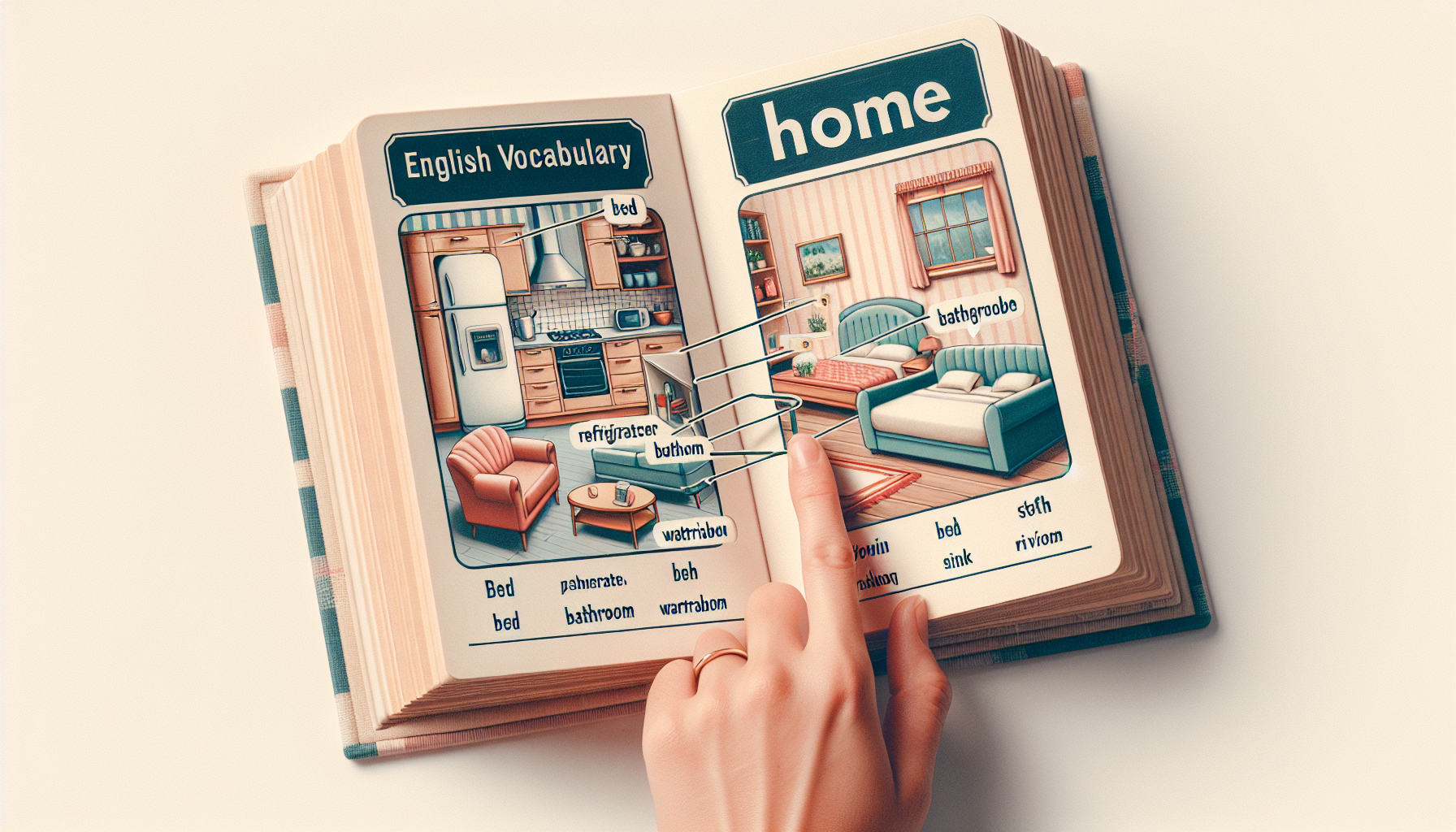
English vocabulary for the home gives English learners the words they need to describe daily life clearly and confidently. In ESL Basics, home vocabulary is one of the most practical parts of basic vocabulary because learners use it from the first week of study: they talk about where they live, what rooms they use, which furniture they own, and what chores they do every day. I have taught this topic in beginner classrooms, online tutoring sessions, and workplace English courses, and it consistently produces fast results because the language connects directly to real routines. When students can say living room, kitchen, shelf, blanket, vacuum, and apartment without stopping to translate, their speaking becomes smoother and their listening improves immediately.
In simple terms, home vocabulary includes words for types of homes, rooms, furniture, household objects, appliances, and common actions. It also includes useful location phrases such as next to, under, on the wall, and across from, because people usually describe a home by explaining where things are. This matters for much more than casual conversation. Learners need home vocabulary to fill out forms, speak to landlords, understand hotel instructions, follow emergency guidance, read apartment listings, ask for repairs, and discuss family routines. It is also essential for other ESL Basics lessons, especially grammar topics like there is and there are, prepositions of place, present simple, countable and uncountable nouns, and possessive adjectives. If a learner cannot name basic objects in a house, those grammar lessons stay abstract.
Another reason this topic matters is cultural and regional variation. A learner may hear apartment in American English and flat in British English. They may hear closet, cupboard, wardrobe, sofa, couch, faucet, tap, trash can, and bin in different settings. Good teaching does not hide those differences; it organizes them so learners can recognize the most common forms first. The goal of this hub is to give a complete, practical map of basic home vocabulary, show how the words connect, and prepare learners for more detailed lessons across the Basic Vocabulary section.
Types of homes and the names of rooms
The first step in learning English vocabulary for the home is understanding the difference between the building itself and the spaces inside it. Common housing words include house, apartment, flat, condo or condominium, studio, dormitory, cabin, and mobile home. In beginner ESL classes, I usually start with house and apartment because they appear most often in conversation and textbooks. A house is usually a separate building for one family. An apartment or flat is one home inside a larger building. A studio is a small apartment with one main room. Learners also benefit from words that describe ownership and location, such as rent, landlord, neighbor, downtown, suburb, and residential area.
Once learners know the type of home, they need room names. The core room vocabulary includes living room, bedroom, bathroom, kitchen, dining room, hallway, laundry room, garage, basement, attic, balcony, yard, garden, and stairs. Not every home has all of these spaces, but these are the most useful high-frequency words. Teachers often present them as a picture set, but the best retention happens when learners personalize them. For example: “I live in an apartment. It has one bedroom, one bathroom, and a small kitchen.” That sentence pattern supports vocabulary, numbers, and grammar at the same time. In real conversations, learners are often asked simple questions such as “How many bedrooms does your home have?” or “Is there a balcony?” so this category should be practiced early and repeatedly.
Room vocabulary also introduces common collocations. English speakers do not usually say food room for kitchen or sleep room for bedroom. Learning the exact standard word matters. The same is true for combined spaces like dining area, home office, guest room, and family room. These terms often appear in apartment ads and real estate listings, so learners who plan to rent a home should know them. At beginner level, the most useful strategy is to group vocabulary by function: we cook in the kitchen, sleep in the bedroom, bathe in the bathroom, relax in the living room, and wash clothes in the laundry room.
Furniture and household objects learners use every day
After room names, the next major area of basic vocabulary is furniture and household objects. These are the nouns learners point to constantly in real life. In the living room, key words include sofa or couch, chair, coffee table, table, television or TV, remote control, lamp, rug, bookshelf, shelf, curtain, and window. In the bedroom, learners need bed, pillow, blanket, sheet, mattress, dresser, wardrobe, closet, mirror, alarm clock, and nightstand. In the kitchen, essential items include refrigerator or fridge, stove, oven, microwave, sink, cabinet, cupboard, counter, table, plate, bowl, cup, glass, fork, knife, spoon, pan, and pot. In the bathroom, common words are toilet, sink, shower, bathtub, towel, soap, shampoo, toothbrush, toothpaste, and mirror.
A consistent challenge is helping learners distinguish similar objects. For example, a table is larger and often used for eating or working, while a desk is mainly for study or office work. A wardrobe is a tall piece of furniture for clothes, while a closet is a built-in storage space. A blanket keeps you warm, while a sheet is a light cloth on the bed. These distinctions matter because learners hear them in stores, home videos, repair conversations, and daily instructions. In my experience, students remember these items better when they practice with real tasks such as “Put the towels in the bathroom cabinet” or “The remote control is on the coffee table.”
Household objects should also be taught with countability and article use. Learners say a chair, a lamp, a pillow, and a blanket because these are countable. They say some furniture because furniture is an uncountable noun in English. This is a frequent error even at intermediate level. Another useful feature is plural formation: shelf becomes shelves, knife becomes knives, and glass can mean a material or a drinking cup depending on context. Vocabulary study works best when each word is linked to pronunciation, meaning, grammar, and a physical place in the home rather than memorized as an isolated list.
Appliances, utilities, and home technology
Modern home vocabulary includes appliances and utility words that learners need for daily problem solving. Essential appliance vocabulary includes washing machine, dryer, dishwasher, refrigerator, freezer, microwave, oven, stove, toaster, blender, vacuum cleaner, air conditioner, heater, fan, and water heater. Utility terms include electricity, gas, water, internet, Wi-Fi, cable, power outlet, light switch, and fuse box. These words are especially important for adult learners because they appear in bills, manuals, lease agreements, and maintenance requests. A tenant may need to say, “The heater is not working,” “The washing machine is leaking,” or “The Wi-Fi password is on the router.”
The words for appliances are not enough by themselves. Learners also need common verbs: turn on, turn off, plug in, unplug, charge, wash, dry, heat, cool, freeze, and repair. One practical lesson sequence I have used is problem-and-solution language: “The light won’t turn on,” “The outlet is broken,” “The dishwasher is full,” or “The air conditioner makes a strange noise.” This prepares learners for realistic conversations with roommates, hosts, hotel staff, and building managers. It also connects strongly to safety language, such as smoke detector, fire alarm, lock, key, and emergency exit.
| Category | Common words | Simple example sentence |
|---|---|---|
| Appliances | refrigerator, microwave, washing machine, dryer | The microwave is above the counter. |
| Utilities | electricity, water, gas, Wi-Fi, outlet | The Wi-Fi is slow in the bedroom. |
| Safety items | lock, key, smoke detector, fire alarm | Check the smoke detector every month. |
| Action verbs | plug in, unplug, charge, repair, switch off | Please unplug the heater before cleaning. |
Regional vocabulary matters here too. In American English, learners often hear trash can, faucet, and apartment building. In British English, they may hear bin, tap, and block of flats. Neither set is wrong. The best approach is to learn the local form first and recognize the alternative. This hub supports future vocabulary pages on household tools, chores, and practical survival English because appliance language sits at the center of everyday communication in the home.
Home actions, chores, and location language
Knowing nouns is only part of basic vocabulary. Learners also need verbs for daily routines and chores. The highest-value verbs include cook, clean, wash, dry, sweep, mop, vacuum, dust, make the bed, do the laundry, hang up clothes, fold clothes, iron, set the table, wash the dishes, take out the trash, water the plants, and open or close the window. These are among the most useful verbs for present simple practice because they describe repeated actions: “I vacuum every Saturday,” “She cooks in the evening,” and “We do the laundry on Sundays.” These patterns are easy to personalize, which improves retention.
Location language is equally important because home descriptions rely on prepositions. Learners should master in, on, under, behind, next to, between, in front of, near, above, below, across from, and at the end of. A beginner who knows these words can produce dozens of accurate sentences: “The lamp is next to the bed,” “The shoes are under the chair,” and “The bathroom is across from the kitchen.” In classroom practice, I have found that home maps and room diagrams are especially effective because they force learners to combine object names with prepositions and articles. This is one reason home vocabulary is a hub topic inside ESL Basics: it supports speaking, listening, reading, writing, and grammar all at once.
Descriptions of the home also use adjectives that beginners should learn early. Common examples include big, small, clean, dirty, quiet, noisy, bright, dark, comfortable, messy, tidy, modern, old, empty, full, soft, hard, warm, and cold. These words help learners move beyond naming objects toward meaningful communication. For instance, “My apartment is small but bright” communicates more than a vocabulary list ever could. Adjectives also prepare learners for practical needs, such as apartment hunting or reporting a problem: “The room is too noisy,” “The bathroom is very clean,” or “The basement feels cold and damp.”
How to learn and remember home vocabulary effectively
The most effective way to learn English vocabulary for the home is to attach new words to real places, repeated actions, and useful sentence frames. In my own teaching, the strongest results come from five habits. First, label your environment with words you actually need, such as mirror, sink, shelf, and blanket. Second, study vocabulary in sets by room, not as random lists. Third, practice with full sentences: “There is a lamp on the desk” is more powerful than memorizing lamp alone. Fourth, combine speaking and movement by describing your home while walking through it. Fifth, review frequently with photos, flashcards, and short writing tasks. Tools such as Quizlet, Anki, and picture dictionaries help, but memory improves fastest when learners use words in real contexts.
This hub page should lead naturally to related ESL Basics lessons on rooms in the house, furniture vocabulary, kitchen vocabulary, bathroom vocabulary, household chores, prepositions of place, there is and there are, and daily routines. The point of a hub article is not only to list words, but to organize the system behind them. When learners see that bedroom words connect to furniture, furniture connects to prepositions, and prepositions connect to description, they build a usable mental network. That network is what turns passive vocabulary into active English.
English vocabulary for the home is one of the most useful foundations in basic vocabulary because it supports real communication from the start. Learners use these words to introduce themselves, describe where they live, understand housing information, ask for help, talk about routines, and follow everyday instructions. The core areas are clear: types of homes, room names, furniture, household objects, appliances, chores, prepositions of place, and descriptive adjectives. When these categories are learned together, English becomes easier to use in natural situations.
The biggest benefit of mastering home vocabulary is confidence. A learner who can say “I live in a small apartment,” “The keys are on the kitchen table,” and “I need to repair the washing machine” can handle common conversations that matter immediately. That progress also strengthens other ESL Basics topics, especially grammar and listening. To move forward, review the words by room, practice them in full sentences, and connect this hub to the rest of your basic vocabulary study. Start with your own home today and describe it in English, one room at a time.
Frequently Asked Questions
What does “home vocabulary” include in English?
Home vocabulary includes the everyday words English learners use to talk about where they live and what they do there. This usually starts with the names of rooms, such as kitchen, bedroom, bathroom, living room, and hallway. It also includes common furniture and household items like table, chair, sofa, bed, lamp, mirror, fridge, and stove. In addition, learners need words for daily activities and chores, such as cook, clean, wash the dishes, make the bed, do the laundry, and vacuum the floor.
This vocabulary is especially important because it helps learners describe real life from the very beginning. Instead of memorizing random word lists, students can use home vocabulary immediately in useful sentences like “My apartment has two bedrooms,” “The keys are on the table,” or “I clean the kitchen every evening.” That practical use makes the words easier to remember and much more valuable in conversation. For beginner learners, home vocabulary builds confidence because it connects English to familiar routines, spaces, and objects they already know well.
Why is English vocabulary for the home so important for beginners?
English vocabulary for the home is important for beginners because it supports communication in some of the most common situations they face every day. Early in their studies, learners often need to talk about their house or apartment, describe where things are, explain chores, or answer simple personal questions such as “Where do you live?” and “What rooms are in your home?” Since these topics appear often in ESL classes, speaking practice, and real conversations, home vocabulary becomes one of the most practical parts of basic English.
It also helps learners build strong sentence patterns. When students learn words connected to the home, they also practice useful grammar naturally. For example, they can use there is and there are to describe rooms and furniture, prepositions like in, on, under, and next to to explain location, and simple present verbs to describe habits and routines. A learner who knows home vocabulary can say, “There is a lamp next to the bed,” or “I do the dishes after dinner.” These are simple sentences, but they are highly functional, and that is exactly what beginners need most.
What are the most useful home vocabulary words to learn first?
The most useful home vocabulary words to learn first are the ones learners can use every day in simple, practical conversations. A strong beginner list usually starts with the main parts of a home: house, apartment, room, kitchen, bedroom, bathroom, and living room. After that, learners should study the most common furniture and objects in each room, such as bed, sofa, table, chair, desk, door, window, sink, shower, toilet, fridge, and oven.
It is also very helpful to learn action words connected to the home, because vocabulary becomes more useful when learners can combine nouns and verbs. Important examples include cook, eat, sleep, sit, wash, clean, sweep, mop, vacuum, and tidy up. In my experience with beginner students, the best approach is not to learn isolated words only, but to learn them in phrases and sentences: “I cook in the kitchen,” “The towels are in the bathroom,” and “We sit on the sofa in the living room.” That method improves both memory and speaking ability much faster than vocabulary lists alone.
How can English learners remember home vocabulary more easily?
English learners remember home vocabulary more easily when they connect the words to their real environment. One of the best techniques is to label objects around the home with small notes. For example, a learner can place labels on the door, mirror, fridge, table, and bed. Seeing the words every day creates constant review without much extra effort. Another effective strategy is to group vocabulary by room rather than studying one long mixed list. Learning “kitchen words,” “bedroom words,” and “bathroom words” helps the brain organize information more clearly.
Speaking and writing also make a big difference. Learners should describe their home out loud, even with very simple English: “This is my kitchen. There is a sink and a stove. The fridge is next to the door.” They can also keep a short daily journal with sentences about chores and routines, such as “I make my bed every morning” or “I do the laundry on Saturday.” Repetition in meaningful sentences is what turns passive vocabulary into active vocabulary. Pictures, flashcards, and short home-themed dialogues are useful too, but the most effective practice usually comes from using the words to talk about one’s own life, because personal language is easier to remember and easier to use confidently in conversation.
How can teachers and students practice home vocabulary in a natural way?
Teachers and students can practice home vocabulary naturally by using tasks that reflect real communication instead of only memorization exercises. A simple but powerful activity is describing a room. The teacher can show a picture of a bedroom or kitchen and ask questions like “What can you see?” “Where is the lamp?” or “What do people do in this room?” Students can also describe their own homes, compare two rooms, or talk about what furniture they have. These activities build vocabulary, speaking confidence, and grammar at the same time.
Role-play is another excellent method. Students can practice conversations such as inviting someone into their home, explaining where something is, talking to a landlord, or discussing chores with family members or roommates. For example, one student can ask, “Where are the clean towels?” and the other can answer, “They are in the bathroom cabinet.” Teachers can also assign practical tasks like making a list of household items, drawing a floor plan and labeling each room, or giving oral directions such as “Go into the kitchen and put the cups on the table.” These activities feel natural because they mirror real life. That is why home vocabulary works so well in beginner classrooms, online tutoring, and workplace English courses: it is familiar, useful, and easy to turn into clear communication from the first week of study.