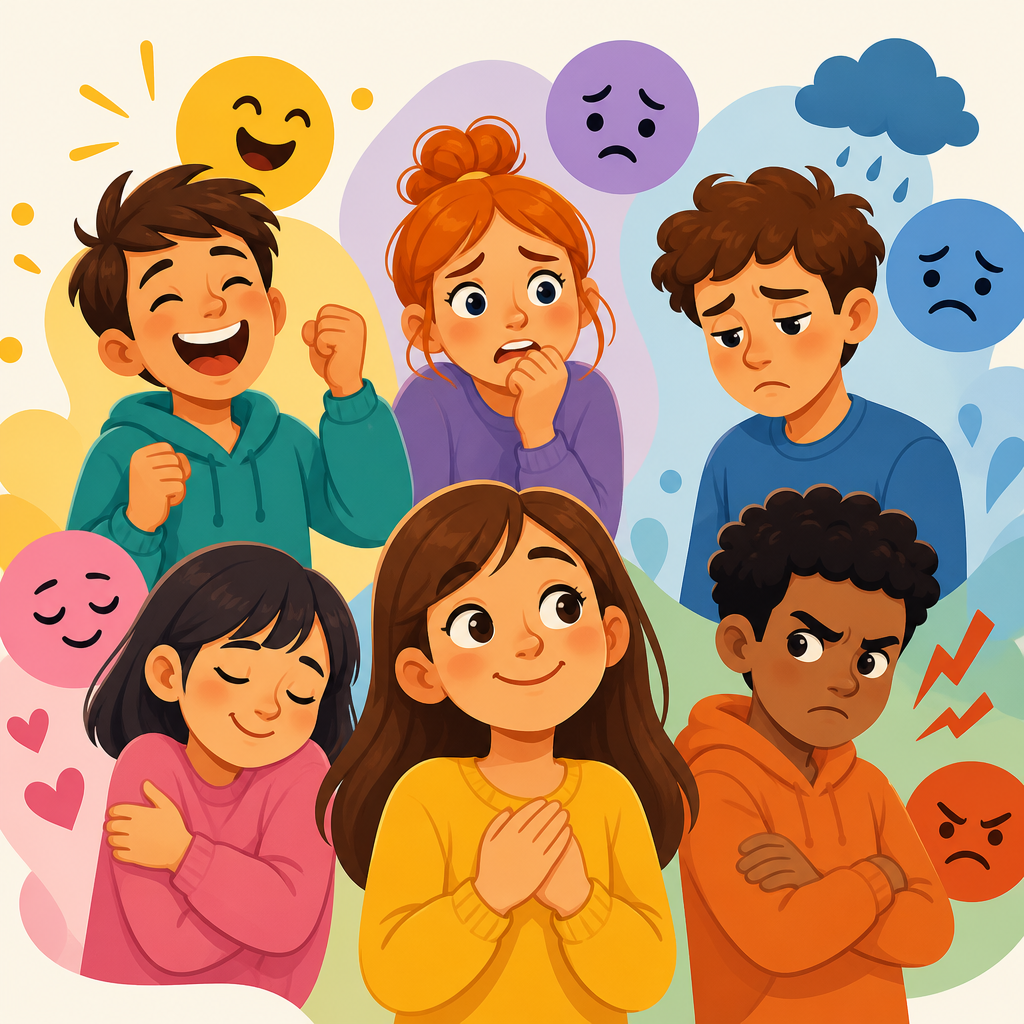
English words for describing emotions and feelings are essential for anyone building practical vocabulary, because daily life depends on expressing needs, reactions, relationships, and mental states with accuracy. In ESL teaching, I have seen learners make rapid progress when they move beyond basic words like happy, sad, and angry and start using a fuller emotional vocabulary in conversations, emails, journaling, and workplace interactions. This topic sits at the center of daily life vocabulary because emotions appear everywhere: greeting a friend, apologizing after a mistake, describing stress at work, talking about family conflict, or explaining why a movie felt inspiring. When learners lack the right words, they often sound vague, repetitive, or misunderstood.
An emotion word names an internal state such as joy, fear, frustration, pride, or disappointment. A feeling word can overlap with emotion, but in everyday English it often covers broader personal states, including physical and mental conditions such as tired, nervous, relaxed, overwhelmed, or curious. That distinction matters because real communication rarely separates emotion from context. A student may not only feel angry; they may feel annoyed by noise, offended by a rude comment, or resentful after being treated unfairly. Each word carries a different intensity, cause, and social meaning. Learning those differences helps students understand films, social media, news interviews, and ordinary spoken English.
This hub article covers the core vocabulary needed to describe emotions and feelings in daily life, while also connecting naturally to wider vocabulary growth in family language, workplace English, travel English, health vocabulary, personality adjectives, and conversational phrases. It explains common positive and negative emotions, level of intensity, formal and informal usage, and the collocations native speakers use most often. It also shows how to choose the right word for the right situation. If your goal is clearer speaking, stronger listening, and more natural writing, emotional vocabulary is not an extra topic. It is one of the most useful parts of English words for daily life.
Why emotional vocabulary matters in daily life communication
People do not remember vocabulary in isolation; they remember words attached to situations. That is why emotion vocabulary develops fastest when tied to daily routines. A learner uses relieved after finishing an exam, embarrassed after forgetting a name, grateful after receiving help, or anxious before a job interview. These are not rare textbook moments. They are ordinary experiences, and English speakers expect precise words for them. In practical communication, emotional vocabulary helps with conflict resolution, empathy, self-advocacy, and relationship building. Saying I’m upset about the delay is more effective than saying I’m bad. Saying I feel uncomfortable with that joke is clearer and safer than simply saying no.
In work and study settings, emotional language also affects professionalism. Managers say concerned, disappointed, encouraged, or satisfied. Teachers say confused, motivated, distracted, or discouraged. Healthcare workers listen for words like stressed, exhausted, hopeless, or calm because those words influence care. Parents and children use emotional vocabulary to negotiate behavior and trust. Without a broad set of feeling words, learners often rely on very general adjectives, and that limits both fluency and confidence. In my experience, once students learn emotional nuance, their speaking becomes more human and persuasive almost immediately.
Another reason this vocabulary matters is comprehension. Native speakers rarely use only beginner words. They say thrilled instead of very happy, irritated instead of a little angry, devastated instead of very sad, and uneasy instead of slightly afraid. If learners only know the basic forms, they miss tone. Tone changes meaning. Compare I was surprised, I was shocked, and I was stunned. All three refer to unexpected events, but the emotional force is different. Daily life vocabulary is not complete until learners can hear and use these distinctions naturally.
Core positive emotion words and how to use them
Positive emotions are often the first feeling words learners meet, but advanced usefulness comes from precision. Happy is common and safe, yet English offers many better choices depending on cause and intensity. Pleased means satisfied in a moderate way: I was pleased with my test result. Delighted is warmer and stronger: She was delighted to see her grandparents. Thrilled suggests high excitement: He was thrilled to get the job offer. Relieved expresses comfort after worry ends: We felt relieved when the doctor called. Proud is used when achievement, effort, or identity matters: Her parents are proud of her progress.
Several positive words are easy to confuse. Content means quietly satisfied, often without excitement. Cheerful describes a bright mood that others can notice. Optimistic means expecting good results in the future. Grateful focuses on appreciation for help, kindness, or opportunity. Inspired means mentally energized by an idea, person, or event. Relaxed is a calm physical and emotional state, often after stress decreases. Learners should notice common combinations, because collocations are how these words sound natural. English speakers say deeply grateful, cautiously optimistic, genuinely proud, visibly relieved, and in high spirits.
Context changes the best choice. After receiving a thoughtful gift, grateful is more accurate than happy. After solving a problem, relieved may fit better than excited. After completing a difficult project, proud and satisfied are usually better than joyful. These distinctions matter in everyday conversation. A colleague who says I’m pleased with the presentation sounds professional. A friend who says I’m thrilled you can come sounds warm and personal. The more exact the word, the more natural and confident the speaker sounds.
Common negative emotions, intensity, and nuance
Negative emotions deserve careful study because they appear frequently in daily life and because small differences in wording can affect relationships. Sad is basic, but disappointed means something failed to meet expectations. Hurt often refers to emotional pain caused by another person’s words or actions. Lonely describes sadness connected to isolation. Miserable suggests a stronger, more continuous unhappy state. Devastated is severe and usually reserved for major loss or shocking bad news. Using devastated for a minor inconvenience sounds exaggerated.
Anger vocabulary also requires nuance. Annoyed describes mild irritation, often temporary. Frustrated is common when effort does not produce results, such as with technology, traffic, or language learning. Angry is direct and broad. Furious is much stronger. Upset is useful because it can include sadness, anger, or emotional disturbance without sounding overly aggressive. Resentful refers to lasting bitterness about unfair treatment. Offended means feeling insulted by a statement or behavior. In professional settings, concerned or dissatisfied may be more appropriate than angry.
Fear-related words also vary. Nervous often appears before presentations, exams, dates, or interviews. Anxious can mean worried in everyday English, though in mental health contexts it can carry clinical weight. Scared is informal and common. Frightened is slightly more formal. Uneasy suggests mild discomfort or suspicion. Terrified is very intense. Overwhelmed is especially useful in modern daily life because it describes emotional overload from too many responsibilities, demands, or decisions. That word appears constantly in workplace English, parenting conversations, and student life.
| Basic Word | More Precise Options | Typical Daily Life Example |
|---|---|---|
| Happy | pleased, delighted, thrilled, relieved, content | I was relieved when my train finally arrived. |
| Sad | disappointed, hurt, lonely, miserable, devastated | She felt disappointed after the event was canceled. |
| Angry | annoyed, frustrated, upset, furious, resentful | He was frustrated because the website kept crashing. |
| Afraid | nervous, anxious, uneasy, frightened, terrified | I felt nervous before speaking in the meeting. |
| Tired | sleepy, exhausted, drained, worn out, fatigued | After the night shift, she was completely exhausted. |
Words for mixed, subtle, and complex feelings
Real emotions are often mixed rather than simple, and this is where intermediate and advanced learners can significantly improve. Bittersweet describes something that is both happy and sad, such as graduating, moving away, or saying goodbye after a wonderful visit. Nostalgic means feeling affection for the past, often with slight sadness. Conflicted means having opposing feelings or loyalties at the same time. Hesitant suggests uncertainty before acting or deciding. Self-conscious describes discomfort about how others may judge your appearance or behavior. Vulnerable means emotionally exposed and open to being hurt.
English also includes many words for low-intensity moods that are common in daily conversation. Bored means unstimulated. Restless suggests inability to relax or stay still. Irritable means easily annoyed, often because of stress, hunger, illness, or lack of sleep. Moody describes frequent changes in emotional state. Detached can mean emotionally uninvolved. Numb suggests lack of emotional response, often after stress or shock. Hopeful is positive but uncertain. Skeptical mixes doubt with caution. These are useful because adults often describe not dramatic emotions, but subtle states that influence decisions and interactions.
Using these words correctly helps learners discuss personal experiences in a sophisticated way. Instead of saying I felt bad about leaving my old city, a learner can say I felt nostalgic and conflicted. Instead of saying I don’t know, they can say I’m hesitant because the timing feels risky. That kind of precision improves not only vocabulary range but also interpersonal communication, because listeners understand the speaker’s state more clearly.
Daily life situations where these words are most useful
Emotional vocabulary becomes durable when linked to predictable daily life situations. In family conversations, learners need words like worried, proud, disappointed, grateful, and guilty. A parent may say, I’m worried about your health. A teenager may say, I’m embarrassed to talk about it. In friendships and dating, common words include excited, jealous, hurt, confused, comfortable, and supported. In workplaces, people often use stressed, under pressure, encouraged, concerned, frustrated, satisfied, and appreciated. In schools, students regularly need confused, motivated, overwhelmed, curious, and discouraged.
Travel and service situations also involve emotions. Tourists may feel lost, anxious, relieved, or impressed. Customers may be dissatisfied, annoyed, grateful, or delighted. In healthcare settings, people often say sore, uncomfortable, scared, exhausted, hopeful, or calm. On social media, speakers use informal emotional language constantly, including excited, obsessed, awkward, drained, and emotional. Not every word fits every setting. Drained is common in speech and online posts, while fatigued appears more often in healthcare or formal writing. Learning where words belong is part of true vocabulary mastery.
This is why a daily life vocabulary hub should connect emotional words with common themes rather than teach them as a single isolated list. Learners benefit most when they study feelings alongside conversations about routines, relationships, food, money, commuting, shopping, health, and work. Those links create stronger memory and more flexible speaking ability.
How to sound natural: collocations, sentence patterns, and register
Knowing a word is not enough; learners need the patterns around it. English speakers say feel anxious about, upset by, proud of, disappointed with, excited about, worried about, and grateful for. They also use patterns like I’m feeling a bit overwhelmed today, She seems unusually cheerful, and He sounded disappointed when he called. These structures matter because direct translation from another language often produces unnatural phrases. I frequently correct sentences such as I have stress or I am in angry. Natural English is I’m stressed or I’m angry.
Register matters too. Kids often say mad for angry in American English, while annoyed or upset may sound softer in adult conversation. In workplaces, saying I’m concerned about the deadline is usually more effective than saying I’m mad about the deadline. Formal writing may prefer distressed, dissatisfied, or apprehensive, while casual speech often uses stressed, upset, or freaked out. Learners should also know that some words can be too strong if overused. Traumatized, depressed, and panicked have serious meanings in many contexts and should not be used carelessly for everyday inconvenience.
A reliable way to improve is to keep vocabulary in groups: synonyms by intensity, opposites, and common situations. For example, nervous, anxious, uneasy, and terrified belong to one emotional family, but they are not interchangeable. The strongest learners build phrases, not just lists. They learn deeply disappointed, extremely grateful, emotionally drained, quietly confident, and cautiously hopeful. That is how emotional vocabulary becomes fluent speech.
How ESL learners can practice and retain emotion vocabulary
The most effective practice is personal, repeated, and contextual. I ask learners to keep a short daily emotion log using three sentences: Today I felt ___ because ___. Later I felt ___ when ___. Right now I feel ___ about ___. This method forces retrieval and creates a habit of precise expression. Role-plays also work well: apologizing to a friend, asking a boss for support, describing a stressful week, or reacting to good news. Listening practice should include interviews, sitcom dialogue, podcasts, and workplace conversations, where tone and word choice reveal subtle meaning.
Spaced repetition tools such as Anki or Quizlet help retention when cards include examples, not just translations. A useful card does not simply say frustrated; it says I was frustrated because the app kept freezing during checkout. Learners should also group words by degree and contrast: content versus thrilled, annoyed versus furious, nervous versus terrified. Reading short stories, advice columns, and social posts is another strong method because emotional vocabulary appears in realistic context. For speaking, recording a one-minute reflection at the end of the day is powerful. It reveals repetition and encourages variety.
To build this subtopic fully, continue into related daily life vocabulary areas: family and relationships, workplace communication, health and body words, personality adjectives, common phrasal verbs, and everyday conversation starters. The main benefit of learning English words for describing emotions and feelings is simple: you become easier to understand and better able to understand others. Start by replacing one basic word this week. Instead of happy, try relieved, proud, or delighted. Instead of sad, try disappointed, lonely, or hurt. Small upgrades create big gains in real communication every day.
Frequently Asked Questions
Why is it important to learn more emotion words in English instead of only using basic words like “happy,” “sad,” or “angry”?
Learning a wider range of emotion words helps you communicate with much greater accuracy and confidence in real-life situations. Basic words such as “happy,” “sad,” and “angry” are useful starting points, but they often do not fully express what you actually mean. For example, “happy” could mean pleased, delighted, relieved, grateful, excited, or proud. Each of these words describes a different emotional experience. When you choose a more precise word, people understand your feelings more clearly, and your English sounds more natural and mature.
This matters in everyday conversations, friendships, family life, school, and work. If you say “I’m frustrated” instead of “I’m angry,” you show that the problem is not pure rage but difficulty or stress. If you say “I’m nervous” instead of “I’m scared,” you communicate a milder feeling that often appears before a test, interview, or presentation. These small differences improve both speaking and listening because emotional vocabulary carries social meaning. It helps you express tone, intention, and personal experience more effectively.
For English learners, emotional vocabulary is especially valuable because so much daily communication depends on reactions, needs, preferences, and relationships. People talk about how they feel after work, how they reacted to news, how they felt during a difficult conversation, or how they are coping with stress. Expanding your vocabulary in this area makes your English more practical, more personal, and far more useful in the situations that matter most.
What are some useful English words for describing emotions and feelings in daily life?
A strong everyday emotional vocabulary should include both positive and negative feelings, as well as words for mild, strong, and mixed emotions. On the positive side, useful words include “content,” “cheerful,” “excited,” “grateful,” “relieved,” “hopeful,” “proud,” and “calm.” These words appear often in normal conversation. For example, you might say, “I felt relieved after the exam,” “She seemed cheerful this morning,” or “We’re hopeful about the results.”
For more difficult emotions, learners should know words such as “frustrated,” “disappointed,” “anxious,” “overwhelmed,” “lonely,” “embarrassed,” “jealous,” “guilty,” “upset,” and “confused.” These are extremely common in personal, academic, and workplace settings. A sentence like “I’m overwhelmed with deadlines” sounds more natural and specific than simply saying “I’m stressed.” Similarly, “disappointed” is often more accurate than “sad” when expectations are not met.
It is also important to learn words that describe emotional intensity. “Annoyed,” “irritated,” and “furious” all relate to anger, but they describe very different levels. “Worried,” “anxious,” and “terrified” do the same for fear. This kind of vocabulary allows you to describe how strong the emotion is, not just what category it belongs to. In daily life, that makes your speech much more expressive and believable.
A practical way to build this vocabulary is to group words by emotion families. For example, under happiness you might learn “pleased,” “delighted,” “thrilled,” and “content.” Under sadness, you might add “down,” “heartbroken,” “disappointed,” and “depressed,” while noting that these words are not always interchangeable. Organizing vocabulary this way helps learners remember meaning, tone, and usage more easily.
How can English learners use emotion vocabulary naturally in speaking and writing?
The best way to use emotion vocabulary naturally is to connect it to real situations rather than memorizing long lists in isolation. Learners make faster progress when they practice emotional language through everyday topics such as work, family, routines, relationships, health, and personal goals. For example, instead of studying the word “frustrated” alone, practice full sentences like “I get frustrated when meetings start late” or “She was frustrated because the instructions were unclear.” This approach teaches both meaning and natural context.
In speaking, emotional vocabulary becomes more fluent when used in short personal responses. You can practice answers to common questions such as “How was your day?” “How did you feel?” or “What did you think about it?” Instead of always replying with “good” or “bad,” try answers like “I was a little anxious before the interview, but I felt relieved afterward,” or “I was disappointed at first, but now I’m more hopeful.” These kinds of responses sound natural, realistic, and socially useful.
In writing, emotional vocabulary is very helpful in emails, journal entries, messages, essays, and reflections. A learner writing, “I was grateful for your support during that difficult week,” sounds far more precise than someone writing, “I was happy you helped me.” In professional communication, emotional accuracy also improves politeness and clarity. For example, “I’m concerned about the delay” is more measured and appropriate than “I’m angry about the delay.” Choosing the right word can strengthen your message without sounding too dramatic.
Another effective strategy is to notice collocations, which are words that commonly appear together. English speakers often say “deeply disappointed,” “extremely grateful,” “a bit nervous,” “emotionally exhausted,” or “pleasantly surprised.” Learning these combinations helps your English sound smoother and more native-like. The goal is not just to know emotion words, but to use them in complete, natural expressions that match real communication.
What is the difference between similar emotion words like “upset,” “frustrated,” “anxious,” and “overwhelmed”?
These words are similar because they all describe unpleasant emotional states, but they are not the same, and understanding the differences is essential for accurate English. “Upset” is a broad and flexible word. It usually means emotionally disturbed, unhappy, or affected by something unpleasant. A person can be upset by bad news, an argument, criticism, or disappointment. It does not tell us exactly what kind of negative feeling is involved, only that something has emotionally affected the person.
“Frustrated” usually describes the feeling of being blocked from doing something, solving something, or achieving something. It often appears when there are repeated problems, delays, misunderstandings, or limitations. For example, “I’m frustrated because the software keeps crashing” suggests difficulty and irritation caused by an obstacle. It is more specific than “upset” because it points to a situation where effort is being blocked.
“Anxious” refers to worry, nervousness, or unease, often about something that may happen in the future. A person can feel anxious before a presentation, medical result, interview, or important conversation. In many cases, anxiety involves anticipation rather than reaction. That makes it different from “frustrated,” which usually happens because of an existing problem, and different from “upset,” which often follows an emotional event.
“Overwhelmed” means feeling that something is too much to handle emotionally, mentally, or practically. This word is common when someone has too many responsibilities, too much information, too many problems, or emotions that feel too intense. For example, “I feel overwhelmed by everything I need to do this week” suggests pressure beyond one’s current ability to manage comfortably. It is a powerful word because it combines stress, emotional strain, and loss of control.
When learners understand these distinctions, they can choose words much more effectively. Saying “I’m upset” is acceptable, but saying “I’m overwhelmed by the workload” or “I’m anxious about tomorrow’s interview” gives the listener a clearer picture of the exact emotional experience.
What is the best way to remember and expand English vocabulary for emotions and feelings over time?
The most effective method is consistent exposure combined with active use. Emotion words are remembered more easily when learners meet them repeatedly in meaningful contexts and then use them in their own speech and writing. Instead of trying to memorize a long list in one session, focus on a small group of words each week. Learn the meaning, pronunciation, common collocations, and one or two realistic example sentences for each word. This creates deeper memory than simple translation alone.
Personalization is especially powerful with emotional vocabulary. If you connect new words to your own experiences, they become easier to remember. For instance, if you learn the word “relieved,” write a sentence about a time you felt relieved. If you learn “embarrassed,” think of a real or imagined social situation where that emotion fits. Because emotions are closely tied to memory and daily life, personal examples help the vocabulary stay active in your mind.
Reading and listening also play a major role. Pay attention to how emotion words are used in podcasts, TV shows, conversations, articles, and books. Notice which words native speakers choose, what situations they describe, and how strong the emotion sounds. You will begin to see patterns, such as the difference between casual expressions like “I’m annoyed” and stronger ones like “I’m furious,” or between reflective words like “I feel grateful” and more immediate reactions like “I’m