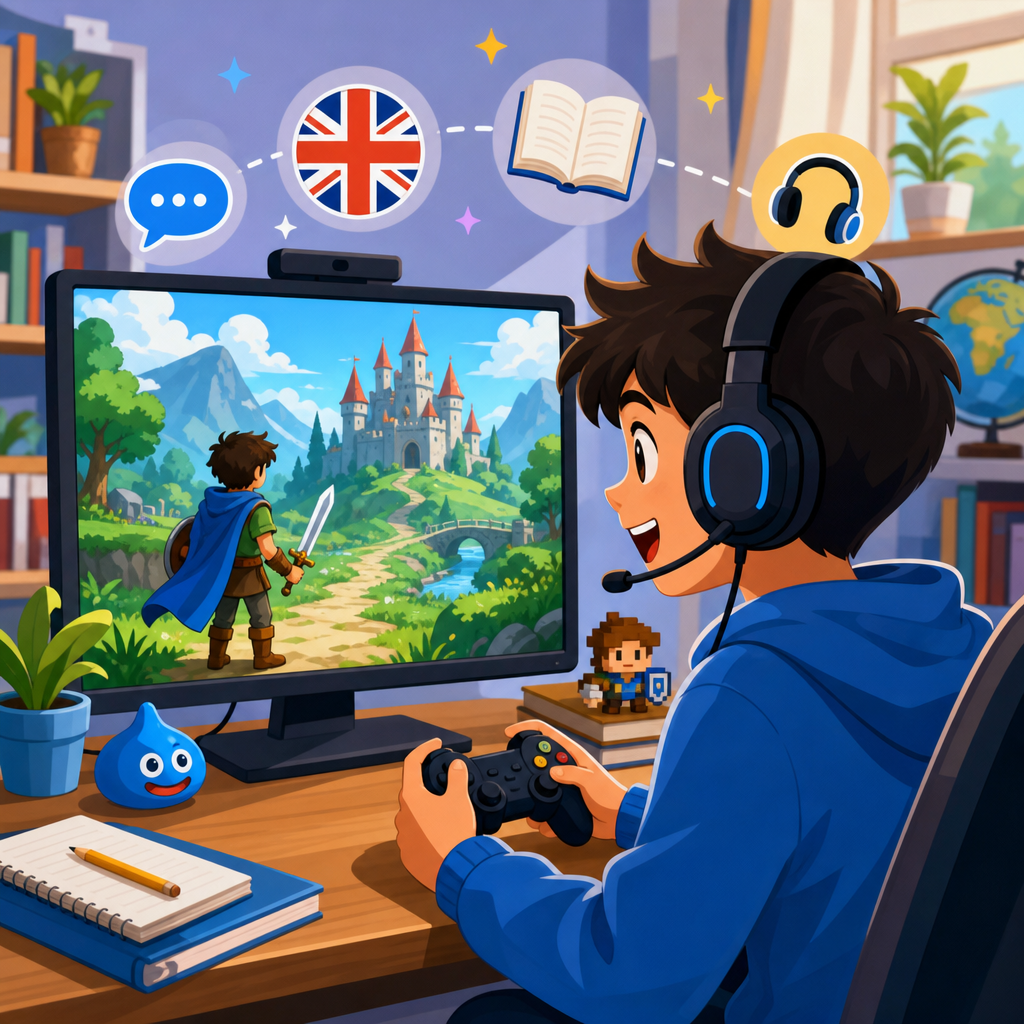
Learning English through video games is one of the most practical ways to build real-world language skills because games combine listening, reading, speaking, problem solving, and cultural context in one highly motivating format. For ESL learners, “video game English” means the vocabulary, phrases, accents, slang, instructions, and social interaction commonly found in console, PC, and mobile games. “Pop Culture English” refers to the language people use when discussing entertainment, trends, memes, fandoms, livestreams, and shared cultural references. I have worked with English learners who made faster progress after adding games to their study routine, not because games are magic, but because they create repeated exposure to meaningful language. A quest log teaches sequencing. Multiplayer chat teaches turn-taking. Story-driven dialogue teaches tone and implication. Just as important, games connect learners to conversations happening outside the classroom, which is the core of real-world usage.
This matters because many learners can pass grammar exercises yet still struggle when a coworker mentions a game release, a Twitch streamer, a meme, or a phrase like “level up,” “grind,” or “rage quit.” Those expressions now appear far beyond gaming spaces. They show up in business presentations, social media captions, and casual conversations. Video games also expose learners to varieties of English they may not hear in textbooks, including regional accents, informal contractions, and fast interactive speech. When used carefully, games become a bridge between academic English and contemporary culture. They can improve vocabulary retention, strengthen reading speed, build listening stamina, and increase confidence in speaking. This hub article explains how video games support English development, which language skills they teach best, how to choose the right games, what cultural knowledge learners gain, and how this topic connects to broader pop culture English.
Why Video Games Are Effective for English Learning
Video games are effective because they create purposeful repetition. In a textbook, a learner may see the word “inventory” once in a unit. In a game, that learner reads it repeatedly while managing items, comparing equipment, or following a tutorial. The same is true for verbs like “craft,” “equip,” “upgrade,” “unlock,” and “defend.” Repetition matters most when it is attached to action, and games do that naturally. Cognitive research on language acquisition consistently shows that learners remember vocabulary better when words are tied to meaningful tasks, immediate feedback, and emotional engagement. Games provide all three. If a player misunderstands “take cover,” the result is immediate. If they understand it, they survive and continue. That consequence makes the phrase memorable.
Games also lower the fear of making mistakes. In many classrooms, students hesitate because speaking incorrectly feels embarrassing. In games, trial and error is expected. Players fail, restart, and improve. That mindset transfers well to language learning. I have seen learners become far more willing to guess the meaning of unfamiliar expressions after spending time with role-playing and cooperative games. They stop waiting for perfect understanding and begin using context, which is exactly what skilled language users do. Another advantage is multimodal input. Most games combine subtitles, voice acting, menus, maps, icons, and mission markers. When learners hear a line, read it on screen, and see the resulting action, comprehension becomes easier and more durable.
What English Skills Games Build Best
Different game genres develop different skills. Story-driven role-playing games are excellent for reading comprehension, narrative vocabulary, and inference. Players follow dialogue trees, understand motives, and interpret consequences. Simulation games build practical vocabulary related to time, money, planning, resources, and routines. Puzzle and adventure games often strengthen instruction-following, sequencing, and descriptive language. Multiplayer games are especially useful for listening and speaking because they require fast responses, clarification, and teamwork. Learners hear authentic phrases such as “behind you,” “hold on,” “good game,” “my bad,” and “let’s rotate left.” These are not polished textbook sentences, but they are common, useful, and socially meaningful.
Pronunciation and listening improve when learners shadow short lines from games with clear voice acting. Open-world titles often include ambient conversations, radio dialogue, and mission briefings that train learners to handle varied speech rates. Reading speed improves because interface text must be processed quickly. Even writing can develop through guild chats, forum posts, in-game messaging, and fan communities. The key is matching the game to the learner’s level and goal. A beginner may benefit from a life simulation game with repetitive daily actions and simple menu language. An intermediate learner may progress faster with a narrative game that includes subtitles and dialogue choices. An advanced learner can use competitive team games to practice rapid listening, negotiation, and pragmatic politeness under pressure.
Best Game Types for Different Learners
Not every game helps in the same way, and choosing the right one prevents frustration. Beginners usually need slow pacing, clear text, repeated actions, and strong visual clues. Games like The Sims, Animal Crossing, or Stardew Valley are useful because they teach everyday vocabulary through routines: cooking, shopping, gardening, relationships, schedules, and household items. Intermediate learners often benefit from games that add richer dialogue and more complex objectives. Minecraft can support language through crafting terms, collaboration, and instructional content on YouTube. Pokémon titles are helpful for descriptive adjectives, commands, and type-based strategy language. Advanced learners can work with games heavy in dialogue or teamwork, such as Baldur’s Gate 3, Final Fantasy XIV, or cooperative shooters, where understanding nuance and reacting quickly matter.
One practical way to compare options is to look at language density, interaction style, and cultural value. The table below summarizes what I recommend most often when helping learners build a balanced pop culture English plan.
| Game type | Best for | Useful English examples | Main caution |
|---|---|---|---|
| Life simulation | Beginners, everyday vocabulary | cook, furniture, schedule, neighbor, harvest | Limited natural conversation speed |
| Role-playing games | Reading, story comprehension, choices | quest, rumor, persuade, alliance, evidence | Can contain dense text |
| Sandbox/building games | Instructions, collaboration, tutorials | craft, mine, stack, survival, resource | Community language may be slang-heavy |
| Multiplayer team games | Listening, speaking, fast interaction | push, defend, rotate, revive, regroup | Voice chat can be toxic |
| Narrative adventure | Tone, inference, conversational English | I guess, maybe, trust, clue, figure out | Less repetition of target words |
How Games Teach Pop Culture English
Video games are a major part of modern entertainment culture, so they teach more than language inside the game. They also teach the language around the game: reviews, reaction videos, patch notes, memes, fan theories, livestream commentary, and social media discussion. This is where pop culture English becomes especially valuable. A learner who understands “open world,” “NPC,” “speedrun,” “loot,” “boss fight,” “side quest,” and “nerf” can follow conversations on YouTube, Reddit, Discord, and TikTok with far less effort. Many of these words now function as general metaphors. People say they are “grinding” at work, “unlocking” a new skill, or facing a “boss level” problem. Knowing the original gaming meaning helps learners understand the figurative one.
Games also introduce cultural references that appear in wider English-speaking media. Fortnite concerts, Minecraft education projects, The Last of Us adaptation discussions, and Pokémon brand vocabulary all influence mainstream conversation. If a learner hears “speedrun this task” in an office or sees “NPC behavior” in a meme, that language comes from gaming culture but lives far beyond it. This is why the topic belongs at the center of pop culture English. It links entertainment, internet communication, humor, identity, and community. Learners who ignore gaming may still succeed academically, but they often miss a large share of current informal English. Understanding these references improves social fluency, especially with younger speakers, online communities, and international workplaces where shared entertainment topics often start casual conversation.
How to Study English With Games, Not Just Play Them
Playing alone is not enough. Progress comes from turning gameplay into structured exposure. The first method I recommend is “selective noticing.” Choose one target each week, such as travel phrases, combat verbs, or disagreement language. While playing, pause to record useful lines in a notebook or notes app. Capture the full sentence, not just the word. “We need to head back before dark” is better than writing only “head back.” The second method is subtitle control. Start with English audio and English subtitles if comprehension is low. As listening improves, turn subtitles off for short sections, then check accuracy by turning them back on. The third method is retelling. After a session, explain what happened out loud in simple English. This converts passive understanding into active language.
For stronger results, combine games with surrounding media. Read a short review before playing. Watch a beginner guide from an English-speaking creator. Join a moderated Discord server or subreddit and notice how players ask for help, give advice, disagree politely, or joke. These connected activities expand vocabulary and expose learners to authentic written English. I also recommend using established tools such as YouGlish for pronunciation checks, Cambridge Dictionary for usage examples, and spaced repetition apps like Anki or Quizlet for review. If the game includes patch notes or update announcements, read those too. They are excellent for learning cause and effect language: fixed, improved, reduced, increased, adjusted, removed. That style is clear, current, and very useful in technical and workplace communication.
Common Problems and How to Avoid Them
The biggest problem is choosing a game that is too hard linguistically. If a learner cannot follow the interface or mission goals, frustration replaces learning. The solution is to start below your maximum level, not at it. Another issue is overexposure to slang, trash talk, or toxic voice chat. Multiplayer spaces can teach authentic English, but not all of it is worth copying. Learners should treat these environments like crowded public spaces: useful for listening practice, but requiring judgment. Mute abusive players, avoid repeating insults, and focus on communication that is functional and respectful. Parents and teachers should also check age ratings and community moderation before recommending titles to younger learners.
A second common mistake is assuming that any improvement in game performance means improvement in English. The two are related but not identical. A learner may memorize interface patterns without actually understanding the language deeply. To avoid that, use output tasks: summarize a quest, write a character description, explain a strategy, or teach a friend how to complete a level. Another limitation is accent range. Some games have excellent voice acting, while others use stylized speech, fantasy terminology, or minimal spoken dialogue. Balance gaming with podcasts, films, and real conversations to avoid narrow exposure. Used well, games are a strong component of English learning, but they work best as part of a broader system that includes deliberate vocabulary review, speaking practice, and regular contact with non-gaming English.
Why This Topic Anchors Pop Culture English
Learning English through video games is more than a study tip; it is a gateway into contemporary culture. Games connect to music, film, streaming, memes, sports-style competition, and online identity. They generate phrases that move into everyday speech and create communities where English is used for real purposes, not classroom exercises. For an ESL learner exploring cultural English and real-world usage, this topic works as a hub because it naturally leads to related areas: internet slang, livestream language, fandom vocabulary, small talk about entertainment, digital etiquette, and cross-cultural humor. It also helps learners understand how modern English changes. New terms spread quickly, meanings shift, and communities shape usage in public view.
The main benefit is practical confidence. When learners can understand a quest, follow a stream, discuss a game update, or recognize a gaming reference in conversation, English feels alive and current. Start with one game that matches your level, keep a record of useful expressions, and turn play into a repeatable study habit. Over time, that habit will strengthen reading, listening, vocabulary, and cultural fluency together. If you want to build real-world English that reaches beyond textbooks, use video games as an entry point and then expand into the wider world of pop culture English through reviews, communities, and everyday conversation.
Frequently Asked Questions
How can video games actually help someone learn English?
Video games help learners build English in a way that feels natural because they combine multiple language skills at the same time. Instead of studying isolated word lists, players read menus, follow instructions, listen to dialogue, react to subtitles, understand mission goals, and often communicate with other people in real time. This creates repeated exposure to useful vocabulary and phrases in a meaningful context, which is one of the most effective ways to remember new language.
Games also support comprehension through action. When a player sees the phrase “collect resources,” “equip your weapon,” or “join the team,” the meaning becomes clear because it is tied to something happening on the screen. That connection between language and action helps learners understand and retain English faster than memorizing definitions alone. Many games also repeat core vocabulary often, which reinforces learning without making it feel like formal practice.
Another major advantage is motivation. Learners are usually more willing to stay engaged with English when they are focused on winning, exploring, building, solving puzzles, or cooperating with teammates. That motivation increases exposure time, and more exposure usually leads to stronger listening, reading, and speaking skills. In addition, games introduce players to real-world conversational English, including pop culture references, slang, humor, and everyday expressions that are not always taught in traditional textbooks.
What kind of English can learners pick up from video games?
Learners can pick up a wide range of English through games, from basic functional vocabulary to more advanced conversational patterns. At the most practical level, games teach action words, instructions, directions, and problem-solving language such as “move,” “wait,” “upgrade,” “search,” “defend,” “turn left,” “save progress,” and “complete the objective.” These words are useful because they appear frequently and are connected to clear situations.
Games also expose learners to dialogue-based English, which includes greetings, questions, persuasion, emotional reactions, and teamwork language. In multiplayer games, players often hear or use phrases like “cover me,” “nice job,” “let’s go,” “I need help,” “watch out,” or “good game.” These are short, memorable expressions that reflect real communication under pressure. Story-driven games can add another layer by introducing learners to narration, humor, sarcasm, regional accents, and character-driven conversation.
Beyond core language, video games are a strong source of pop culture English. Learners become familiar with the way people talk about trends, fandoms, updates, streamers, online communities, competition, and digital entertainment. This matters because real English fluency includes understanding how native and advanced speakers discuss media, memes, internet culture, and social interaction. In that sense, video game English is not only about gameplay vocabulary. It is also about learning how modern English is actually used in contemporary life.
Are some types of video games better for learning English than others?
Yes, some game genres are especially useful depending on the learner’s level and goals. Story-rich adventure games, role-playing games, and simulation games are often excellent for English learning because they include large amounts of dialogue, subtitles, menus, quests, and contextual language. These games give learners time to read and think, which is helpful for building vocabulary and comprehension. Games with strong narratives can also improve understanding of tone, emotion, and sentence structure because players follow conversations in context.
Multiplayer games can be extremely valuable for speaking and listening practice, especially when they require teamwork. Cooperative games encourage players to give instructions, ask questions, respond quickly, and interpret casual speech from other players. This kind of interaction can improve practical communication skills and listening speed. However, beginners may find fast voice chat challenging, particularly when players use slang, abbreviations, or different accents.
For learners who want a balanced approach, games with optional subtitles, adjustable difficulty, clear menus, and moderate pacing are often the best choice. Mobile and casual games can also be useful for learning simple commands and repeated vocabulary, while strategy and building games can introduce analytical language related to planning, resources, timing, and decision-making. The best game is usually one that the learner genuinely enjoys, because consistent exposure matters more than choosing a “perfect” title. If a game keeps the learner engaged and provides understandable English input, it can become a powerful learning tool.
What is the best way to study English while playing video games without losing the fun?
The most effective approach is to keep the experience enjoyable while adding light, intentional learning habits. A good starting point is to play in English with subtitles turned on, if available. This helps learners connect spoken language with written words and makes it easier to notice pronunciation, vocabulary, and sentence patterns. Instead of stopping to translate everything, it is usually better to focus on understanding the main idea and only write down words or phrases that seem useful or repeated.
Keeping a small vocabulary list can be very helpful, especially if learners organize words by situation rather than by alphabetical order. For example, they can create sections like combat phrases, social phrases, quest language, menu vocabulary, or emotional reactions. Short notes such as “level up = improve,” “loot = items collected,” or “respawn = return after losing” are easier to remember because they connect directly to gameplay experience. Reviewing these notes after playing for even five or ten minutes can make a big difference over time.
Speaking practice can also be built into gaming naturally. Learners can repeat useful lines aloud, describe what they are doing while playing, or join cooperative games where communication is necessary but manageable. Watching streamers or gameplay videos in English is another smart strategy because it adds commentary, reaction language, and conversational rhythm. The key is not to turn every session into a formal lesson. Instead, learners should use simple habits that increase attention to language while preserving the enjoyment that makes gaming such an effective learning environment in the first place.
Can learning English through video games improve real-life communication skills?
Yes, it can improve real-life communication skills, especially when gaming is used consistently and actively. Video games expose learners to practical listening and reading input, but they also train fast comprehension, response timing, and contextual understanding. In everyday communication, people do not speak in slow textbook sentences. They interrupt, react emotionally, use shortened expressions, and refer to shared culture. Games prepare learners for this by presenting English in dynamic, interactive situations rather than only in controlled classroom exercises.
Multiplayer games are particularly useful for building confidence in spontaneous communication. Players often need to ask for clarification, make quick decisions, give instructions, agree or disagree, and respond to unexpected situations. These are real communication skills. Even when the vocabulary is game-related, the interaction patterns are transferable to everyday English. A learner who gets comfortable saying “I’m not ready yet,” “Can you repeat that?” “Let’s try again,” or “What do you mean?” is developing language that can be used in school, work, and social settings.
Games also help learners understand cultural context, which is essential for natural communication. Through characters, jokes, online communities, and pop culture references, players begin to notice how English speakers express personality, humor, politeness, frustration, and enthusiasm. That kind of cultural awareness makes conversations smoother and more authentic. While video games should not be the only method used to learn English, they can absolutely become a strong part of a broader learning strategy that includes speaking, reading, listening, and interaction outside the game world.