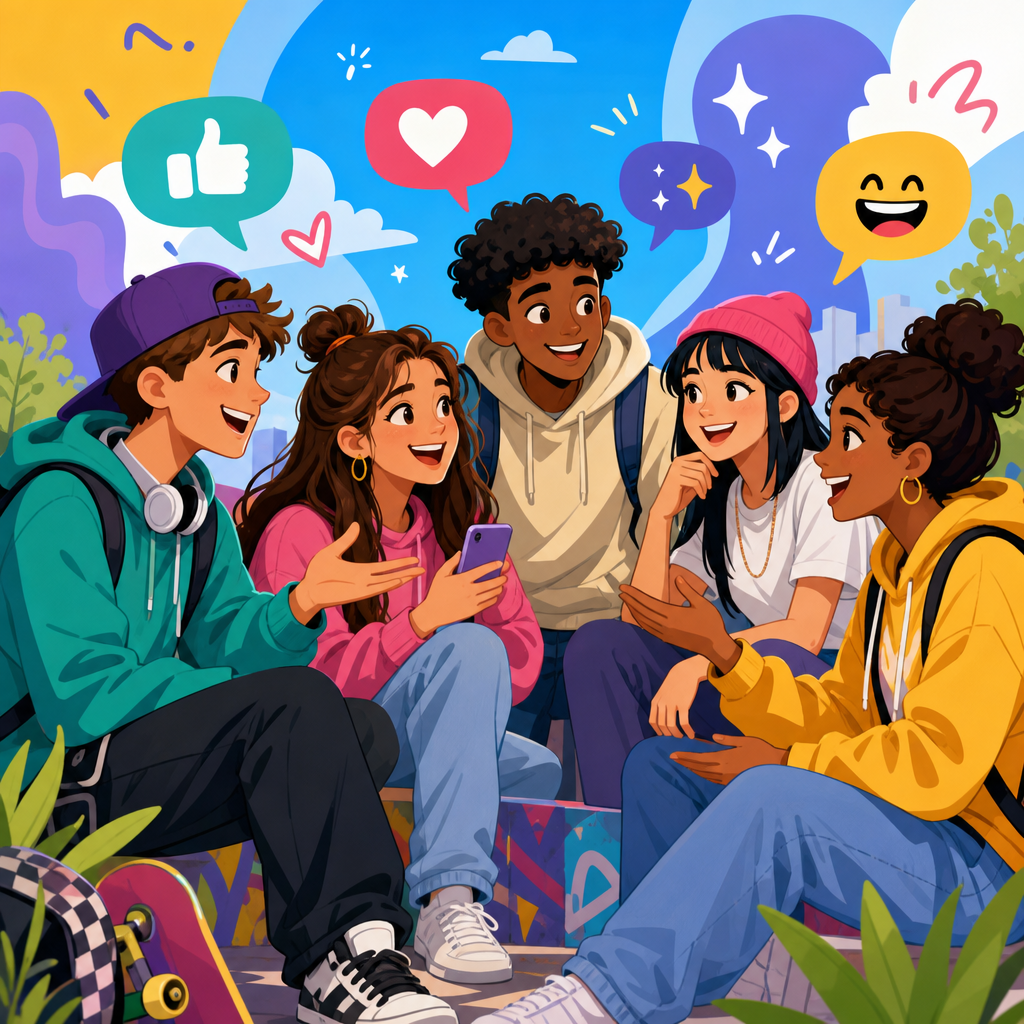
Youth slang in English changes fast, but learning how it works gives ESL learners a practical advantage in conversations, social media, films, and everyday listening. In simple terms, youth slang is informal language used mainly by younger speakers to signal identity, humor, attitude, and belonging. It includes single words such as “lit,” abbreviations such as “TBH,” reaction terms such as “cringe,” and expressions that spread through music, gaming, TikTok, YouTube, texting, and school culture. I have taught this area to learners who knew textbook English well yet still felt lost when native speakers said, “That’s low-key iconic” or “He’s capping.” The problem was not grammar; it was cultural meaning, context, and speed. That is why a clear guide to youth slang in English matters. It helps learners understand real speech, avoid confusion, and decide when to use informal English safely. This hub article explains the major categories of slang, where slang comes from, how meanings shift, what common expressions mean, and how to use them without sounding unnatural or offensive.
What youth slang is and how it functions
Youth slang in English is not random broken English. It follows patterns, and those patterns reveal social meaning. In practice, slang often does four jobs. First, it marks group identity. Teenagers and young adults use shared vocabulary to show they belong to a community, whether that community is based on school, gaming, music, sports, fandom, or online culture. Second, slang compresses meaning. Saying “It slaps” is a quick way to say a song is extremely good and energetic. Third, slang adds emotional tone. Compare “embarrassing” with “cringe”: both refer to discomfort, but “cringe” often feels more immediate and socially loaded. Fourth, slang evolves to stay fresh. Once adults, brands, or institutions adopt a term widely, younger speakers may replace it.
For ESL learners, one key point is that slang depends on register. Register means the level of formality suitable for a situation. A phrase that works in a group chat may sound inappropriate in a job interview, academic essay, or email to a teacher. I often tell learners to separate three questions before using any slang term: What does it literally mean? What social attitude does it carry? In which setting is it acceptable? Those questions prevent the most common mistake, which is using a trendy expression correctly in grammar but incorrectly in context.
Where modern English slang comes from
Modern youth slang comes from several overlapping sources, and understanding those sources helps learners understand why slang spreads so quickly. A major source is African American Vernacular English, which has influenced mainstream English vocabulary, rhythm, and expression for decades through music, comedy, television, and internet culture. Terms such as “tea,” “shade,” “cap,” and “finna” entered wider circulation through this path, although usage and acceptance vary by region and community. Another source is internet platform culture. TikTok, X, Instagram, Twitch, Discord, Reddit, and YouTube can push a phrase from a niche group into international use within days.
Gaming is another strong source. Words such as “nerf,” “grind,” “main,” “carry,” and “noob” moved from game-specific communities into broader youth speech. Music scenes also matter. Hip-hop, drill, K-pop fandoms, and electronic music communities constantly create and recycle terms. School environments produce local slang, while immigrant communities contribute vocabulary from multiple languages. British youth slang and American youth slang also influence each other through streaming platforms. In my experience, learners improve faster when they stop treating slang as a list of isolated words and instead see it as a living system shaped by media, geography, age, and community.
Core categories of youth slang every ESL learner should know
Most youth slang in English falls into a few practical categories. Understanding these categories makes new expressions easier to decode. Evaluation slang describes whether something is good, bad, impressive, awkward, or boring. Examples include “fire,” “mid,” “trash,” “clean,” and “goated.” Identity and social-position slang describes people and behavior, such as “NPC,” “pick-me,” “simp,” or “try-hard.” Reaction slang expresses feelings in real time: “dead,” “I can’t,” “yikes,” “oof,” and “valid.” Honesty and exaggeration slang helps speakers comment on truth, including “cap,” “no cap,” “for real,” and “low-key.” Relationship slang includes “ghost,” “soft launch,” “situationship,” and “link up.” Internet-native abbreviations such as “IMO,” “TBH,” “IRL,” and “POV” shape online communication and often enter speech.
One practical rule is to learn the social force of each word, not only the dictionary meaning. “Mid” does not just mean average; it is often dismissive. “Extra” does not simply mean more; it criticizes behavior as excessive or dramatic. “Delulu,” short for delusional, is often playful but can still sound insulting. “Based” usually praises someone for being confidently authentic, especially when others disagree. “Sus,” from suspicious, can refer to something questionable, deceptive, or strange. Once learners group slang by function, listening becomes easier because they can infer meaning from situation and tone.
Common youth slang terms and how to use them correctly
The safest way to learn slang is through examples with context. “Lit” means exciting, lively, or excellent: “The party was lit.” “Cringe” describes something socially embarrassing: “That joke was cringe.” “Cap” means a lie, while “no cap” means truthful or serious: “He said he ran ten miles? That’s cap.” “Bet” can mean agreement, like “okay” or “sounds good”: “Meet at six?” “Bet.” “Slay” means to do something exceptionally well, especially in style or performance: “She slayed that presentation.” “Low-key” means somewhat, secretly, or not too openly: “I low-key liked the movie.” “High-key” is the stronger version. “Ghost” means suddenly stop replying to someone. “Flex” means show off. “Vibe” refers to mood, atmosphere, or emotional impression.
Usage errors usually happen for three reasons. First, learners overuse one trendy term until it sounds forced. Second, they copy a word from a video without noticing the speaker’s age, region, or humor. Third, they miss whether the word is current, fading, or already outdated. For example, “on fleek” had a strong moment years ago but now often sounds dated or ironic. “Rizz,” meaning charisma or flirting ability, became widely recognized quickly, but it still fits casual settings, not formal ones. If you are unsure, use receptive knowledge first: understand the term before actively using it.
How meaning changes across regions, communities, and age groups
Not all English-speaking communities use the same slang in the same way. American, British, Canadian, Australian, and online global English overlap, but important differences remain. In the United States, “mad” may intensify an adjective in some areas, while in British English “cheeky,” “peng,” or “gobsmacked” carry distinct local flavor. In London youth speech, multicultural urban influence has shaped many expressions that do not sound natural in other regions. Age matters too. A 14-year-old, a university student, and a 35-year-old social media manager may all know the same term but use it differently. Sometimes adults use youth slang jokingly, strategically, or to market products, which can make the slang feel less authentic to younger speakers.
This is why pronunciation, timing, and speaker identity matter. I have seen advanced ESL learners use a current term correctly but still sound off because they used it in a stiff tone or with the wrong social distance. Slang is partly vocabulary and partly performance. It depends on pace, stress, facial expression, and relationship. The same phrase can sound friendly, sarcastic, playful, or rude depending on delivery. Learning from real clips, not just word lists, is essential.
How to decide when slang is appropriate
Using slang well is mostly a question of judgment. Before saying a slang expression, check the setting, the relationship, and the risk. In close friendships, online chats, casual class discussions, and entertainment contexts, some slang may sound natural. In customer service, business communication, visa interviews, presentations, and academic writing, it usually does not. The most reliable rule is this: understand broadly, use selectively. Native speakers follow this rule too. Skilled communicators switch styles depending on audience, a concept often called code-switching or style-shifting.
| Situation | Slang use | Better choice |
|---|---|---|
| Texting a close friend | Usually fine | “That party was lit” |
| Class essay | Avoid | “The event was highly energetic” |
| Job interview | Avoid | “I communicated effectively with the team” |
| Casual social media comment | Sometimes fine | “This song slaps” |
| Email to a professor | Avoid | “I would appreciate your feedback” |
If you want a practical filter, ask whether the slang adds clarity or only performs trendiness. If it only tries to sound cool, skip it. Clear English builds trust faster than borrowed slang used awkwardly.
How to learn youth slang without sounding unnatural
The best method is to study slang as listening comprehension first. Build a small personal glossary with four notes for each term: meaning, tone, example sentence, and safe context. Use authentic sources such as subtitles, creator videos, song interviews, podcasts, and comments, but compare multiple examples because one clip may be sarcastic or regional. Tools like YouGlish can help with real usage, while corpora and learner dictionaries help verify frequency and meaning. When I coach learners, I tell them to wait until they have heard a term naturally at least five times before using it themselves. That delay improves accuracy.
Practice paraphrasing too. If you hear “That fit is fire,” be able to restate it as “That outfit looks great.” If you can paraphrase the slang, you actually understand it. Also learn expiration dates. Some terms become mainstream and stable, while others disappear quickly. Keep your active slang vocabulary small and current. A few natural expressions used well are far better than many used badly. Most important, never imitate a community’s speech pattern without understanding its cultural background. Respectful learning means recognizing origin, nuance, and limits.
Common mistakes, risks, and cultural sensitivities
Some slang is harmlessly playful, but some carries stronger social or cultural weight. Borrowed terms from specific communities can sound disrespectful if used carelessly. Other expressions may seem funny online yet become offensive in person. Sarcasm also creates risk. A learner may understand the words but miss the ironic intention. Another issue is direct translation. Slang usually does not translate word for word across languages because it depends on local humor, shared references, and social norms. That is why memorizing lists without context leads to mistakes.
There is also a difference between understanding controversial slang and choosing to use it. You should recognize terms related to insult, dating, gender, status, or conflict because they appear online often, but recognition does not mean recommendation. In teaching, I focus on comprehension, neutral alternatives, and situational awareness. That approach protects learners from embarrassment and helps them join informal conversations without crossing lines. Good slang knowledge is not about copying everything young speakers say. It is about understanding what people mean, what attitude they express, and what response fits the moment.
Youth slang in English is one of the clearest windows into real-world usage because it shows how language, culture, identity, and media interact in everyday life. For ESL learners, the goal is not to chase every new viral word. The goal is to understand common slang quickly, recognize where it comes from, and use only the expressions that fit your voice and the situation. If you remember the core principles in this guide, you will make steady progress: slang has patterns, context matters more than translation, online popularity does not guarantee safe usage, and receptive understanding should come before active use. Start with the most frequent categories, notice tone and setting, and keep a short glossary from real examples. Over time, films, group chats, podcasts, and social posts will become much easier to follow. Use this hub as your starting point for deeper study of texting language, internet abbreviations, regional slang, and informal conversation skills, then practice by listening for one new expression each day.
Frequently Asked Questions
What is youth slang in English, and why does it matter for ESL learners?
Youth slang in English is informal, fast-changing language commonly used by teenagers and young adults in conversation, texting, social media, gaming, music, and pop culture. It often includes short expressions, creative meanings, abbreviations, memes, reaction words, and phrases that may not appear in traditional textbooks. Words like “lit,” “cringe,” “TBH,” or “low-key” are good examples because they carry emotional tone, social meaning, and cultural context beyond their literal definitions. In many cases, slang helps speakers show humor, personality, attitude, group identity, or a sense of belonging.
For ESL learners, understanding youth slang matters because real-world English is not limited to grammar exercises and formal vocabulary. If you watch videos online, listen to native speakers, follow influencers, read comments, or talk with younger English speakers, you will hear slang regularly. Even if you do not plan to use much slang yourself, recognizing it can improve your listening comprehension and help you avoid confusion. It also helps you understand tone more accurately. For example, if someone says a video is “cringe,” they are not simply describing it as strange; they are reacting to it as awkward or embarrassing in a socially specific way.
Learning youth slang also gives learners practical cultural insight. It shows how English evolves, how identity works in language, and how younger speakers create meaning quickly and creatively. That said, slang should be learned carefully. Some terms are playful and common, while others may be very local, very temporary, or inappropriate in formal settings. The best goal is not to memorize every trending word, but to understand how slang functions and how to recognize it in context.
Where does English youth slang come from?
English youth slang comes from many sources, and that is one reason it changes so quickly. A large amount of slang spreads through social media platforms such as TikTok, YouTube, Instagram, Snapchat, and X, where trends can go viral in days. Music scenes, especially hip-hop, rap, pop, and electronic culture, also influence everyday slang by introducing phrases that fans repeat and adapt. Gaming communities are another major source, contributing reaction terms, abbreviations, and expressions related to performance, competition, and online interaction.
School culture and friend groups are equally important. Young people often create or popularize phrases within local communities, then those expressions spread more widely through online sharing. Television, films, livestreams, memes, and internet humor also shape the language. In addition, much youth slang develops from older slang, regional dialects, African American Vernacular English, multicultural urban speech, and other community-based language varieties. As terms move from one group to another, meanings may shift, broaden, or become simplified.
This is why slang is not just random vocabulary. It reflects social trends, technology, identity, humor, and cultural influence. A term may begin in one online space, become popular in schools, appear in songs, and then reach international learners through subtitles and short-form video. For ESL students, this means slang should be understood as part of living English, not as a fixed list of words. The origin of a term can affect who uses it, how natural it sounds, and whether it is appropriate for you to use in a particular situation.
How can I understand youth slang without getting lost or overwhelmed?
The smartest approach is to focus on patterns instead of trying to learn every new word. Youth slang changes constantly, so it is more useful to understand categories such as reaction words, abbreviations, intensifiers, approval terms, and ironic expressions. For example, some slang expresses positive judgment, such as “lit” or “fire,” while other slang signals embarrassment or disapproval, such as “cringe.” Abbreviations like “TBH” often function as shortcuts for tone, helping speakers sound casual, direct, or emotionally honest. When you learn what kind of job a slang term does in a sentence, it becomes easier to interpret new examples.
Context is your best tool. Pay attention to where the word appears, who says it, what emotion is being expressed, and whether the speaker seems serious, playful, sarcastic, or ironic. If a comment under a video says, “This is so cringe,” the situation, facial expressions, and reactions around it usually help explain the meaning. Watching short videos with subtitles, reading comments, and listening to repeated usage are excellent ways to build understanding naturally. Online slang dictionaries can help, but they should not be your only source, because meanings online are sometimes outdated or exaggerated.
It is also helpful to keep a personal slang notebook or digital list. Write down the word, the sentence you saw it in, the possible meaning, and whether it sounded positive, negative, funny, or casual. Over time, you will notice that many slang terms follow familiar social functions. You do not need perfect mastery. If you can identify tone, general meaning, and level of formality, you are already making strong progress. For most learners, understanding slang first and using it later is the most effective path.
Should ESL learners use youth slang themselves, or is it better just to understand it?
In most cases, it is best for ESL learners to understand youth slang first and use it selectively. Comprehension is essential because it helps you follow real conversations, media, and online content. Using slang is more complicated, because slang depends heavily on timing, age group, region, tone, and social context. A word that sounds natural in one friend group may sound strange, outdated, or forced in another. Some terms also become unpopular very quickly, so learners who copy older slang may unintentionally sound unnatural.
That does not mean you should avoid slang completely. If you hear a term often, understand its tone clearly, and know it is common in your environment, using it occasionally can make your English sound more relaxed and current. Simple, widely understood expressions are usually safer than highly specific or trend-based ones. However, learners should be cautious with slang connected to identity, cultural background, or communities they do not fully understand. Some expressions carry deeper social meaning and may not be appropriate to borrow casually.
A good rule is to match your language to the setting. Slang can work in informal chats, text messages, or conversations with friends, but it usually does not belong in academic writing, professional emails, interviews, or formal presentations. If you are unsure, listen first. Notice which words are used naturally by people around you and in what situations. Language confidence comes not from using the newest expression, but from choosing the right words for the moment. For that reason, careful observation is often more powerful than trying to sound trendy.
How can I keep up with new English slang as it changes over time?
The most reliable way to keep up with youth slang is to build regular exposure into your English learning routine. Follow authentic content where younger speakers actually communicate: short videos, vlogs, gaming streams, music interviews, school-related content, and social media comments. Subtitled video is especially useful because it lets you connect spoken slang with spelling, pronunciation, and tone. Repetition matters. If you see the same term across multiple platforms and speakers, it is more likely to be genuinely current and widely understood.
You should also compare sources. A slang term used by one influencer may be highly niche, while a phrase used in different videos, group chats, and entertainment content may have broader value. Looking at example sentences is more helpful than memorizing a one-line definition. Ask yourself: Is this positive or negative? Is it used seriously or ironically? Is it more common in text than speech? Is it used by teens, college students, gamers, or specific online communities? These questions help you learn the practical life of the word, not just its dictionary meaning.
Finally, accept that not all slang is worth learning. Some expressions disappear quickly, and others are only useful in narrow contexts. Your goal should be functional understanding, not total coverage. If you can recognize common reaction words, abbreviations, and tone markers, you will already understand a large part of modern informal English. Keep your attention on high-frequency terms, stay curious, and update your knowledge gradually. Slang will always change, but with consistent exposure and careful observation, you can stay comfortable with the way real English is spoken by younger generations.