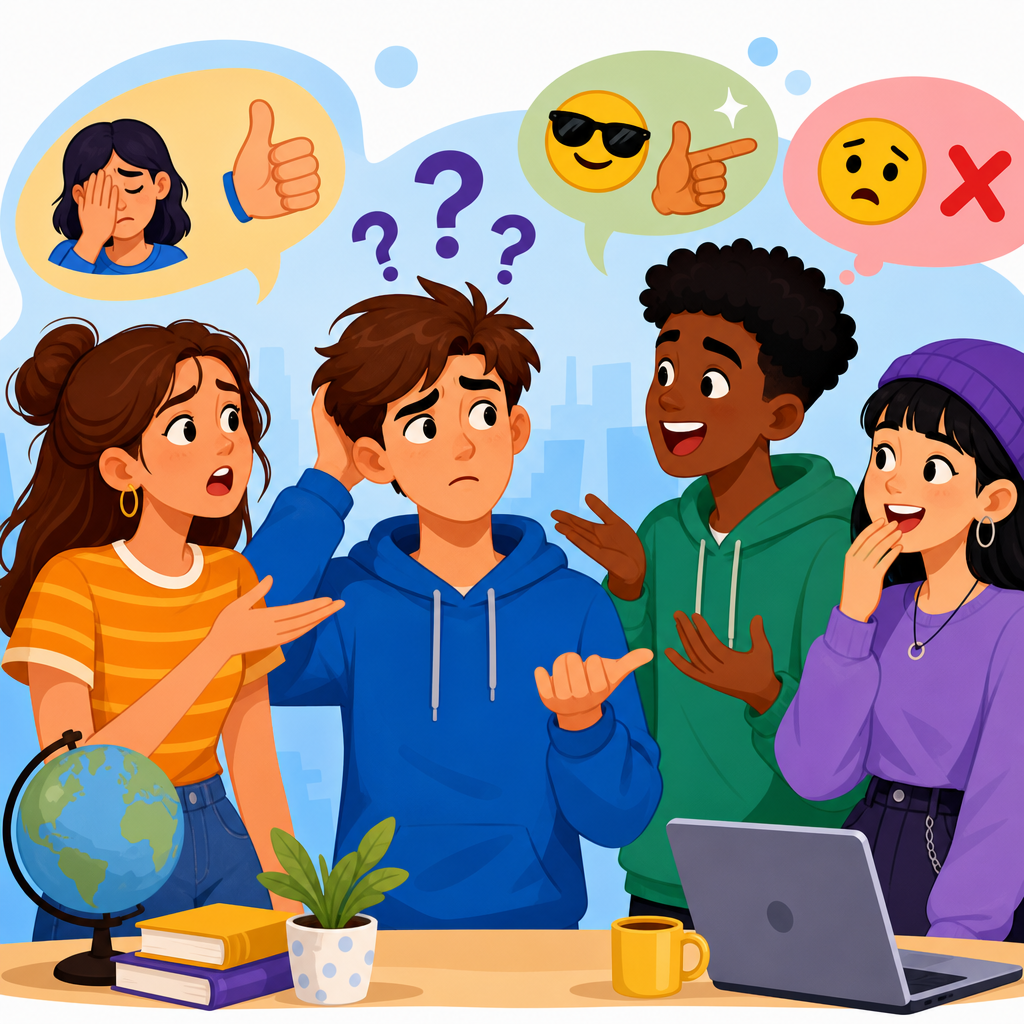
Common mistakes when using English slang usually happen because slang changes fast, depends heavily on context, and often carries social meaning beyond the dictionary definition. For ESL learners, slang can make conversations sound natural and help with movies, social media, music, and workplace small talk, but it can also create confusion, embarrassment, or even offense when used carelessly. In this sub-pillar hub for slang and informal English, I will break down what slang is, why learners misuse it, and how to use it accurately in real-world situations. Slang refers to informal words or expressions used by particular groups, regions, or generations. It is different from standard vocabulary, idioms, and profanity, although these categories sometimes overlap. A phrase like “hang out” is widely accepted informal English, while words like “lit,” “salty,” or “cringe” carry stronger signals about age, platform, and tone. That distinction matters. In my experience teaching and editing learner English, the biggest problem is not pronunciation or grammar alone. It is register: knowing what sounds natural with friends, what sounds forced, and what should never be said in class, at work, or with strangers. Learners often memorize slang from TikTok, Netflix, rap lyrics, or gaming streams, then use it everywhere. That approach fails because slang is not a list of cool words. It is a social tool tied to identity, timing, relationship, and place. Understanding the common mistakes when using English slang helps learners sound more fluent, avoid awkward moments, and build stronger listening skills across real conversations.
Using slang without understanding register, audience, or setting
The most common error is using slang in the wrong situation. Register means the level of formality that fits a context. Slang belongs mainly to casual speech, texting, peer conversations, and some online communities. It usually does not belong in academic writing, job interviews, customer emails, legal discussions, or first meetings with senior colleagues. I have seen learners write sentences such as “I was super hyped to join your company” in application emails or tell a professor that an assignment was “kinda lame.” Native speakers immediately notice the mismatch. The words may be understandable, but they damage credibility because they sound immature or disrespectful. A safer rule is simple: if the relationship is not clearly casual, choose standard English first. Slang should be earned by context, not inserted automatically.
Audience matters just as much as setting. Some slang is friendly among close friends but inappropriate with older relatives, customers, or people from different cultural backgrounds. The phrase “What’s up?” is broadly safe. Calling someone “bro,” “dude,” or “man” can be acceptable in some circles but rude or strange in others, especially across gender, age, or professional boundaries. Terms that sound playful in one group may sound dismissive in another. This is why advanced fluency depends on observation. Before using new slang, listen to who says it, to whom, and in what tone. If you cannot answer those three questions, you are not ready to use it confidently.
Treating slang as universal when it is regional, generational, or community-based
Another major mistake is assuming that one slang expression works everywhere English is spoken. English slang varies widely across the United States, the United Kingdom, Canada, Australia, Ireland, South Africa, and other English-speaking communities. Even within one country, local expressions can change by city, age group, and social scene. In the UK, “cheers” often means thanks, while in the US it usually relates to drinking or a lighthearted goodbye. In American English, “pants” means trousers, but in British English it means underwear, which can create instant confusion. Australian slang includes forms like “arvo” for afternoon and “brekkie” for breakfast, which many learners never hear in US-based study materials. Using the wrong regional slang can sound unnatural, comic, or misleading.
Generational differences create another layer. Many learners pick up slang from entertainment aimed at teenagers and then use it with people in their thirties, fifties, or older. Expressions like “no cap,” “mid,” or “it’s giving” may be common in certain online spaces but not in broad everyday speech. On the other hand, older slang such as “groovy” or “rad” may be understood but used mostly for humor or nostalgia. This is why slang dating matters. If a phrase became popular five years ago, that does not mean it still sounds current today. Search trends, subtitles, Reddit usage, and corpora such as the News on the Web corpus can help, but live listening is better. Slang always has a shelf life.
Copying slang from media without learning meaning, tone, and risk
Movies, stand-up comedy, lyrics, and social media are useful sources, but copying expressions directly from them causes many mistakes. Media often exaggerates language for character, humor, or conflict. A gangster film, reality show, or gaming stream may contain insults, profanity, or highly marked slang that sounds natural only in that exact environment. Learners sometimes repeat lines because they sound memorable, not because they understand the emotional force behind them. For example, calling something “sick” can mean excellent in some contexts, but saying a person looks “sick” usually means ill. “Savage” may praise bold humor or criticize cruelty depending on tone. “Crazy” is still common in conversation, yet some speakers avoid it in sensitive contexts related to mental health. Meaning alone is not enough; connotation drives real usage.
Profanity creates the highest risk. Many learners underestimate how strong swear words are because subtitles, songs, and memes make them look casual. But frequency of exposure is not the same as permission to use them. Some words are vulgar but common among close friends. Others can escalate conflict immediately or carry sexist, racist, or homophobic history. If you are unsure, do not repeat it. I advise learners to understand strong language for listening purposes long before attempting to use it. Passive knowledge is valuable. Active use requires much more cultural judgment.
Translating slang directly from your first language
Direct translation is one of the fastest ways to sound unnatural. Every language has informal expressions shaped by local humor, history, and social norms. When learners translate slang word-for-word, the result is often confusing or unintentionally funny. A phrase that means “relax” in one language may sound aggressive in English. A playful nickname in one culture may feel overly intimate in another. I regularly see learners create sentences that are grammatically correct but socially wrong because they imported the structure of slang from their first language. English listeners may understand the literal meaning but miss the intended friendliness, irony, or sarcasm.
The better approach is functional matching. Instead of asking, “How do I translate this slang phrase?” ask, “What communicative job does this phrase do?” Does it greet a friend, soften criticism, show surprise, complain, praise, or joke? Once you identify the function, you can choose a natural English equivalent. For example, if your first language uses a casual expression meaning “leave me alone,” possible English options range from mild to strong: “Give me a minute,” “Back off,” or “Get off my case.” They are not interchangeable. The correct choice depends on your relationship and the intensity you want. Slang is about function plus social fit, not literal translation.
Overusing slang to sound fluent
Many learners think more slang equals more natural English. In practice, overuse has the opposite effect. Native speakers mix standard vocabulary, informal phrasing, and occasional slang. They do not usually fill every sentence with trendy expressions. When learners say things like “That party was literally so lit, and everyone was vibing, and the food was fire, and the DJ was insane,” the message may be clear, but the style sounds exaggerated or copied. Real fluency often sounds simpler. A native speaker might just say, “The party was great. Good music, good crowd, really fun.” Natural speech depends on rhythm and fit, not maximum informality.
Overuse also creates dating problems. Slang ages quickly, so heavy reliance on trendy terms can make a speaker sound stuck in a specific internet moment. This is especially risky in workplace English, presentations, and mixed-age groups. A strong foundation in neutral informal English is more durable. Phrases like “That makes sense,” “I’m just kidding,” “No worries,” “Sounds good,” and “I’m not really into it” are useful across many settings and rarely feel outdated. Learners should build that core before experimenting with narrow or highly current slang.
| Mistake | What it sounds like | Better approach |
|---|---|---|
| Using slang in formal settings | Immature or disrespectful | Use neutral professional English |
| Assuming slang is universal | Regionally odd or confusing | Check country, age group, and context |
| Copying media lines | Overdramatic or risky | Learn tone, connotation, and limitations |
| Directly translating slang | Grammatically correct but unnatural | Match the communicative function |
| Overusing trendy words | Forced, dated, or performative | Mix standard informal English with selective slang |
Missing pronunciation, sarcasm, and conversational timing
Even when learners choose the right slang word, delivery can still cause problems. Pronunciation matters because many slang terms are reduced, linked, or stressed in specific ways. “Gonna,” “wanna,” and “kinda” are common in speech, but saying them too carefully can sound robotic, while spelling them in formal writing looks unprofessional. Intonation matters even more. A flat “Nice” can signal boredom, while an upbeat “Nice!” shows approval. “Sure” can mean agreement, hesitation, or annoyance depending on voice. Sarcasm is especially dangerous because learners often recognize the words but not the social cue. Someone saying “Great job” after a mistake may not be offering praise at all.
Timing is another hidden skill. Slang often works as a quick reaction, not a long prepared statement. Saying “Fair enough,” “Makes sense,” or “That tracks” at the right moment can sound natural. Interrupting a serious discussion with “That’s wild” may sound dismissive. In real conversations, I recommend shadowing short clips from podcasts or interviews rather than memorizing isolated slang lists. Tools like YouGlish can help learners hear the same expression across many speakers and accents. That practice teaches not only meaning, but pace, stress, and realism.
Building a smart strategy for learning slang and informal English
The best way to avoid common mistakes when using English slang is to learn in layers. First, master neutral informal English that works almost everywhere. Second, notice recurring slang from reliable, current sources. Third, test new expressions in low-risk settings such as texting close friends, language exchanges, or speaking practice, not in important professional situations. Fourth, ask for feedback. Native speakers can often tell you whether an expression sounds natural, dated, too strong, or simply not like you. That last point matters. Good slang should fit your personality. If a phrase feels fake in your mouth, do not force it.
As a hub for slang and informal English, this topic connects to several practical areas learners should study next: everyday text messaging language, common conversational fillers, regional English differences, internet abbreviations, mild versus strong profanity, and informal workplace communication. Each of those areas deserves its own deep article because mistakes usually happen at the boundaries. Learners struggle less with clear textbook English than with gray zones: joking without offending, sounding relaxed without sounding careless, and understanding what people mean when the words are indirect. Slang is not the whole of fluency, but it is a powerful signal of social understanding.
The key takeaway is simple: use English slang carefully, selectively, and only when you understand the people, place, and tone. Most mistakes come from ignoring register, copying media blindly, translating directly, or using trendy words too often. If you build from neutral informal English, observe real conversations, and treat slang as culture rather than decoration, your speech will sound more natural and more confident. Keep learning the subtopics under slang and informal English, listen before you imitate, and add new expressions one at a time. That method works.
Frequently Asked Questions
1. Why do English learners often make mistakes when using slang?
English learners often make mistakes with slang because slang is not stable in the way standard grammar and vocabulary are. It changes quickly, depends heavily on region, age group, tone, and social setting, and often carries meanings that are not obvious from a dictionary definition alone. A word or phrase that sounds friendly and natural in one conversation can sound awkward, outdated, rude, or completely confusing in another. That is what makes slang so useful for sounding natural, but also what makes it risky for learners.
Another major reason is that learners often encounter slang through movies, music, TikTok, YouTube, memes, or online comments. These sources are helpful, but they do not always explain who uses the expression, when it is appropriate, or whether it is current. A phrase may be popular in one city, one generation, or one online community, yet sound strange elsewhere. Learners may also copy pronunciation, attitude, or emotional tone without fully understanding the social message behind the words. In many cases, the mistake is not the vocabulary itself, but the mismatch between the slang and the situation.
Slang also creates problems because it often breaks normal language rules. It can be sarcastic, ironic, shortened, exaggerated, or intentionally vague. Native speakers usually learn these patterns naturally over time through repeated exposure, but ESL learners may try to apply literal meaning or textbook logic to expressions that do not follow those rules. The safest way to avoid mistakes is to treat slang as context-based language rather than just new vocabulary. Instead of asking only “What does this mean?” it is smarter to ask “Who says this, to whom, in what situation, and with what tone?”
2. What is the most common mistake people make when trying to sound natural with slang?
The most common mistake is overusing slang or forcing it into situations where it does not fit. Many learners believe that using more slang automatically makes their English sound more fluent, casual, or native-like. In reality, too much slang can have the opposite effect. It can make speech sound unnatural, performative, or copied from social media rather than learned through real interaction. Native speakers usually mix slang with standard English very naturally, and they adjust their language depending on the relationship, topic, and setting.
For example, slang that works in a text message to a close friend may sound unprofessional in a meeting, strange in a classroom discussion, or disrespectful when speaking to someone older or in a position of authority. Even among friends, using several trendy expressions in every sentence can sound unnatural if the speaker does not fully control the tone. This is especially true when slang is used just because it is fashionable, rather than because it suits the moment. Language that feels easy and spontaneous is usually selective, not overloaded.
A better approach is to learn slang gradually and use it sparingly until you are confident. Listen to how native speakers use one expression in different situations before trying it yourself. Start with common, low-risk informal phrases that are widely understood and not too identity-specific. Pay attention to whether the expression sounds playful, rude, warm, dismissive, sarcastic, or enthusiastic. Sounding natural in English is not about using the most slang possible. It is about using the right expression at the right time with the right tone.
3. How can slang cause confusion or offense even when the meaning seems clear?
Slang can cause confusion or offense because its meaning is often tied to social identity, emotional tone, and relationship dynamics, not just vocabulary. Two people may understand the basic definition of a slang word but still react very differently to it depending on who says it and how it is said. Some slang is playful among close friends but rude among coworkers. Some expressions are common in one community but inappropriate or offensive when copied by outsiders. Others may sound harmless on the surface but carry strong cultural, gendered, generational, or class-related associations.
This is where many learners get into trouble. They may learn that a word means “good,” “friend,” “annoying,” or “impressive,” and assume they can use it freely. But slang often has unwritten rules. A phrase may signal intimacy, rebellion, irony, aggression, or group membership. If a learner uses it without understanding those signals, the listener may feel uncomfortable or may simply think the speaker is being careless. In some cases, the issue is not grammar at all. It is the social meaning attached to the expression.
To avoid this problem, it is important to study reactions as much as definitions. Notice whether an expression appears in friendly joking, heated arguments, casual online comments, or specific cultural spaces. Pay attention to whether native speakers use it broadly or only within certain groups. If there is any doubt, choose neutral informal English instead of stronger slang. That choice still helps you sound natural, but with much less risk of misunderstanding or offense. In spoken English, being appropriate is often more important than being trendy.
4. Is it okay to learn slang from movies, music, and social media?
Yes, but it should be done carefully. Movies, music, TV shows, podcasts, memes, and social media are excellent sources for hearing real informal English in action. They expose learners to rhythm, tone, humor, emotion, and conversational patterns that textbooks often miss. They can also help learners understand how slang works in modern culture, especially in areas like entertainment, online communication, and everyday small talk. For many learners, these sources are the reason slang becomes memorable and useful.
The problem is that entertainment and internet content do not always reflect everyday speech accurately. Some slang in movies is written to sound dramatic, funny, rebellious, or tied to a specific character. Song lyrics may use slang creatively, metaphorically, or in ways that do not transfer well to normal conversation. Social media makes this even more complicated because online slang changes extremely fast. An expression may go viral and then disappear, or it may be popular only inside a niche community. By the time a learner starts using it, it may already sound old, exaggerated, or misplaced.
The smartest strategy is to use these sources as exposure, then verify what you learn. If you hear a slang phrase repeatedly, check how recent it is, where it is used, and whether it appears in reliable learner dictionaries, usage forums, subtitles, or real conversations. Notice whether different speakers use it in similar ways. If possible, ask a teacher, tutor, or native speaker whether the phrase sounds natural for your age, personality, and situation. Media is a great place to discover slang, but real-life observation is what helps you use it correctly.
5. What is the safest way for ESL learners to use slang without sounding awkward?
The safest way is to focus on understanding slang before actively using a lot of it. Receptive knowledge comes first. If you can recognize slang in conversations, shows, posts, and messages, you will already improve your listening and reading comprehension without taking unnecessary social risks. This matters because understanding informal English is often more urgent than producing it. Once you can identify common expressions and their tone, you can begin using a small number of them in low-pressure situations.
Start with slang or informal expressions that are widely used, mild in tone, and unlikely to offend. Use them in casual conversations with people you know well, and observe the response. If the interaction feels natural and the phrase fits your speaking style, keep it. If it feels forced, stop using it. This trial-and-observation method is much more effective than memorizing long lists of trendy expressions. It helps you build authentic fluency instead of scripted slang.
It also helps to develop a strong neutral informal style. Phrases like “That makes sense,” “No way,” “I’m not sure,” “That’s great,” “Sounds good,” or “That’s a bit much” can sound relaxed and natural without being risky. When learners control this middle ground well, they can communicate smoothly in social and professional settings and add slang only when it genuinely fits. In other words, the goal is not to sound like internet content or a movie character. The goal is to sound comfortable, clear, and socially aware in real English conversations.