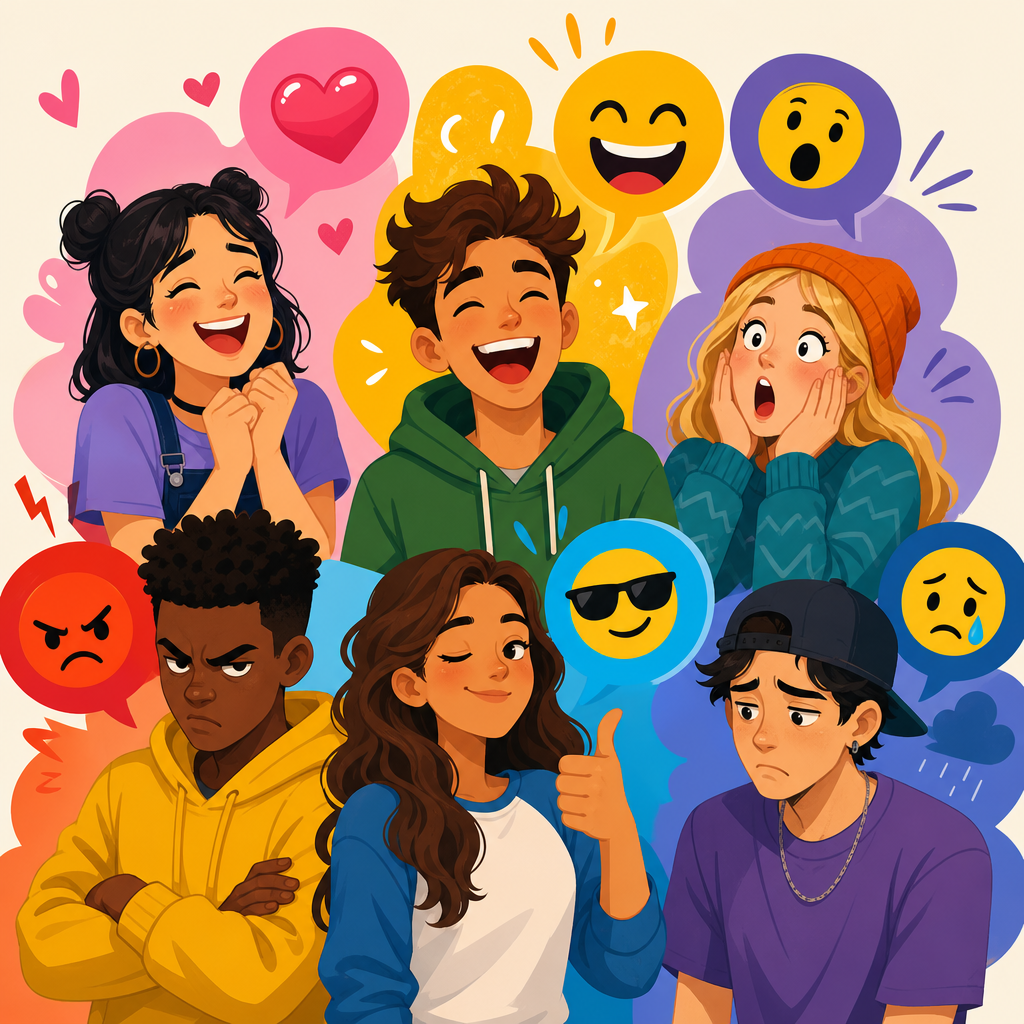
Slang for expressing emotions in English is one of the fastest-moving parts of everyday speech, and for ESL learners it often makes the difference between sounding textbook-correct and actually understanding real conversations. In simple terms, slang means informal words or phrases used by particular groups, regions, generations, or online communities, while emotion slang refers to casual expressions people use to show feelings such as excitement, anger, embarrassment, fear, affection, or disappointment. I have taught this area in conversation classes and workplace English sessions, and the same pattern appears every time: learners may know words like happy, sad, angry, and nervous, yet still feel lost when someone says, “I’m hyped,” “She’s salty,” “That joke killed me,” or “He was freaking out.” This topic matters because emotional slang appears everywhere people speak naturally—text messages, social media captions, streaming shows, gaming chats, podcasts, and office small talk. If learners miss these phrases, they may understand the grammar of a sentence but completely miss the attitude, intensity, or social meaning behind it.
Emotion slang is also a cultural skill, not just a vocabulary list. Many expressions carry signals about age, relationship, region, and setting. Saying “I’m devastated” in a formal meeting may be fine, but saying “I’m wrecked” or “I’m dead” may be too casual unless the context is friendly. Some phrases are playful exaggerations, some are rude, and some are harmless in text but awkward in speech. English learners need more than definitions; they need usage guidance, tone awareness, and examples of where each phrase fits. This hub article covers the full landscape of slang and informal English for feelings, from positive reactions to conflict language, online expressions, intensity markers, and common mistakes. It is designed as a starting point for deeper study across the wider ESL Cultural English & Real-World Usage topic, helping readers build listening comprehension, choose natural phrases with confidence, and avoid slang that can create the wrong impression.
What emotion slang means and why native speakers use it
Emotion slang is informal language that compresses feeling, attitude, and social identity into short expressions. Native speakers use it because it is efficient, vivid, and emotionally precise in ways standard vocabulary sometimes is not. “I’m happy” is correct, but “I’m pumped” tells you the speaker feels energetic anticipation. “I’m annoyed” is clear, but “I’m irritated,” “I’m pissed,” and “I’m salty” all suggest different intensities and different social tones. In real conversations, especially among friends, coworkers, classmates, and online communities, these distinctions matter. Slang also helps people sound less formal and more socially connected. When speakers mirror each other’s style, rapport often improves.
There is another practical reason to learn this language: emotion slang is highly productive. Once learners understand common patterns, they can decode new expressions more easily. English often creates slang feelings through metaphor. Heat suggests anger, death suggests extreme laughter or embarrassment, movement suggests excitement, and pressure suggests stress. That is why phrases like “heated,” “I’m dead,” “buzzing,” and “under pressure” feel intuitive to native speakers. Learners who notice these patterns improve faster than those who try to memorize isolated phrases. In teaching, I have found that students remember slang better when they group expressions by feeling and intensity rather than alphabetically.
Positive emotion slang: excitement, happiness, affection, and relief
Positive emotion slang is common in daily speech, but each term has its own texture. “Pumped,” “hyped,” and “stoked” all mean excited, though “stoked” is especially common in American informal speech and often sounds enthusiastic in a relaxed way. “Buzzing” is frequent in British English for being excited or thrilled. “Psyched” usually means mentally ready and excited: “I’m psyched for the trip.” For happiness, speakers might say “I’m over the moon,” which is idiomatic rather than slangy, or more casually, “I’m on cloud nine.” Online and in younger speech, “obsessed” often means strongly enthusiastic, not literally unhealthy fixation: “I’m obsessed with this song.”
Affection and approval also have rich slang. “I’m into it” means I like it. “I’m feeling it” means I respond positively to it. “That’s my jam” means it suits my taste perfectly, especially music, style, or an activity. To describe warmth toward a person, “I’ve got a soft spot for him” is informal but widely acceptable. Relief can appear as “I’m so glad that’s over,” but also “What a relief,” “I can breathe again,” or “I’m good now,” depending on context. In spoken English, tone carries meaning. “I’m good” can mean emotionally fine, socially satisfied, or politely declining an offer. Learners need to listen for situation, voice, and facial expression, not words alone.
Negative emotion slang: anger, frustration, sadness, anxiety, and embarrassment
Negative emotion slang requires more caution because it often carries stronger social impact. For anger, “mad” is standard in American English, but slang expands into “pissed,” “ticked off,” “heated,” and “fired up.” “Pissed” in American English usually means angry; in British English it more often means drunk, so learners should be careful. “Salty” means bitter, resentful, or annoyed, often because someone feels slighted after losing, being criticized, or not getting attention. “Triggered” originally referred to trauma responses, but casual use widened online; however, many speakers now avoid using it lightly because it can sound insensitive to mental health realities.
For stress and anxiety, common phrases include “freaking out,” “spiraling,” “stressed out,” and “losing it.” “Spiraling” suggests thoughts getting worse and harder to control. “Anxious” is standard; “on edge” is slightly more idiomatic and less slangy. Sadness can appear as “bummed,” “gutted,” “down,” “heartbroken,” or “wrecked.” “Gutted” is especially common in British English for strong disappointment. Embarrassment creates some of the most frequent internet-linked slang: “cringe,” “awkward,” “I’m dead,” and “that was painful.” “Cringe” can be a noun, adjective, or reaction: “That video is cringe.” “I’m dead” usually means something is so funny or embarrassing that the speaker is overwhelmed, not literally harmed. Context is everything here.
How age, region, and culture change slang meanings
Emotion slang is not universal across all English speakers. Age matters. Teenagers and people in their twenties often use newer expressions from TikTok, gaming culture, memes, and music scenes, while older speakers may prefer phrases that were current in earlier decades or avoid highly online language entirely. Region matters too. A British speaker may say “gutted,” “chuffed,” or “fuming,” while an American speaker may say “bummed,” “pumped,” or “heated.” Australian English has its own informal emotional shorthand, and Indian English, Nigerian English, Singapore English, and other global varieties contribute expressions that may be clear locally but not everywhere.
Culture shapes appropriateness as much as meaning. Some speech communities value emotional openness and hyperbole; others prefer understatement. For example, “I’m obsessed” may sound normal in fashion or pop culture talk, but exaggerated in a formal workplace. African American English has influenced mainstream slang heavily, including terms such as “pressed,” “shook,” and “shade,” but learners should understand that borrowing expressions without understanding their history, tone, or community roots can sound unnatural or performative. The safest strategy is to notice who uses a phrase, in what setting, and with what relationship. Good learners do not only ask, “What does this mean?” They also ask, “Who says this, and when?”
Common slang for emotions and how to use it naturally
The best way to master slang and informal English is to study emotion, intensity, and context together. The table below summarizes core expressions that learners hear frequently in conversation, streaming media, and social platforms. These are not the only options, but they are high-value phrases that appear often enough to deserve active study.
| Expression | Meaning | Typical context | Example |
|---|---|---|---|
| pumped | very excited | plans, sports, events | I’m pumped for the concert. |
| stoked | enthusiastic, pleased | casual American speech | She was stoked about the new job. |
| buzzing | thrilled | casual British speech | They were buzzing after the win. |
| salty | annoyed, bitter | games, arguments, online talk | He’s salty because he lost. |
| fuming | extremely angry | British and global informal use | I was fuming about the delay. |
| bummed | disappointed, sad | casual everyday speech | I’m bummed we missed it. |
| gutted | deeply disappointed | especially British English | She was gutted after the exam result. |
| freaking out | very anxious or overwhelmed | stress, panic, urgency | I’m freaking out about tomorrow. |
| cringe | embarrassing, socially painful | online and youth speech | That comment was so cringe. |
| shook | shocked or emotionally rattled | online and spoken informal English | I was shook by the ending. |
To use these naturally, match the phrase to the relationship and setting. “I’m pumped for the client presentation” may work in a modern office, but “I’m shook by the quarterly report” may sound too internet-heavy unless the team culture is very casual. In class, I usually tell learners to build two layers of active vocabulary: safe informal phrases for broad use, such as excited, stressed out, bummed, and relieved, and more culture-specific slang for listening comprehension first, such as salty, cringe, and shook. This approach improves understanding immediately without forcing learners to imitate language they cannot yet carry comfortably.
Digital communication, memes, and emotion slang online
Much current emotion slang spreads online before entering speech. Platforms such as TikTok, Instagram, YouTube, Reddit, Discord, and X accelerate change because users repeat short, expressive phrases that fit fast reactions. Terms like “I can’t,” “I’m dead,” “unwell,” “pressed,” and “living for this” became popular because they signal emotion dramatically in very few words. In digital spaces, punctuation, capitalization, and emoji also act like emotional slang. “I’m fine” and “I’M FINE” communicate different emotional states, and “lol” often softens a complaint, signals discomfort, or marks irony rather than actual laughter.
Learners should know that online emotion slang is especially unstable. A phrase can sound current for a year and dated the next. Some expressions survive because they are broadly understandable; others disappear with a platform trend. The practical rule is to observe before adopting. If a phrase appears mostly in meme captions, fan communities, or ironic posts, it may not transfer well into face-to-face conversation. On the other hand, many online expressions eventually settle into mainstream informal English. I have seen “cringe,” “low-key,” and “spiraling” move from digital-heavy use into ordinary speech among educated adults. Exposure helps, but selective use helps more.
How ESL learners can learn slang without sounding forced
The most effective method is not to memorize huge lists. Start with emotional situations you actually talk about: being excited for plans, annoyed by delays, nervous before interviews, embarrassed by mistakes, or relieved after exams. Then collect three or four natural expressions for each situation and practice them in full sentences. Corpus-based tools such as YouGlish, the Corpus of Contemporary American English, and subtitle databases are useful because they show real usage, not invented textbook examples. Learners should also compare dictionary labels from Cambridge, Merriam-Webster, Oxford, and Macmillan, since those labels often show whether a term is informal, slang, offensive, or region-specific.
Another key skill is imitation with restraint. Listen to how one trusted speaker uses a phrase, then test it in a low-risk setting. Do not stack too much slang into one sentence. Native speakers rarely say, “I was low-key shook and totally dead and super salty”; real speech usually mixes one colorful term with standard grammar. It also helps to keep a personal register map: phrases safe for work, phrases safe with friends, phrases mainly for texting, and phrases you only want to recognize. Slang and informal English work best when they sound like a natural extension of your personality. The goal is not performance. The goal is understanding, precision, and comfortable real-world communication.
Slang for expressing emotions in English gives learners access to the real emotional operating system of everyday conversation. It explains why standard vocabulary alone is not enough, shows how informal language signals intensity and identity, and helps learners understand speakers across social media, entertainment, work, and casual relationships. The biggest lesson is that emotion slang is never just about meaning. It is also about register, region, age, culture, and timing. A phrase like “pumped” is broadly useful, while a phrase like “shook” or “I’m dead” may fit better in younger or more online settings. Learners who pay attention to context will sound natural faster and avoid common mistakes.
As a hub within ESL Cultural English & Real-World Usage, this article maps the core territory of Slang & Informal English: positive and negative emotions, regional variation, digital language, and practical learning strategies. From here, the smart next step is to study individual subtopics in more detail, such as texting slang, workplace informality, British versus American emotional expressions, and phrases that are common in media but risky in professional settings. Build a small, usable set first, notice how native speakers choose words for specific moments, and practice with complete sentences rather than isolated terms. If you want your English to sound more current, more socially aware, and easier to understand in real life, start tracking emotional slang every day and use it carefully.
Frequently Asked Questions
What does “slang for expressing emotions” mean in English?
Slang for expressing emotions in English refers to informal words and phrases people use to show how they feel in everyday conversation. Instead of using more standard vocabulary like “I am very happy,” “I am embarrassed,” or “I am angry,” native speakers often choose slang expressions such as “I’m hyped,” “I’m salty,” “I’m shook,” or “I’m crushed.” These expressions are often shorter, more vivid, and more socially meaningful than textbook language because they can signal age group, region, online culture, and personality at the same time.
For ESL learners, this matters because emotional slang appears constantly in spoken English, social media posts, text messages, videos, and casual workplace or school conversations. If you only know formal vocabulary, you may understand the general topic of a conversation but miss the emotional tone. For example, there is a big difference between someone saying they are “a little upset” and saying they are “so done,” “low-key annoyed,” or “completely triggered,” even if all of them suggest negative feelings. Emotional slang adds nuance, intensity, and attitude.
Another important point is that slang changes quickly. Some expressions stay popular for years, while others become outdated fast or are only common in certain communities. That means learning emotion slang is not just about memorizing vocabulary lists. It is also about noticing who uses a phrase, in what context, and whether it sounds playful, dramatic, sarcastic, affectionate, or rude. The goal is not to use every slang term you hear, but to recognize common ones and understand the emotional meaning behind them.
Why is emotional slang so important for ESL learners?
Emotional slang is important for ESL learners because it helps bridge the gap between classroom English and real-world English. Many learners study grammar, standard vocabulary, and polite expressions first, which is useful and necessary. However, real conversations rarely stay at that level. Friends, coworkers, classmates, and people online often describe feelings with slang because it sounds more natural, more expressive, and more socially connected. If you do not recognize these phrases, you can miss the real emotional message even when you understand every individual word.
For example, if someone says “I’m freaking out,” “She’s losing it,” “He’s totally pumped,” or “I’m so over it,” the literal meanings do not tell the whole story. These are emotional signals. They show excitement, stress, frustration, exhaustion, or emotional intensity in a way that standard vocabulary may not. Understanding them improves listening comprehension, especially in films, podcasts, YouTube content, and casual speech. It also makes reading social media and group chats much easier, where slang is often the default style.
There is also a social benefit. Recognizing emotional slang helps learners understand tone, humor, and relationships between speakers. It can help you tell whether someone is joking, venting, exaggerating, being affectionate, or expressing real distress. That is a major part of fluency. You do not need to force slang into your own speech immediately, but being able to understand it gives you confidence and makes interactions feel less confusing. Over time, you can choose a few common expressions that fit your personality and use them naturally when appropriate.
What are some common English slang expressions for emotions?
Some of the most common English slang expressions for emotions cover a wide range of feelings. For excitement, people often say “I’m hyped,” “I’m pumped,” or “I’m stoked.” These all suggest strong enthusiasm, though “stoked” can sound slightly more casual and is especially common in some varieties of spoken English. For happiness or pleasure, someone might say “I’m feeling great,” “I’m vibing,” or “That made my day.” For surprise or shock, “I’m shook” is a popular slang expression, especially online, though it can sound trendy depending on the speaker.
For negative emotions, there are many useful examples. “Salty” usually means annoyed, irritated, or bitter, often about something small or unfair. “Mad” in informal American English often means angry, not mentally unwell. “I’m over it” means you are tired of a situation and emotionally finished with it. “Crushed” means deeply disappointed or sad. “Freaking out” can describe panic, anxiety, or overwhelming stress. “Triggered” is sometimes used casually online to mean strongly upset, but it also has serious mental health meanings, so learners should use it carefully.
There are also slang expressions for embarrassment, affection, and emotional awkwardness. “I’m dying” can mean “I’m laughing so hard” or “I’m extremely embarrassed,” depending on context. “I’ve got a crush” means romantic interest. “Soft” can describe feeling emotionally tender or affectionate toward someone or something. “Awkward” is not pure slang, but it is often used very casually to describe uncomfortable social emotions. The best way to learn these expressions is not as isolated vocabulary, but in context. Notice the situation, the speaker’s tone, and whether the phrase sounds playful, serious, exaggerated, or ironic.
How can I learn and use emotion slang naturally without sounding awkward?
The best way to learn emotion slang naturally is to focus first on comprehension, then on selective use. Start by noticing the expressions that appear repeatedly in content made for native speakers: TV shows, interviews, vlogs, TikTok clips, podcasts, and social media comments. When you hear a slang phrase, do not just translate it word for word. Ask what emotion it expresses, how strong the feeling is, who is using it, and whether it sounds current, humorous, dramatic, or casual. This helps you learn the phrase as part of real communication rather than as a dictionary entry.
It also helps to group slang by emotion. For example, keep a list for excitement, anger, embarrassment, affection, fear, disappointment, and surprise. Under each feeling, write two or three expressions and one natural example sentence. That makes the language easier to remember and easier to use. Instead of memorizing twenty random slang words, you learn a few that match situations you actually talk about. If you often describe stress, for instance, phrases like “I’m freaking out” or “I’m stressed out” may be more useful than trendier expressions you rarely hear in your environment.
When you begin using emotional slang, choose common, flexible expressions rather than highly trendy ones. Say “I’m so over it,” “I’m hyped,” or “That was awkward” before trying expressions that may sound very age-specific or internet-specific. Pay attention to your audience as well. Some slang works well with friends but may sound unprofessional in class, at work, or with people you do not know well. In general, it is better to use a small number of phrases correctly and confidently than to overuse slang in a way that feels forced. Natural use comes from exposure, repetition, and good judgment about context.
Are there any risks or mistakes to avoid when using slang for emotions in English?
Yes, there are several common mistakes ESL learners should avoid. The first is assuming that all slang is universal. Many emotional expressions vary by country, region, generation, and online community. A phrase that sounds normal in one place may sound old-fashioned, strange, or even rude somewhere else. For example, younger speakers may use expressions that older speakers rarely say, and internet slang may not fit face-to-face professional conversation. That means context matters just as much as meaning.
Another risk is using emotionally strong slang without understanding its intensity. Some expressions are playful exaggerations, while others can sound serious, aggressive, or insensitive. Saying you are “dead,” “dying,” “triggered,” or “obsessed” may be common in casual speech, but these phrases can also touch on serious topics depending on the situation. Learners should be especially careful with slang connected to mental health, trauma, or identity, because misuse can sound careless or disrespectful. If you are unsure, listen more before using the expression yourself.
A final mistake is overusing slang in an attempt to sound fluent. Real fluency is not about filling every sentence with trendy words. In fact, too much slang can make speech sound unnatural, especially if the phrases do not match your age, personality, or social setting. A better strategy is to understand a wide range of emotional slang and actively use only the expressions that feel comfortable and appropriate for you. That way, your English sounds natural, clear, and socially aware. The strongest learners are not the ones who know the most slang, but the ones who know when to use it and when to choose more neutral language instead.