Learning English through music lyrics is one of the most effective ways to build listening accuracy, vocabulary range, pronunciation awareness, and cultural fluency at the same time. In ESL teaching, “music lyrics” means the written words of songs, while “Pop Culture English” refers to the everyday language people absorb from popular media, including songs, films, social platforms, and celebrity interviews. I have used lyrics in classrooms, tutoring sessions, and self-study plans for learners from beginner to advanced levels, and the results are consistent: motivated students study longer, remember more phrases, and become more confident using natural English. This matters because many learners know textbook grammar but struggle with connected speech, slang, emotion, and rhythm in real conversations. Songs fill that gap. They expose learners to stress patterns, contractions, idioms, repetition, storytelling, and cultural references that rarely appear in formal exercises. As a hub topic inside ESL Cultural English and Real-World Usage, Pop Culture English helps learners move from correct English to believable English. Music is central to that transition because it combines memory, emotion, and repeated exposure. A good lyric lesson can teach collocations, verb tense, metaphor, and pronunciation in one short activity. It can also help learners understand how English changes across regions, genres, and generations.
Used well, songs are not just entertaining extras; they are structured language input. Repetition in choruses strengthens recall, rhyme supports sound discrimination, and melody makes difficult phrases easier to retain. When learners revisit a song over several days, they practice extensive listening, intensive listening, reading, speaking, and even writing if they keep a lyric journal. Music also lowers affective barriers. Students who feel anxious during traditional listening tasks often relax when working with a familiar artist. That reduced anxiety improves comprehension and willingness to speak. At the same time, lyrics require caution. Not every song models standard grammar, some use heavy slang or dialect, and many include figurative meaning that beginners may misread. That is why a smart approach matters. This article serves as the hub for Pop Culture English by explaining why lyrics work, how to choose the right songs, what language features to study, where learners make mistakes, and how to turn passive listening into measurable progress.
Why music lyrics work for English learning
Music lyrics work because they deliver language in memorable patterns. Cognitive research has long shown that repetition and emotional engagement improve retention, and songs provide both naturally. In practice, I see learners remember a line from a chorus weeks after they forget a workbook sentence. A phrase like “I still haven’t found what I’m looking for” sticks because the melody carries the grammar. That single line teaches present perfect, contraction, stress, and useful everyday vocabulary. Lyrics also train listening for reduced speech. Native speakers often say “gonna,” “wanna,” “I’ve,” or “don’tcha” in connected speech. Learners who only read formal English can understand the rule but miss the sound. Songs bridge that gap.
Another reason lyrics work is density. A three-minute song can contain narrative sequencing, repeated collocations, emotional adjectives, phrasal verbs, and cultural references. Compare that with a short textbook dialogue, which is often cleaner but less realistic. Songs can also model register. A pop ballad may sound intimate and conversational, while rap may demonstrate rhyme, wordplay, and regional identity. Folk and singer-songwriter tracks often offer clear storytelling in the past tense. For students building real-world comprehension, that range matters. It exposes them to English as people actually use it, not only as grammar books present it.
How to choose the right songs for your level and goals
The best song for learning English is not always the most famous one. Selection should match level, objective, and accent exposure. For beginners, choose songs with slower tempo, clear enunciation, high-frequency vocabulary, and repeated choruses. Artists known for clearer delivery often work better than tracks with dense production or heavy vocal effects. For intermediate learners, songs with narrative lyrics are ideal because they provide context clues. Advanced learners can benefit from metaphor-heavy songwriting, regional dialect, satire, or complex rhyme schemes, but they still need a defined target such as idioms, pronunciation, or culture.
I usually screen songs using five criteria: speed, clarity, repetition, lexical usefulness, and cultural value. If a song is too fast, students focus only on survival. If the vocabulary is obscure, they spend more time decoding than learning. If the song repeats key lines, it becomes excellent material for shadowing and pronunciation drills. Cultural value matters too. A song that shaped a generation, sparked debate, or reflects a social trend teaches more than language alone. That is why Pop Culture English should include mainstream hits, classic standards, soundtrack songs, and a limited number of genre-specific tracks. Learners need broad exposure, but they also need guidance.
| Learning goal | Best lyric type | Why it helps |
|---|---|---|
| Pronunciation | Slow pop ballads | Clear vowels, repeated chorus lines, easier shadowing |
| Vocabulary | Narrative singer-songwriter tracks | Context makes new words easier to infer and remember |
| Slang and informal English | Contemporary pop and hip-hop | Shows current expressions, contractions, and social tone |
| Grammar review | Songs with recurring tense patterns | Repeated structures reinforce form and meaning |
| Cultural fluency | Iconic hits and soundtrack songs | Builds shared references used in conversation and media |
What learners can study inside a single song
A strong lyric lesson goes far beyond filling in blanks. Start with vocabulary, but divide it into useful categories: core words, collocations, idioms, phrasal verbs, and figurative language. In a song about heartbreak, learners may meet “break down,” “move on,” “let go,” and “fall apart.” Those are not isolated words; they are high-value phrases that appear in real conversation. Then examine grammar in context. Songs regularly use present simple for states, past simple for storytelling, present perfect for unfinished experience, and imperatives for advice or emotion. Learners remember these forms better when tied to a line they can hear and repeat.
Pronunciation is equally important. Lyrics reveal stress timing, weak forms, linking, elision, and intonation. For example, “I’m gonna let you know” teaches contraction and reduced pronunciation that textbooks may only describe. Students can mark stressed syllables, notice where words connect, and compare sung pronunciation with spoken pronunciation. Meaning also deserves careful attention. Songwriters use metaphor constantly: fire for passion, rain for sadness, roads for choices, and walls for emotional distance. Learners who treat every line literally will misunderstand the message. Teaching imagery helps them read more naturally across all media, including films, advertising, and social posts.
Using lyrics to build pronunciation and listening accuracy
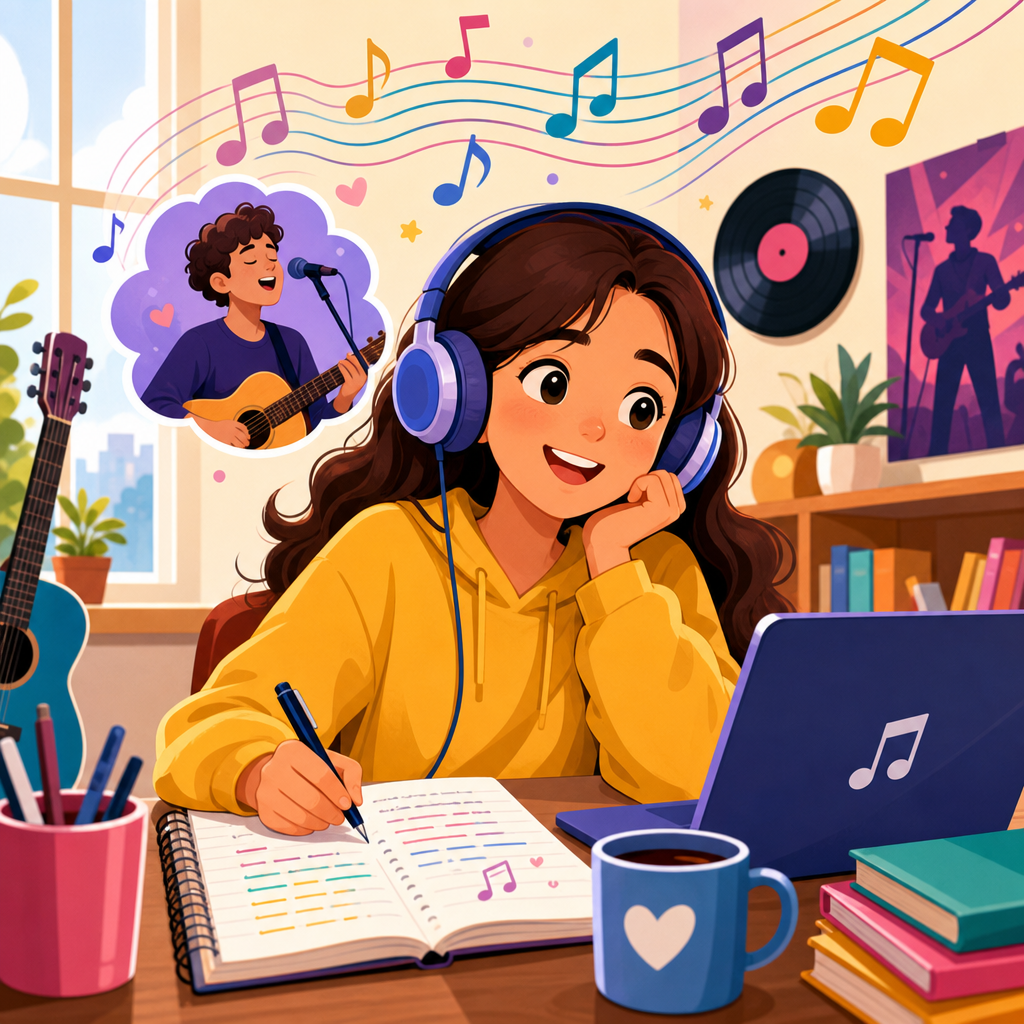
Many learners say, “I can read English, but I cannot catch it when people speak.” Lyrics are one of the best tools for solving that problem because they slow the listening process without removing authentic sound patterns. My most reliable routine has four passes. First, listen without text and identify the topic. Second, listen with lyrics and underline missed words. Third, study sound features such as contractions, linking, and dropped consonants. Fourth, shadow the singer line by line. This sequence improves bottom-up listening, the ability to hear actual sounds, while also strengthening top-down listening, the ability to predict meaning from context.
Shadowing deserves special emphasis. Learners listen to a short line and repeat it immediately, copying rhythm, stress, and mouth movement. This is different from singing casually. It is deliberate pronunciation practice. I recommend using short segments of five to ten seconds and recording the result on a phone. Tools such as YouTube playback speed, LyricsTraining, and language-learning features in Spotify or Apple Music can support this process. The goal is not to sound like the artist; it is to hear where English compresses sounds. Once students notice that “did you” often sounds like “didja,” conversational listening becomes much easier.
Vocabulary, idioms, and cultural references in Pop Culture English
Pop Culture English is valuable because it teaches the language people quote, post, parody, and recognize instantly. Songs contribute heavily to that shared cultural layer. A lyric can become a meme caption, a headline, a graduation speech line, or a joke between friends. Learners who understand these references participate more fully in conversation. They also become better at reading tone. For example, when a line is dramatic, ironic, rebellious, or romantic, the language choices reveal how English expresses identity. This is where songs connect to the wider subtopic hub: film dialogue, celebrity culture, internet trends, and everyday spoken English all overlap with music.
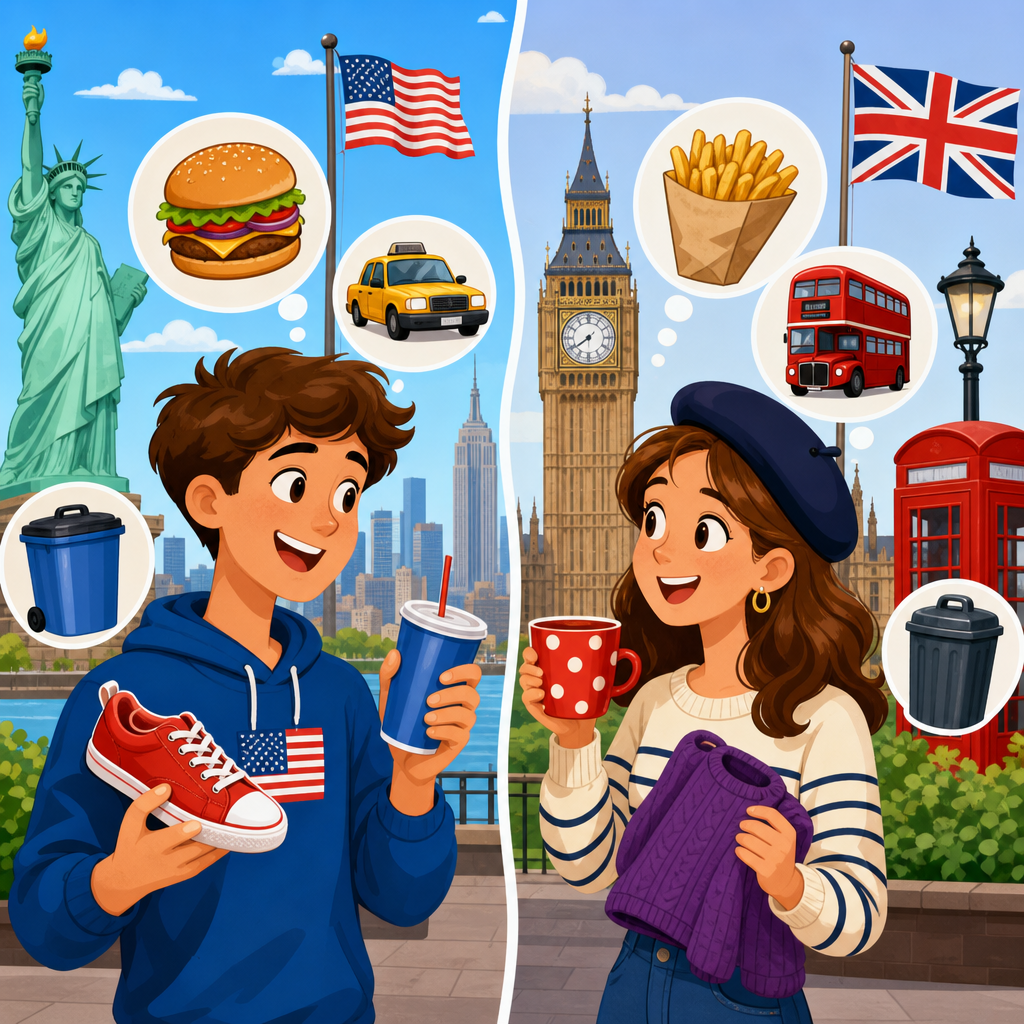
Idioms and informal expressions are especially rich in songs, but they need explanation. A learner may understand every word in “hit the road,” “cold shoulder,” or “piece of my heart” and still miss the real meaning. Songs also use brand names, places, historical moments, and social references that carry hidden context. A line mentioning Hollywood, Broadway, downtown, Saturday night, a pickup truck, or a high school football game may point to specific cultural imagery, especially in American English. British pop introduces different references, from council estates to Tube stations. Teaching these details prevents shallow understanding and helps learners decode authentic media beyond music.
Common mistakes when learning English through songs
The biggest mistake is assuming every lyric is a model for everyday speech. Songwriters bend grammar for rhyme, rhythm, character voice, or artistic effect. Double negatives, unusual word order, clipped forms, and invented pronunciations are common. Learners should ask three questions: Is this standard English, is it informal but common, or is it artistic language that sounds strange in normal conversation? Without that filter, students copy lines that native speakers would only use in songs. Another mistake is choosing songs that are too difficult. Fast rap with dense slang can be excellent for advanced analysis, but it overwhelms many learners if used too early.
A third mistake is passive repetition without focused study. Simply listening to a playlist for hours may improve familiarity, but progress is slow unless learners notice language features and reuse them. I advise keeping a lyric notebook with three columns: phrase, meaning, and personal example. If a student learns “I’m over it,” they should write a sentence such as “I was upset yesterday, but now I’m over it.” That transfer from lyric to personal use is what turns exposure into acquisition. Finally, learners should verify lyrics on reliable sources because auto-generated captions are often wrong, especially with fast singing or background harmonies.
How to create a weekly lyric-based study routine
The most effective routine is simple enough to repeat. Choose one song per week. On day one, listen for general meaning. On day two, read the lyrics and highlight unknown words. On day three, study five to ten useful phrases, not every difficult item. On day four, shadow one verse and one chorus. On day five, write a short paragraph or voice note using the new language. On day six, review the song without looking at the text. On day seven, revisit your notes and compare what you now understand. This structure creates retrieval practice, spaced repetition, and active production, which are essential for long-term improvement.
As the hub for Pop Culture English, lyric study should also connect outward. After learning a song, students can watch a live performance, read an artist interview, analyze fan comments, or compare the song’s language to movie dialogue and social media captions. Those links expand one song into a network of real-world English. Over time, learners build not only vocabulary but also taste, confidence, and cultural awareness. Learning English through music lyrics works best when it is intentional, level-appropriate, and connected to broader pop culture input. Start with one well-chosen song this week, study it actively, and use what you learn in speech and writing. That is how music becomes a practical path to natural English.
Frequently Asked Questions
Why are music lyrics such an effective tool for learning English?
Music lyrics combine several core language skills in a way that feels natural and memorable. When learners listen to a song while reading the lyrics, they train their ears to connect spoken sounds with written words. This improves listening accuracy, especially with connected speech, reduced sounds, and common pronunciation patterns that are often difficult to catch in textbook audio. Lyrics also expose learners to repetition, which is essential for vocabulary retention. A chorus, for example, may repeat the same key phrases many times, helping learners remember useful expressions without feeling like they are drilling.
Another major benefit is that lyrics carry emotion, rhythm, and context. Words learned through music are often easier to recall because the melody supports memory. In addition, songs introduce learners to natural phrasing, stress patterns, and intonation. This helps with pronunciation awareness and speaking confidence. Beyond language mechanics, lyrics also open a door to culture. They reflect themes, slang, values, humor, social issues, and everyday communication found in real English-speaking environments. That is where music connects closely with Pop Culture English, because learners are not just studying isolated vocabulary; they are seeing how English lives in media, identity, and daily conversation.
How can English learners use song lyrics without becoming confused by slang, figurative language, or grammar that seems incorrect?
This is one of the most important questions, because songs often use language creatively rather than formally. Lyrics may include slang, metaphors, contractions, regional expressions, incomplete sentences, or intentionally nonstandard grammar for artistic effect. That does not make them bad learning material, but it does mean learners should approach them strategically. The best method is to treat lyrics as authentic English input, not as a perfect grammar textbook. In other words, songs are excellent for building awareness of how people really speak, but learners should still compare what they hear with standard usage.
A practical approach is to study lyrics in layers. First, listen for the general message and mood. Second, read the written lyrics and highlight unfamiliar words or phrases. Third, identify which items are standard everyday English and which are artistic, informal, or culture-specific. For example, a line may contain a phrasal verb that is highly useful in conversation, alongside a metaphor that is memorable but not something a learner would say literally. Teachers and self-study learners can also use reliable dictionaries, lyric annotations, and example sentences to separate common usage from poetic language. This turns confusion into a learning advantage: instead of memorizing everything equally, learners build judgment about register, tone, and context. That judgment is a major step toward fluency.
What is the best step-by-step method for learning English with music lyrics?
The most effective method is active, not passive. Simply playing English songs in the background can help with familiarity, but real improvement comes from structured listening and analysis. A strong step-by-step routine begins by choosing a song that matches the learner’s level. Clear vocals, moderate speed, and repeated phrases are ideal, especially for beginners and intermediate learners. After selecting the song, listen once without reading anything and try to catch the main topic, emotions, and a few repeated words. This builds top-down listening skills.
Next, listen again while reading the lyrics. Underline unknown vocabulary, idioms, contractions, and pronunciation features. Then check the meaning of important words, but focus on high-value vocabulary that can be reused in speaking and writing. After that, listen again and pause line by line to repeat the lyrics aloud. This shadowing technique improves stress, rhythm, connected speech, and confidence. Learners can then paraphrase the meaning of each verse in simple English, which strengthens comprehension and productive vocabulary. As a final step, review the song over several days. Repetition is what turns a song from enjoyable exposure into actual language acquisition. For even better results, learners can keep a lyric notebook with new expressions, pronunciation notes, and example sentences taken from the song.
Can learning English through music lyrics really improve pronunciation and listening skills?
Yes, and in many cases it improves them faster than learners expect, especially when music is used actively. Songs are powerful for pronunciation because they make stress, rhythm, and sound patterns more noticeable. English is a stress-timed language, which means some syllables are emphasized while others are reduced. Lyrics help learners feel that rhythm physically and mentally. When learners sing or repeat lines, they begin to notice how native speakers link words together, drop certain sounds, and change pronunciation in fast speech. These features are often the reason listening feels difficult in real conversations.
Lyrics are also useful because the same lines are repeated multiple times, giving learners repeated exposure to the same sound patterns. This repetition strengthens listening discrimination, helping learners hear the difference between similar words, contractions, and reduced forms. For example, learners may become better at recognizing phrases like “gonna,” “wanna,” or “I’ve been” because they hear them in rhythm and context. That said, pronunciation improvement depends on the type of song and the study method. Some singers use highly stylized pronunciation, which may not represent neutral spoken English. For that reason, learners should balance music study with exposure to interviews, podcasts, and conversation-based audio. Used together, these materials build both musical listening enjoyment and practical spoken comprehension.
What kinds of songs are best for ESL learners, and how does music connect to Pop Culture English?
The best songs for ESL learners are those with clear pronunciation, strong repetition, and language that appears in real communication. Pop songs often work well because choruses repeat key phrases and the topics are usually relatable, such as relationships, confidence, memories, or everyday emotions. Acoustic songs, slower pop tracks, and some singer-songwriter material are especially useful because the vocals are easier to follow. Beginners should generally avoid songs with extremely fast delivery, heavy slang, dense cultural references, or strong regional accents until they have more experience. Intermediate and advanced learners, however, can benefit from those songs later because they provide exposure to authentic variation in English.
Music is also one of the clearest pathways into Pop Culture English. Popular songs influence the words, expressions, attitudes, and references people use in daily life, especially online and in media. A phrase heard in a hit song may later appear in social posts, interviews, memes, or casual conversation. By studying lyrics, learners do more than build vocabulary; they learn how English interacts with trends, identity, emotion, and shared cultural moments. This makes communication more natural, because fluency is not only about grammar accuracy. It is also about understanding what people mean, what they imply, and why certain phrases feel current, playful, emotional, or culturally loaded. In that sense, music lyrics help learners develop not just language skill, but cultural fluency as well.