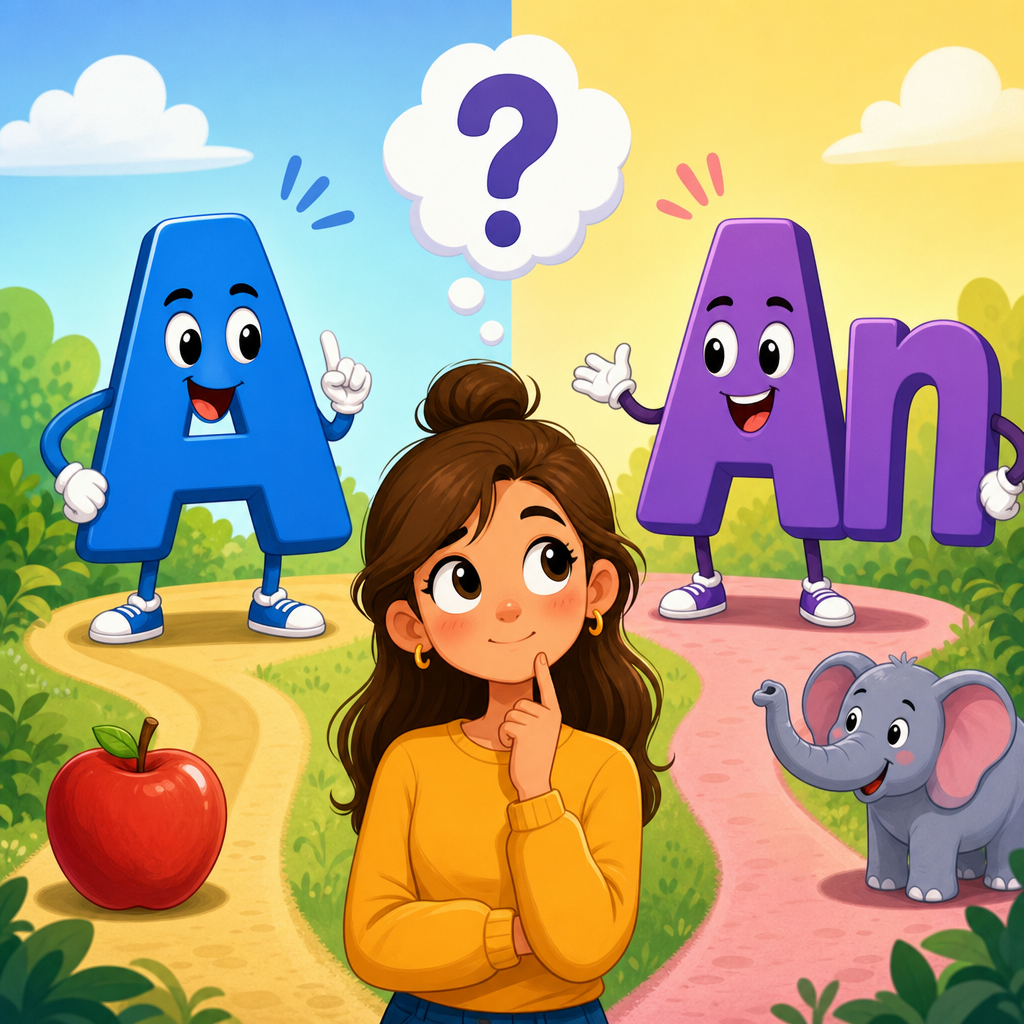
English learners and native speakers alike make predictable errors, which is why a clear guide to common grammar mistakes is one of the most useful resources in any ESL Grammar library. Grammar is the system that governs how words change form, combine into phrases, and create meaning in context. When people talk about common grammar mistakes in English, they usually mean errors involving sentence structure, verb forms, agreement, punctuation, word choice, or usage rules that affect clarity and correctness. I have edited student essays, workplace emails, and website copy for years, and the same patterns appear again and again: a missing article, a confused preposition, a run-on sentence, or a verb that does not match its subject. These mistakes matter because they can reduce test scores, weaken professional writing, and make a speaker sound less precise than they really are.
For ESL learners, the challenge is not simply memorizing rules. English contains irregular verbs, flexible word order, silent letters, borrowed vocabulary, and competing standards of formal and informal usage. A sentence can sound natural in conversation and still be wrong in an exam essay. Some errors also come from direct translation. For example, speakers of article-free languages often omit a, an, and the, while speakers of highly inflected languages may overuse literal word order patterns that sound unnatural in English. Native speakers make different mistakes, often because they rely on speech habits when writing. That is why this hub page covers the top 50 common grammar mistakes in English in one place, with concise explanations and practical examples you can apply immediately.
This article functions as a foundation page for the broader topic of common grammar mistakes. It groups the errors into logical categories so you can diagnose problems faster: sentence-level mistakes, verb mistakes, noun and pronoun mistakes, modifier and comparison mistakes, and punctuation and usage mistakes. Treat it as a map. If you keep seeing one error type in your writing, that category is where you should focus. If you are preparing for IELTS, TOEFL, Cambridge exams, workplace communication, or university writing, mastering these core points will improve both accuracy and confidence.
Sentence Structure Errors That Damage Clarity
Many common grammar mistakes begin at the sentence level. Error 1 is the sentence fragment, an incomplete sentence missing a subject, a verb, or a complete thought: “Because I was tired.” Error 2 is the run-on sentence, where two independent clauses are joined without correct punctuation: “I finished the report I sent it at midnight.” Error 3 is the comma splice, a specific run-on using only a comma: “She studied hard, she passed.” Error 4 is faulty parallelism, where items in a series do not follow the same grammatical pattern: “He likes reading, to swim, and biking.” Error 5 is misplaced word order, common in ESL writing: “Always I go by bus” instead of “I always go by bus.”
Error 6 is the dangling modifier, where the descriptive phrase seems to modify the wrong noun: “Walking to work, the rain soaked my bag” suggests the rain was walking. Error 7 is the misplaced modifier, where a phrase is grammatically attached to the wrong element: “She almost drove her kids to school every day” changes meaning unintentionally. Error 8 is unclear reference, where this, which, or it points to no obvious noun. Error 9 is double negatives used unintentionally in standard English: “I don’t know nothing.” Error 10 is unnecessary repetition, sometimes called redundancy, as in “basic fundamentals” or “return back.” These errors weaken formal writing because they force readers to stop and interpret structure rather than meaning.
Verb Tense, Form, and Agreement Mistakes
Verb errors are among the most frequent common grammar mistakes in English because tense carries time, aspect, and agreement. Error 11 is subject-verb agreement failure: “The list of items are on the desk” should use is because the subject is list. Error 12 is using the wrong tense for time context, such as “Yesterday I go” instead of “Yesterday I went.” Error 13 is inconsistent tense within a paragraph, where a writer shifts from past to present without reason. Error 14 is confusing the present perfect and simple past. “I have seen him yesterday” is wrong because yesterday requires the simple past: “I saw him yesterday.”
Error 15 is incorrect past participle use, especially with irregular verbs: “He has went” instead of “He has gone.” Error 16 is forgetting the third-person singular -s in the present simple: “She work in finance.” Error 17 is misusing progressive forms with stative verbs, such as “I am knowing” or “She is wanting” in contexts where know and want should be simple forms. Error 18 is leaving out auxiliary verbs in questions and negatives: “You like coffee?” is conversationally common but not standard in formal writing; the full form is “Do you like coffee?” Error 19 is confusing gerunds and infinitives after certain verbs, as in “enjoy to read” instead of “enjoy reading.” Error 20 is incorrect modal verb structure, such as “must to go” or “can goes.”
Writers also struggle with passive and conditional forms. Error 21 is building the passive voice incorrectly: “The cake was ate” should be “was eaten.” Error 22 is mixing conditional patterns, such as “If I would study, I will pass,” instead of “If I study, I will pass” or “If I studied, I would pass.” Error 23 is omitting had in third conditional forms: “If I known” instead of “If I had known.” Error 24 is overusing would in time clauses: “When he would arrive, we ate” should usually be “When he arrived, we ate.” These errors often appear because English verb systems combine form and meaning in ways that do not map neatly onto other languages.
Nouns, Articles, Pronouns, and Determiners
Noun-related mistakes are especially important for ESL Grammar because articles and countability affect nearly every sentence. Error 25 is omitting articles: “I bought car” instead of “I bought a car.” Error 26 is choosing the wrong article, especially with shared knowledge or specificity: “Pass me a salt” instead of “the salt.” Error 27 is using a singular count noun without a determiner, as in “Teacher gave homework” when standard English requires “The teacher” or “My teacher.” Error 28 is confusing countable and uncountable nouns: “many advice” should be “much advice” or “many tips.” Error 29 is wrong plural formation, especially with irregular nouns like childs, informations, or equipments.
Error 30 is possessive confusion: its versus it’s, whose versus who’s, and students’ versus student’s. These mistakes are common because apostrophes signal both contraction and possession. Error 31 is pronoun-antecedent disagreement, as in “Every student must bring their pencil” in contexts where strict formal agreement is expected. Modern usage often accepts singular they, but learners should understand the register issue. Error 32 is pronoun case error: “between you and I” should be “between you and me.” Error 33 is ambiguous pronoun reference: “John told Mark that he was late” leaves he unclear. Error 34 is demonstrative mismatch, such as “this two books” instead of “these two books.”
| Mistake Type | Incorrect Example | Correct Example |
|---|---|---|
| Article omission | I saw movie last night. | I saw a movie last night. |
| Subject-verb agreement | The results shows improvement. | The results show improvement. |
| Run-on sentence | She called me I was asleep. | She called me, but I was asleep. |
| Preposition error | Married with a doctor | Married to a doctor |
| Pronoun case | He gave it to Sarah and I. | He gave it to Sarah and me. |
Adjectives, Adverbs, Comparisons, and Word Choice
Some of the most visible common grammar mistakes involve modifiers and comparison forms. Error 35 is using an adjective where an adverb is needed: “She sings beautiful” instead of “beautifully.” Error 36 is the opposite problem, using an adverb after a linking verb: “The soup tastes well” should usually be “tastes good.” Error 37 is double comparison, such as “more better” or “more easier.” Error 38 is incomplete comparison: “My score is higher” without stating than what, when context does not make it clear. Error 39 is faulty comparative structure, as in “She is smarter than me do” instead of “than I am” or informal “than me.”
Error 40 is confusion between fewer and less. Traditional usage prefers fewer for countable items and less for uncountable amounts, so “fewer cars” but “less traffic.” Error 41 is confusing much, many, little, and few, especially in negative and formal contexts. Error 42 is using so and such incorrectly: “It was such hot day” should be “such a hot day” or “so hot.” Error 43 is wrong word form, such as “success” for “successful” or “explanation” for “explain.” In editing ESL essays, I see this constantly when learners know the root word but choose the wrong grammatical category. Building word families helps: decide whether the sentence needs a noun, verb, adjective, or adverb before choosing the form.
Prepositions, Conjunctions, and Usage Problems
Prepositions cause persistent errors because they are highly idiomatic. Error 44 is choosing the wrong preposition: interested on instead of interested in, married with instead of married to, or depend of instead of depend on. Error 45 is omitting a necessary preposition, as in “listen music” instead of “listen to music.” Error 46 is adding an unnecessary preposition, such as “discuss about” or “enter into the room” in contexts where discuss and enter do not take one. Corpus-based tools like the British National Corpus and learner dictionaries are excellent for checking these patterns because they show authentic collocations rather than invented rules.
Error 47 is conjunction misuse, especially because, although, despite, and however. For example, “Although he was tired, but he continued” is incorrect because although and but duplicate the contrast. Error 48 is confusion between than and then, a small spelling error with a big effect on meaning. Error 49 is mixing formal and informal register in one sentence, such as using contractions, slang, and academic phrasing together in an essay. Error 50 is punctuation-driven grammar failure, especially apostrophe errors, missing end punctuation, and inconsistent capitalization of proper nouns. Strictly speaking, punctuation is not identical to grammar, but in real writing instruction they interact constantly, and readers judge them together.
The best way to fix these fifty common grammar mistakes is not to memorize isolated corrections. Build an editing process. First, check sentence boundaries. Second, check verbs for tense, agreement, and form. Third, review nouns, articles, and pronouns. Fourth, examine modifiers and comparisons. Fifth, scan for prepositions and punctuation. Professional editors use passes like this because the brain misses errors when trying to fix everything at once. Digital tools can help, but use them carefully. Grammarly, Microsoft Editor, LanguageTool, and the Hemingway app catch patterns, yet they also produce false positives. A grammar checker should support judgment, not replace it.
One practical method is to keep a personal error log. If you repeatedly write “informations,” note that the noun is uncountable. If you often confuse present perfect and simple past, add a reminder that finished past time expressions like yesterday, last year, and in 2022 usually require the simple past. Read your sentences aloud to hear missing words, especially articles and auxiliaries. Compare your writing with trusted models from reputable newspapers, university writing centers, and learner dictionaries published by Oxford, Cambridge, Longman, or Merriam-Webster. Repetition with feedback is what turns grammar knowledge into habit.
How to Use This Hub to Improve Faster
This hub page gives you a structured overview of common grammar mistakes in English, but its main value is diagnostic. When you know the name of an error, you can fix it more efficiently and search for targeted practice. If your issue is article use, focus on countability and specificity. If your issue is verb forms, review irregular verbs, auxiliary verbs, and time markers. If your issue is sentence clarity, practice combining clauses with conjunctions, semicolons, and relative pronouns. Strong grammar does not mean writing stiff, complicated sentences. It means choosing forms that communicate your meaning accurately the first time.
The central takeaway is simple: most grammar errors are repeat errors, not random ones. A learner who identifies their top five patterns can improve faster than someone who studies dozens of rules without applying them. Start by revising one page of your own writing and label every mistake by category from this list. Then rewrite the same page correctly. That process builds awareness, control, and long-term accuracy. Use this common grammar mistakes hub as your reference point, return to it when you edit, and keep practicing until correct grammar becomes your default.
Frequently Asked Questions
What are the most common grammar mistakes in English?
The most common grammar mistakes in English usually fall into a few predictable categories: subject-verb agreement, verb tense errors, sentence fragments, run-on sentences, misplaced modifiers, pronoun mistakes, punctuation problems, and commonly confused words. For example, writers often mix up its and it’s, use your when they mean you’re, or write a sentence such as “She go to school every day” instead of “She goes to school every day.” These errors are common because English has many small rules that affect meaning, and even fluent speakers rely on patterns they hear in conversation rather than on formal grammar rules.
Another reason these mistakes appear so often is that spoken English is usually more flexible than written English. In conversation, people may leave out words, shift tenses casually, or use informal structures that sound natural but look incorrect on the page. That is why mistakes involving apostrophes, comma use, parallel structure, and word order are especially common in emails, essays, and online writing. A strong grammar guide helps learners notice these patterns, understand why they are incorrect, and replace them with clearer, more accurate forms.
Why do native speakers still make grammar mistakes if they already know English?
Native speakers know how to use English naturally, but natural fluency is not the same as conscious grammatical accuracy. Most native speakers learn the language by hearing and repeating it, not by studying formal rules first. As a result, they may speak and write with confidence while still making errors in areas such as punctuation, pronoun agreement, verb consistency, or standard written usage. For instance, a native speaker might say or write “Me and him went to the store,” which sounds normal in casual speech but is not grammatically correct in formal writing.
Grammar mistakes also happen because written English demands precision. In speech, tone, pauses, and context help listeners understand meaning, even when grammar is imperfect. In writing, those signals are limited, so errors become more visible and can affect clarity. Fast typing, informal texting habits, regional dialects, and lack of proofreading all contribute as well. This is why grammar resources are valuable not just for ESL learners, but for native speakers who want to improve professional, academic, or polished everyday writing.
Which grammar mistakes cause the biggest problems with clarity?
The grammar mistakes that cause the biggest problems with clarity are usually the ones that confuse who is doing the action, when the action happens, or how ideas connect. Run-on sentences and sentence fragments are major examples. A run-on sentence joins two or more complete ideas incorrectly, making the sentence hard to follow, while a fragment leaves out an essential part of the sentence, so the reader is left waiting for a complete thought. Errors with verb tense can also create confusion, especially when a writer shifts from past to present without a clear reason.
Misplaced modifiers are another serious issue because they can change the meaning of a sentence unintentionally. For example, “She almost drove her kids to school every day” does not mean the same thing as “She drove her kids to school almost every day.” Pronoun reference problems can also weaken clarity when it is not obvious who he, she, they, or it refers to. Even small punctuation errors, such as missing commas or apostrophes, can make writing feel unclear or careless. In short, the most damaging grammar mistakes are not always the most advanced ones; they are the ones that interfere with meaning, structure, and readability.
How can I identify and correct grammar mistakes more effectively?
The best way to identify and correct grammar mistakes is to review your writing in layers instead of trying to catch everything at once. Start by checking sentence structure: does every sentence have a clear subject and verb, and is each one complete? Next, look at verb tenses and subject-verb agreement. Then review pronouns, punctuation, and word choice. This step-by-step method is much more effective than simply rereading your work and hoping mistakes stand out. Reading your writing aloud is especially useful because it helps you hear awkward phrasing, missing words, or unnatural sentence rhythm.
It also helps to focus on your personal error patterns. Many writers repeat the same mistakes, such as confusing affect and effect, overusing commas, or forgetting articles like a and the. If you keep a list of your frequent errors, you can proofread with more purpose. Grammar tools and spellcheckers can help, but they are not perfect, so they should support your editing rather than replace it. Finally, studying examples of correct and incorrect sentences is one of the fastest ways to improve. When you see how a rule works in context, it becomes easier to recognize and fix similar mistakes in your own writing.
What is the best way to improve grammar for long-term accuracy?
The most effective way to improve grammar for long-term accuracy is to combine rule study, regular reading, and consistent writing practice. Learning grammar rules in isolation can help, but improvement becomes much stronger when you notice those rules in real sentences. Reading high-quality English exposes you to correct sentence patterns, verb forms, punctuation, and word choice again and again. Over time, this repetition builds stronger grammatical instincts. At the same time, writing regularly gives you opportunities to apply what you have learned and identify weak areas that need more attention.
Long-term improvement also depends on active correction. Instead of just noting that a sentence is wrong, ask why it is wrong and how the corrected version changes the meaning. This kind of reflection helps grammar become a usable skill rather than a memorized list of rules. It is also smart to practice one topic at a time, such as articles, prepositions, or comma usage, rather than trying to master every rule at once. For both English learners and native speakers, grammar improves most when it becomes part of a routine: read carefully, write often, proofread slowly, and review recurring mistakes until correct usage feels natural.