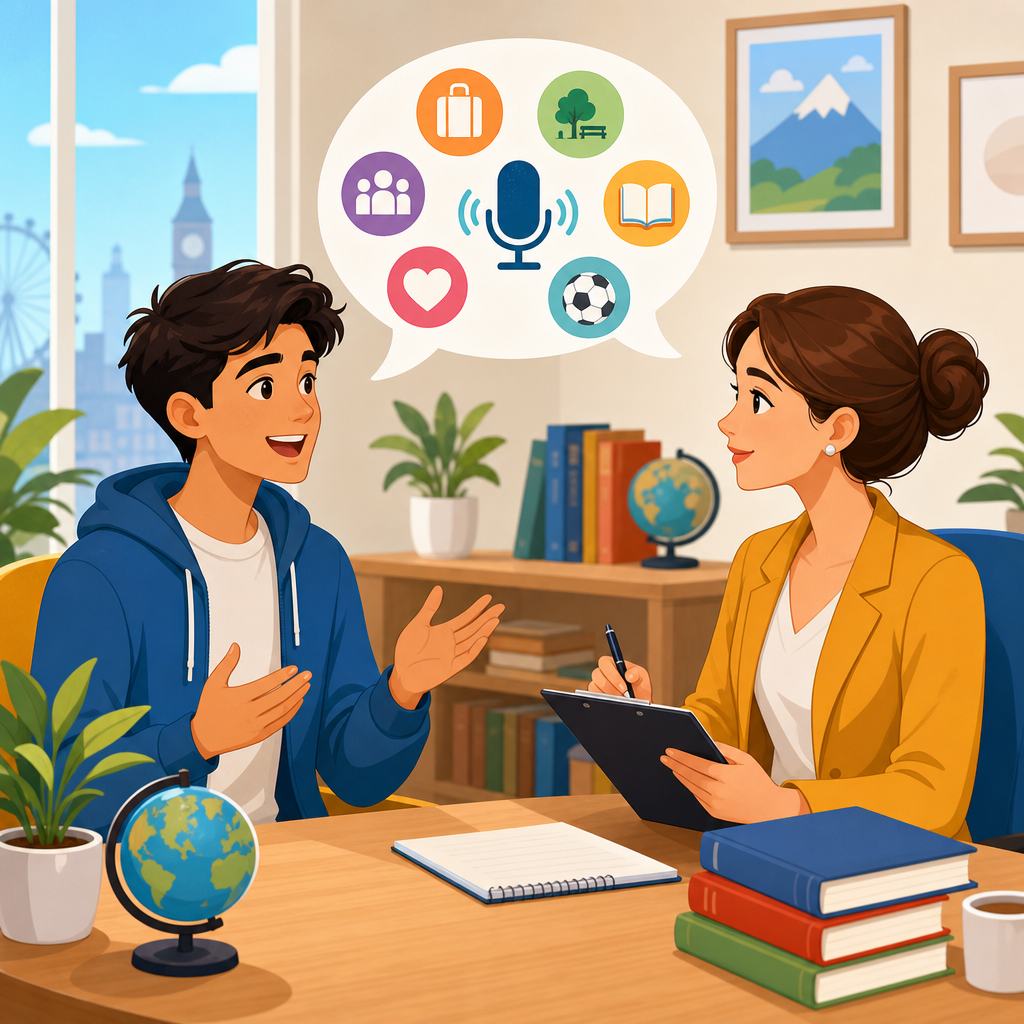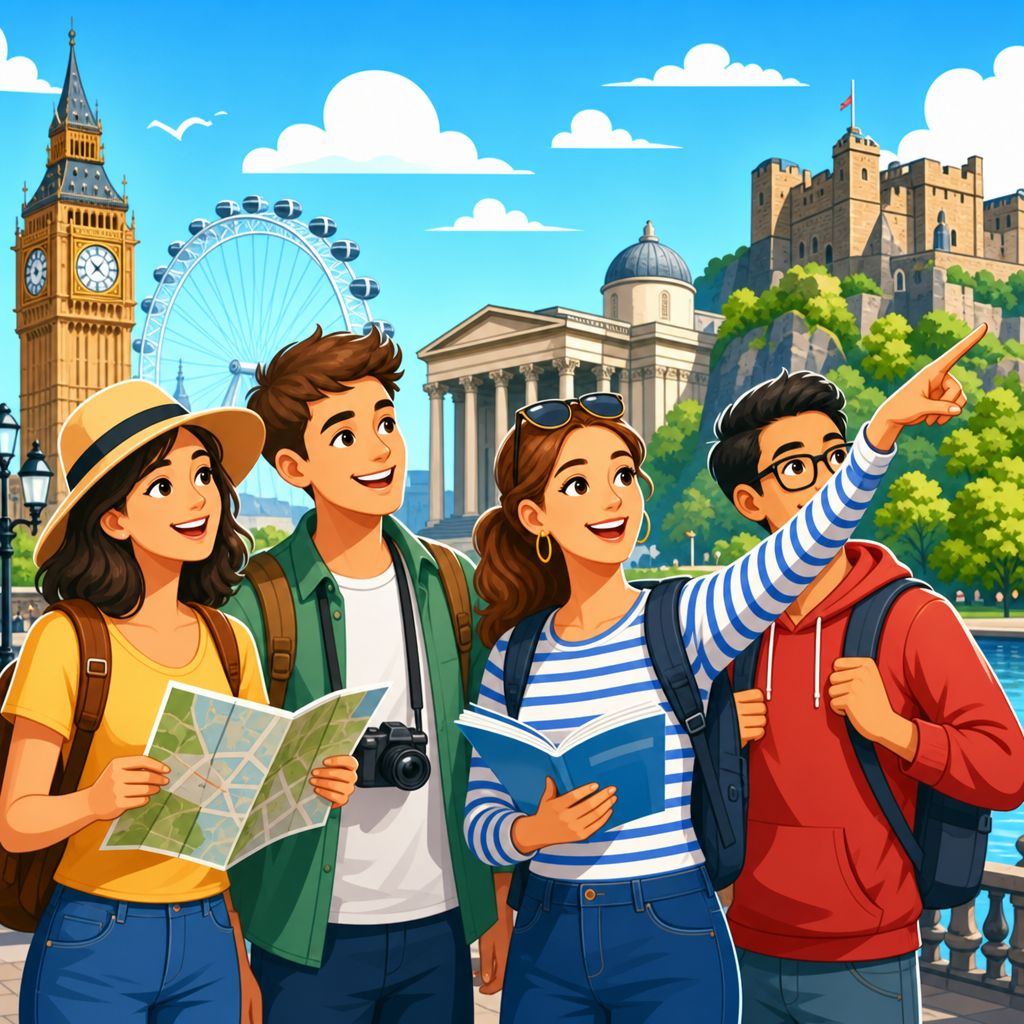
English for tourist attractions and sightseeing is the part of travel English that helps learners understand signs, ask for information, book tickets, follow guided tours, and describe places clearly and confidently. It sits at the center of practical English for travel because many of the most important interactions on a trip happen at museums, landmarks, parks, historic sites, observation decks, galleries, temples, castles, and local points of interest. When students can use this language well, they do more than buy a ticket or read a map. They gain independence, avoid common misunderstandings, and enjoy richer cultural experiences.
In my work with adult ESL learners preparing for holidays, study tours, business trips, and family visits, sightseeing vocabulary is often the skill gap they notice only after arrival. They may know how to order food or check into a hotel, yet freeze when a ticket agent asks whether they want a guided tour, an audio guide, or admission to a special exhibition. They may understand basic directions but struggle with phrases like “timed entry,” “skip-the-line access,” “temporary closure,” “restoration work,” or “restricted area.” That is why English for tourist attractions matters: it connects classroom English to real decisions people make while moving through unfamiliar places.
Key terms in this topic include attraction, admission, entrance fee, guided tour, self-guided tour, opening hours, landmark, heritage site, viewpoint, brochure, exhibit, queue, and accessibility. Learners also need action language such as “Is photography allowed?” “How long does the tour last?” “Where do we collect our tickets?” and “What is included in the pass?” They need descriptive language too, because sightseeing is not only transactional. Travelers talk about architecture, scenery, history, crowds, weather, and recommendations. A complete hub article must therefore cover both survival English and expressive English.
This page serves as a practical overview of English for travel with a sightseeing focus. It explains the core language situations, the vocabulary families that appear repeatedly, the questions travelers most often ask, and the study methods that lead to fluent use under real conditions. If you are building travel English for a specific goal, this is the foundation. From here, learners can branch into airport English, hotel English, restaurant English, transportation English, shopping English, and emergency English with a stronger command of the words and structures they will actually use on the ground.
Core English for tourist attractions and sightseeing
The most useful sightseeing English begins with orientation and access. Travelers need to ask where an attraction is, how to get there, whether tickets must be booked in advance, and what time entry begins. In practice, short direct questions work best: “How do I get to the museum from here?” “Do I need to book ahead?” “What time is the last entry?” “Is there a student discount?” “Can I buy tickets online?” “Is the attraction within walking distance?” These are high-frequency questions because they solve immediate problems and reduce wasted time.
At the attraction itself, the language becomes more specific. Ticket counters commonly use terms such as adult ticket, child ticket, concession, family pass, combination ticket, valid ID, non-refundable, and timed slot. Guided tours add another set: meeting point, departure time, headset, multilingual guide, and group size. I advise learners to memorize these as chunks rather than isolated words. For example, “Where is the meeting point?” is more useful than learning “meeting” and “point” separately. The same is true for “How long is the guided tour?” and “What does the ticket include?”
Signs also carry important functional English. “No flash photography” means photos may be allowed, but not with flash. “Please do not touch the exhibits” appears in museums and historic houses. “Keep off the grass,” “mind the step,” “watch your belongings,” and “entrance around the corner” are common at outdoor sites. Learners who can decode this language move more confidently and avoid mistakes that can be embarrassing or costly. Reading signs is an often overlooked part of English for travel, yet it is one of the fastest ways to build independence.
Sightseeing also includes talking about impressions. Travelers want to say that a site is breathtaking, crowded, overrated, well preserved, family-friendly, worth visiting, or difficult to access. They may compare places: “The cathedral was more impressive than I expected,” or “The old town was charming, but very busy in the afternoon.” This descriptive language matters because travel is social. People share recommendations, discuss plans, and post reviews. A learner who can only ask for tickets but cannot describe an experience still has a limited command of travel English.
Essential vocabulary and phrases by situation
A strong travel English system groups vocabulary by situation instead of alphabetical lists. For planning, learners need destination words such as opening hours, peak season, admission fee, reservation, cancellation policy, queue, map, and public transport connection. For arrival, they need entrance, ticket desk, security check, cloakroom, restroom, lift, staircase, exit, and information counter. For touring, they need exhibit, gallery, monument, ruins, viewpoint, trail, guided commentary, brochure, and souvenir shop. Grouping vocabulary this way makes retrieval faster during real conversations.
Question forms are equally important. The most reliable structures are “Where can I…?” “How much is…?” “How long does… take?” “Is there…?” “Are we allowed to…?” and “Could you recommend…?” These frames cover most travel interactions. For example, “Where can I store my bag?” “How much is admission?” “How long does the visit usually take?” “Is there a reduced rate for seniors?” “Are we allowed to bring water inside?” “Could you recommend the best time to visit?” Because the grammar repeats, learners can focus their energy on the key nouns.
Pronunciation matters more than many learners expect. Words like itinerary, architecture, archaeological, cathedral, and souvenir often cause hesitation. So do place names. In my classes, I encourage students to practice saying the exact names of major attractions on their itinerary aloud before traveling. This sounds simple, but it saves time and reduces stress when asking local staff for help. If you cannot clearly pronounce “Sagrada Família,” “Acropolis,” or “Metropolitan Museum of Art,” even a grammatically correct question may not land.
| Situation | Useful question | Typical reply |
|---|---|---|
| Buying tickets | Do I need to book in advance? | Yes, timed entry is required on weekends. |
| Finding access | Which entrance should we use? | Please use the main entrance on the east side. |
| Joining a tour | Where is the meeting point? | Meet your guide beside the information desk. |
| Checking rules | Is photography allowed inside? | Yes, but flash and tripods are not permitted. |
| Planning time | How long does the visit usually take? | Most visitors spend about two hours here. |
Polite repair language is another essential layer. Travelers often miss one key word in a noisy environment. They need simple recovery phrases such as “Sorry, could you repeat that?” “Did you say the south entrance?” “Could you speak a little more slowly?” and “Can you show me on the map?” These expressions are not advanced, but they are high value because they keep communication moving. In real travel settings, successful English is not perfect English. It is clear, polite, and resilient.
Using English at museums, landmarks, tours, and outdoor sites
Museums require a combination of transactional and academic vocabulary. Visitors ask about exhibitions, collections, periods, and facilities: “Which gallery has the Impressionist paintings?” “Is the special exhibition included in general admission?” “Are lockers available?” “Do you offer audio guides in English?” They also need to understand labels that refer to century, artifact, restoration, archive, and curator. This is especially useful for learners who travel for education, professional development, or cultural interest, not only leisure.
Historic landmarks and monuments bring different language demands. Staff may explain conservation rules, restricted zones, steep climbs, uneven surfaces, or weather-related closures. At castles, forts, archaeological sites, and religious buildings, visitors often hear phrases like “Please remain behind the barrier,” “The tower is accessible by stairs only,” or “This section is closed for restoration.” In many destinations, UNESCO World Heritage sites attract large numbers of international visitors, so the English used there tends to be standardized, concise, and sign-based. Learners who master this style can transfer it from one country to another.
Guided tours depend heavily on listening skills. A guide may give instructions quickly: where to meet after free time, whether headphones are required, what is included, and when the bus departs. I have seen fluent readers struggle here because spoken travel English compresses information. Numbers, time references, and location details are especially easy to miss. That is why note-taking strategies help. Learners should practice catching key data points: meeting time, gate number, platform, level, duration, and emergency contact. This makes sightseeing English functional instead of passive.
Outdoor attractions such as national parks, viewpoints, botanical gardens, and walking tours require weather and safety language. Visitors may need to ask, “Is the trail suitable for children?” “How difficult is the route?” “Are there shaded areas?” “Do we need sturdy shoes?” “Is the viewpoint open in strong winds?” Unlike indoor sightseeing, outdoor trips can change quickly due to rain, heat, visibility, or wildlife rules. Clear English here improves not just convenience but safety. Travel learners should treat this vocabulary as essential, not optional.
Practical communication skills for real travel problems
Even well-planned sightseeing trips create friction points. Tickets do not scan, tours sell out, maps are unclear, and opening hours change. The best travel English prepares learners for problem solving, not just ideal scenarios. Useful complaint and clarification language includes “I think there may be a mistake with my booking,” “My ticket shows today, but the gate is not accepting it,” “The website said the attraction opened at nine,” and “Could you tell me what my options are?” This language stays polite while clearly stating the issue.
Digital travel has changed the language learners need. Many attractions now use QR codes, app-based tickets, timed entry systems, and contactless payment. Visitors must understand prompts like “download your voucher,” “present the barcode,” “activate location services,” “select a time slot,” and “show proof of purchase.” They also need fallback language when technology fails: “The app is not loading,” “I did not receive the confirmation email,” or “Is there a paper map available?” These are now mainstream travel situations, especially in major cities.
Accessibility language deserves dedicated attention. Travelers may need to ask about step-free access, wheelchair rental, elevators, accessible restrooms, hearing loops, seating areas, or stroller access. Phrases such as “Is the route wheelchair accessible?” “Are there benches along the path?” and “Does the museum provide captioned guides?” are practical and respectful. Inclusive travel English is not a niche skill. It supports older travelers, families with children, and anyone managing mobility, sensory, or fatigue issues during long sightseeing days.
There is also a cultural skill behind the words. In some places, direct questions are normal and efficient. In others, a softer opening works better: “Hi, could you help me?” or “Excuse me, I have a question about the tour.” I tell learners to balance clarity with politeness, especially when staff are busy. Tone matters. A short, calm request often gets a better response than a long explanation. Good sightseeing English is therefore not only vocabulary. It is the ability to choose the right level of formality for the moment.
How to study English for travel and build long-term fluency
The fastest way to improve English for tourist attractions and sightseeing is to study from real travel materials. Use official attraction websites, online maps, museum floor plans, ticketing pages, visitor FAQs, and audio guide samples. These sources show the exact language travelers meet in the real world. Learners should build phrase banks from them, organized by purpose: booking, arrival, rules, asking questions, and giving opinions. This produces better results than memorizing generic travel dialogues that rarely match actual situations.
Role-play remains one of the most effective methods when done realistically. Practice buying a ticket, asking for the best route, joining a walking tour late, requesting a refund after a closure, or explaining that you did not understand the guide. Record the conversation, listen back, and check whether the request was clear in under fifteen seconds. That benchmark matters because real travel interactions are usually brief. Fluency for sightseeing is not about long speeches. It is about fast retrieval of accurate phrases under mild pressure.
Listening practice should include different English accents because tourist staff and guides may be local speakers, international workers, or fellow travelers. Exposure to British, American, Australian, Irish, and non-native but fluent global English improves comprehension. Video walking tours, museum clips, and city guide channels are useful because they combine visuals with context. Learners remember language more effectively when they can connect words like archway, courtyard, waterfront, and observation deck to actual images.
As a hub within ESL for specific goals, this topic should connect to every major travel skill. Sightseeing links directly to transportation when you ask how to reach an attraction, to hotel English when you request local recommendations, to restaurant English when you plan meals around tour times, and to emergency English when you get lost or separated from your group. Build these links intentionally in your study plan. Choose one city, create a full day itinerary in English, and practice every stage from departure to return. That is how travel English becomes usable, memorable, and confident. Start with your next destination and build your phrase list today.
Frequently Asked Questions
1. Why is English for tourist attractions and sightseeing so important when traveling?
English for tourist attractions and sightseeing is important because it covers many of the real-life situations travelers face every day. Even if someone already knows basic travel phrases for airports, hotels, and restaurants, they often still need specific language to understand maps, read entry rules, ask about opening hours, buy tickets, join tours, follow directions, and learn about a place’s history or cultural meaning. At museums, landmarks, galleries, national parks, temples, castles, and city viewpoints, travelers regularly interact with staff, guides, signs, audio devices, and other visitors. Being able to understand and use the right English in these situations makes the experience smoother, less stressful, and much more enjoyable.
This type of English also helps learners become more independent. Instead of avoiding questions or feeling confused by unfamiliar vocabulary, they can ask things like “Where is the entrance?”, “Is photography allowed here?”, “How long does the tour last?”, or “Do I need to book in advance?” These are practical, high-value questions that save time and prevent misunderstandings. In many tourist settings, clear communication matters because there may be time limits, safety rules, restricted areas, or different ticket options. A traveler who can speak confidently is better prepared to make decisions, solve problems, and enjoy the visit fully.
Just as importantly, sightseeing English helps people describe what they see and share experiences with others. Learners can talk about architecture, scenery, historical importance, and personal impressions more clearly. That means they are not only surviving the trip but actively participating in it. For anyone studying practical travel English, this area sits at the center of real communication because so many memorable travel moments happen at places of interest.
2. What kinds of vocabulary and expressions should learners study for museums, landmarks, and other attractions?
Learners should focus on vocabulary that supports both understanding and interaction. A strong starting point includes words related to access and movement, such as entrance, exit, ticket office, queue, guided tour, audio guide, map, platform, viewpoint, exhibit, gallery, monument, temple, trail, and opening hours. These are the terms travelers are most likely to see on signs, brochures, websites, and information boards. They should also learn common action phrases such as “buy a ticket,” “book online,” “join the tour,” “take photos,” “follow the path,” “stand in line,” and “check the schedule.”
Question forms are equally important. Travelers should be comfortable asking for information in clear, polite ways. Useful examples include “How much is admission?”, “Is there a discount for students?”, “What time does it close?”, “Where does the tour start?”, “Can I bring a backpack inside?”, and “Is this area open to visitors today?” These expressions are especially useful because they apply to many types of places, from art museums and historic homes to observation decks and botanical gardens. Polite phrases such as “Could you tell me…,” “Excuse me,” and “Would you mind explaining…” also make communication more natural and respectful.
Descriptive vocabulary matters too, especially for discussing the attraction itself. Learners benefit from words like ancient, modern, crowded, peaceful, famous, preserved, local, scenic, historic, impressive, well-known, and cultural. They should also learn how to describe features of a place: “The building is over 300 years old,” “The view overlooks the city,” “This temple is known for its carvings,” or “The museum has a large collection of paintings.” With this combination of practical and descriptive language, learners can understand the environment, ask the right questions, and speak about sightseeing experiences with more confidence and accuracy.
3. How can learners use English to ask for information, book tickets, and handle common sightseeing problems?
Learners can prepare by mastering a set of practical question patterns that work in many situations. For asking for information, simple and direct questions are often best: “What time is the next tour?”, “Which ticket includes the tower access?”, “How do I get to the main entrance?”, and “Is there a guided tour in English?” These questions help travelers quickly get the details they need. When booking tickets, it is also useful to know phrases related to availability, timing, and price, such as “Are there any tickets left for today?”, “Can I reserve two tickets for the 2 p.m. tour?”, “Is it cheaper to book online?”, and “Do I need to print the confirmation?”
Common sightseeing problems usually involve timing, access, confusion about directions, or misunderstanding the rules. For example, a traveler may arrive at the wrong entrance, miss a time slot, not understand whether photography is allowed, or discover that an attraction is sold out. In these situations, clear English can make a big difference. Helpful phrases include “I think I booked the wrong date,” “Can you help me find the ticket counter?”, “I’m not sure where the tour meeting point is,” “Is there another entrance?”, and “Could you explain the rule about photos?” These expressions are practical because they help the traveler stay calm, explain the problem, and ask for a solution.
It is also smart to practice polite follow-up language. If the first answer is unclear, learners can say “Sorry, could you repeat that?”, “Do you mean I need to wait here?”, or “So the last entry is at 5 p.m., right?” Confirming information this way reduces mistakes. In tourist environments, where there may be crowds, noise, and limited time, short, clear, and polite English is often the most effective. The more familiar learners become with these useful patterns, the more confidently they can manage both routine tasks and unexpected issues.
4. What English is useful for following guided tours, understanding signs, and listening to explanations?
Following a guided tour requires a different but closely related set of language skills. Learners need to understand instructions, transitions, and key descriptive terms used by guides. Common phrases include “Please follow me,” “We’ll stop here for a few minutes,” “On your left, you’ll see…,” “This site dates back to…,” and “The building was restored in….” These expressions appear often in live tours, audio guides, and educational presentations. By becoming familiar with them, learners can follow the flow of information more easily and avoid getting lost during the visit.
Signs also use very specific language, so travelers should learn the most common forms they will see. Examples include “No entry,” “Staff only,” “Keep off the grass,” “Silent area,” “No flash photography,” “Temporary exhibition,” “Last admission,” “Emergency exit,” and “Please do not touch.” These messages are usually short, but they are important because they communicate rules, restrictions, and safety instructions. Misunderstanding even one sign can lead to confusion or inconvenience, especially at busy or highly regulated attractions such as heritage sites, religious buildings, or wildlife reserves.
To improve listening comprehension, learners should practice identifying the main idea first instead of trying to understand every single word. On tours, key information often includes dates, names, locations, historical events, and instructions about where to go next. If something is unclear, helpful questions include “Could you say that again?”, “What does that word mean?”, “Did you say this part is original?”, and “Are we allowed to explore this area on our own?” These questions show active interest and help learners stay engaged. In practical terms, successful sightseeing English is not about perfect fluency; it is about understanding enough to follow the experience, respect the rules, and enjoy the story behind the place.
5. How can students practice English for sightseeing so they can speak more clearly and confidently on a real trip?
The best way to practice is to combine vocabulary study with realistic speaking tasks. Students should begin by learning the most common words and phrases connected to tourist attractions, then use them in short role-plays. For example, one person can act as a visitor and another as a ticket office employee, tour guide, or museum staff member. Practice situations might include asking about prices, checking tour times, finding the entrance, asking whether photos are allowed, or requesting directions to a famous landmark. Repeating these everyday scenarios helps learners build speed, confidence, and automatic recall.
It also helps to use real-world materials. Students can read attraction websites, look at online ticket pages, study maps, and listen to audio guide samples or travel videos in English. This exposes them to the exact language used in authentic situations, including terms like admission, reservation, guided visit, exhibition hall, observation deck, heritage site, and accessibility information. They can then summarize what they read or heard by saying things like “The museum opens at 10 a.m.,” “Visitors need to reserve in advance,” or “The castle is famous for its medieval architecture.” This type of practice strengthens both understanding and speaking ability.
Another effective method is personal description practice. Students should talk about attractions they have visited or would like to visit, using clear structure: what the place is, where it is, why it is famous, what visitors can do there, and what they personally think about it. For example, they might describe a historic cathedral, a local park, a famous art museum, or a mountain viewpoint. This develops the ability to speak naturally during real travel conversations. Over