Future tense in English often confuses learners because English does not use one single future form. Instead, speakers choose between several structures, especially will and be going to, to express different meanings. In ESL grammar, understanding that difference is essential because it affects clarity, accuracy, and naturalness in speaking and writing. I have taught this point to beginners, test-preparation students, and working professionals, and the same pattern appears every time: students may know the rules in isolation, but they hesitate when they must choose the right form in real conversation.
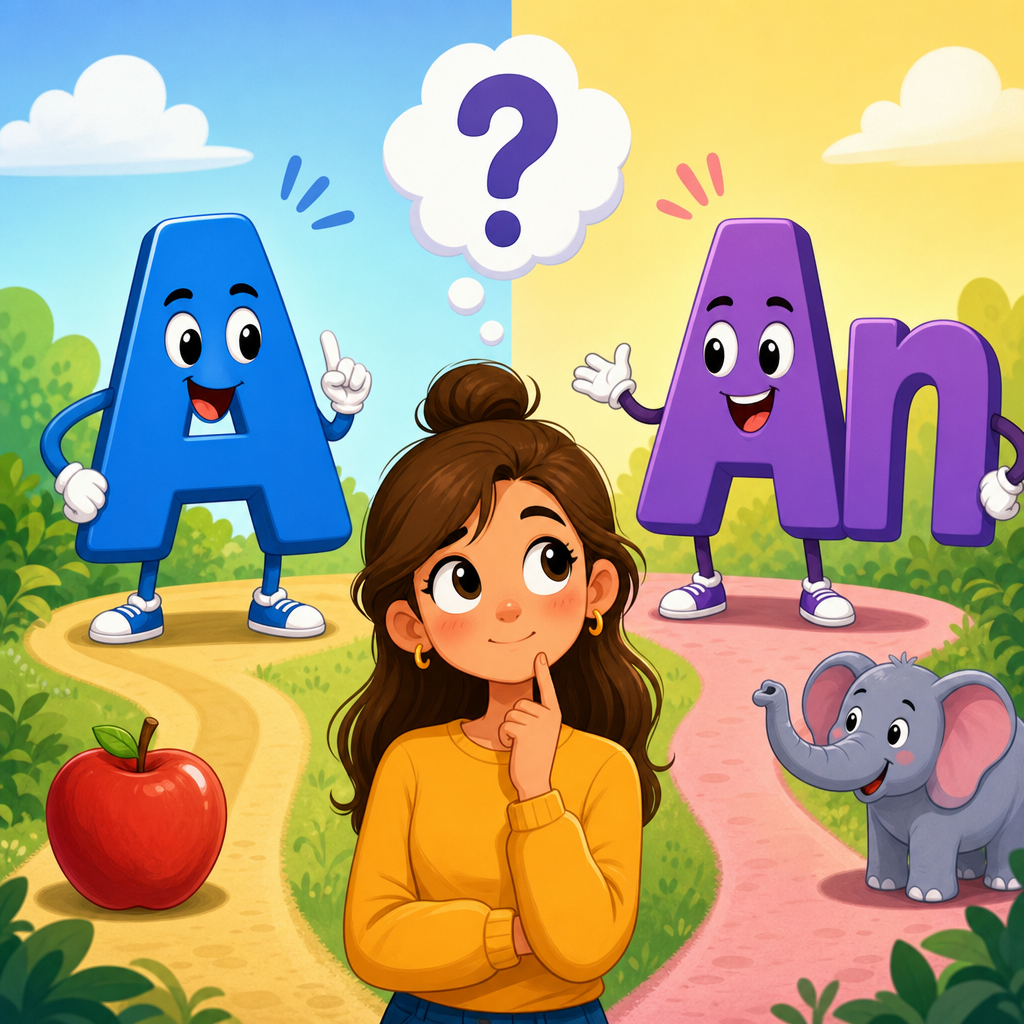
At a basic level, will and going to both refer to the future. However, they do not always mean exactly the same thing. In most modern usage, will commonly expresses instant decisions, promises, offers, predictions, and future facts, while going to usually expresses plans, intentions, and predictions based on present evidence. That distinction matters because grammar is not only about correctness; it is also about signaling how certain, planned, or immediate an idea is. A learner who says, “I will visit my aunt this weekend,” may sound different from one who says, “I’m going to visit my aunt this weekend,” even if both sentences refer to the same trip.
This article is a hub for verb tenses within ESL grammar, with the future tense in English as the central focus. To use future forms well, learners also need to connect them to the wider tense system: present simple for schedules, present continuous for arrangements, future continuous for actions in progress, future perfect for completed actions before a later time, and modal forms for probability and obligation. When students understand how these pieces fit together, they stop treating grammar as a set of disconnected rules and start seeing a practical decision system. That system helps with exams, workplace English, academic writing, and everyday conversation.
English grammar resources often oversimplify the topic by saying will is “future simple” and going to is “planned future.” That shortcut helps at first, but it breaks down quickly. Native speakers regularly use both forms in overlapping ways, and context decides the best option. The good news is that the patterns are teachable. Once you learn what each form usually signals, you can make strong choices and notice how fluent speakers use future language naturally.
What future tense means in English grammar
In technical grammar terms, English has no single inflected future tense like some other languages. Instead, it uses auxiliary verbs and time expressions to refer to future time. That is why many grammar references, including large learner dictionaries and pedagogical grammars, discuss “future forms” rather than one future tense. For ESL learners, this distinction matters because future meaning can appear in several structures: will, be going to, present continuous, present simple, future continuous, future perfect, and future perfect continuous.
Consider these examples. “The train leaves at 6:10” uses the present simple for a schedule. “I’m meeting Sarah tomorrow” uses the present continuous for a personal arrangement. “At 9 p.m., I’ll be studying” uses the future continuous. “By Friday, she will have finished the report” uses the future perfect. These are all future meanings, but each structure answers a slightly different question. A strong verb tense foundation means knowing not only the form, but also the communicative purpose behind it.
As a hub within verb tenses, this page should help you identify where will and going to fit. Think of them as two high-frequency future forms that sit beside other future expressions rather than above them. Learners who master this relationship write more natural sentences and avoid common errors such as using will for every future idea.
Will vs going to: the core difference
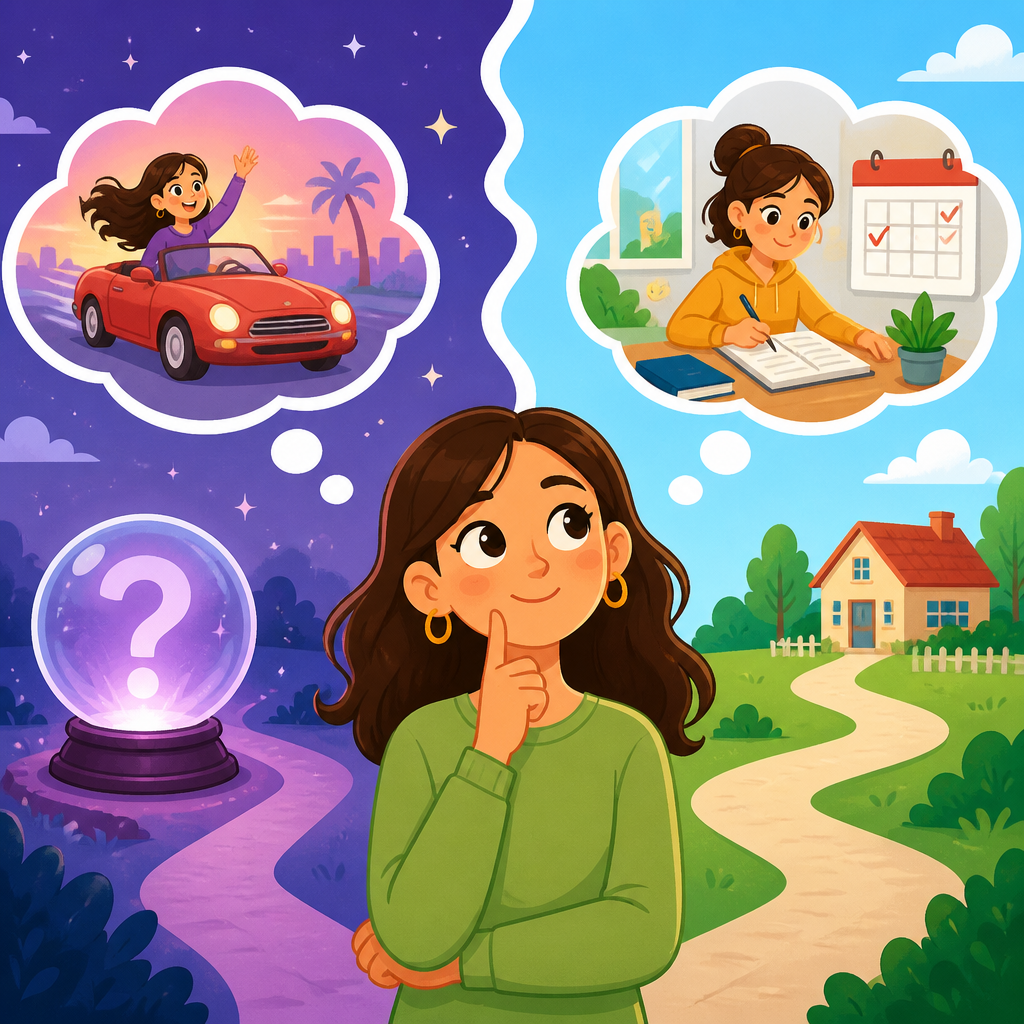
The clearest practical difference is this: will often presents a future action as a decision, promise, offer, prediction, or neutral fact, while going to presents it as a prior plan, intention, or evidence-based prediction. In the classroom, I summarize it this way: if the idea exists before the moment of speaking, going to is often the better choice; if the idea is formed at the moment of speaking, will is usually more natural.
For example, imagine someone says, “There’s no milk.” If you reply, “I’ll buy some,” that sounds like a spontaneous decision. If you say, “I’m going to buy some,” it suggests the plan already existed or is part of a broader intention. Another example: “Look at those clouds. It’s going to rain” uses visible evidence. By contrast, “I think it will rain tomorrow” sounds like a general prediction, opinion, or forecast without immediate physical proof.
These differences are tendencies, not rigid laws. In many everyday sentences, both forms are grammatically possible. The real issue is what meaning you want to highlight. Precision here improves fluency because listeners hear not just the future event, but your attitude toward it.
How to form future structures correctly
Form matters because many learner errors are mechanical rather than conceptual. The structure of will is simple: subject + will + base verb. Example: “She will call later.” Negatives use will not or won’t: “She won’t call tonight.” Questions invert the subject and auxiliary: “Will she call later?” The verb after will stays in the base form, so forms like “will goes” and “will to go” are incorrect.
The structure of going to is subject + form of be + going to + base verb. Example: “They are going to move in June.” Negatives place not after the verb be: “They aren’t going to move yet.” Questions also invert be: “Are they going to move in June?” Because this form contains the verb be, students often forget agreement and say “He going to study.” The correct form is “He is going to study.”
| Use | Typical Form | Example | Why It Fits |
|---|---|---|---|
| Spontaneous decision | will + base verb | I’ll answer the phone. | The decision happens now. |
| Prior plan | be going to + base verb | We’re going to repaint the kitchen. | The intention existed before speaking. |
| Prediction without evidence | will + base verb | I think sales will improve. | It expresses opinion or forecast. |
| Prediction from present evidence | be going to + base verb | That box is going to fall. | The evidence is visible now. |
Contractions matter too. In conversation, native speakers strongly prefer “I’ll,” “you’ll,” “we’re going to,” and “she’s going to.” Learners who only practice full forms can understand grammar but still sound stiff. Accurate contracted speech is part of practical tense control.
When to use will
Will is the best choice for several common functions. First, use it for spontaneous decisions: “I’ll open the window.” Second, use it for offers and willingness: “I’ll help you with your bags.” Third, use it for promises: “I’ll call you after the meeting.” Fourth, use it for predictions and beliefs: “I think the team will win.” Fifth, use it for future facts or formal statements: “The next semester will begin in September.”
In professional English, will also appears in requests and polite statements, especially with adverbs and time clauses. Examples include “I’ll send the revised version by noon” and “Will you please confirm receipt?” In contracts, policies, and technical writing, will can mark expected future action, though some style guides prefer must for obligation because it is clearer. This is an important nuance for advanced learners writing business or legal-adjacent English.
One classroom mistake I see often is overusing will after if in conditional clauses. Standard usage is “If it rains, we’ll stay inside,” not “If it will rain, we’ll stay inside,” unless will expresses willingness. That issue connects future forms to conditionals, which are a major part of the broader verb tense system.
When to use going to
Going to is most natural when talking about intentions and plans already in the speaker’s mind. “I’m going to start a new course next month” suggests a decided intention. It is also the preferred form for predictions based on present evidence: “Watch out! You’re going to spill your coffee.” In both cases, the future is linked to something that already exists now, either a plan or visible proof.
This form is especially useful in spoken English because it sounds direct and concrete. A manager saying, “We’re going to expand into two new markets” implies a strategic plan, not just a guess. A parent saying, “It’s going to be a long day” while looking at traffic, tired children, and a delayed train points to current evidence. That evidence-based feature is the fastest way for many learners to choose correctly.
Pronunciation also matters here. In rapid speech, many speakers reduce “going to” to /ˈɡənə/ in informal conversation, though it should still be written as going to in standard English unless you are representing speech informally. Learners should recognize the reduced sound, but not assume every casual pronunciation belongs in formal writing.
Other future forms every ESL learner should know
Because this is a verb tenses hub, future meaning cannot stop with will and going to. The present continuous often expresses fixed arrangements: “I’m meeting the client at 3.” The present simple expresses official schedules and timetables: “The exam starts at 9.” The future continuous describes an action in progress at a future time: “This time tomorrow, I’ll be flying to Osaka.” The future perfect shows completion before a future point: “By next week, they’ll have finished the audit.” The future perfect continuous emphasizes duration up to a future moment: “By June, she’ll have been teaching here for ten years.”
Each form solves a different communication problem. If you choose going to for a train timetable, you sound less natural than if you use the present simple. If you use will instead of the future perfect in “By 5 p.m., I’ll finish,” the meaning may be understandable, but it loses the precise sense of completion before a deadline. Strong ESL grammar depends on matching time meaning to the right structure, not just selecting any future form.
Common learner mistakes and how to fix them
The first common error is treating will and going to as perfectly interchangeable in all cases. They overlap, but they are not identical. The second error is forgetting the verb be in going to. The third is using future forms after time words such as when, after, before, and as soon as when English usually prefers the present simple: “I’ll call you when I arrive,” not “when I will arrive.” The fourth is using the wrong future form for schedules and arrangements.
The best fix is contrastive practice. Put similar sentences side by side and ask what changes in meaning: “I’ll cook tonight” versus “I’m going to cook tonight.” Then add context. If a friend asks, “What are your plans for dinner?” the second sentence is usually better. If someone says, “We’re hungry,” the first may fit as an immediate decision. This kind of contextual drilling works better than memorizing abstract rules alone.
Tools can help, but they should be used carefully. Corpora such as the Corpus of Contemporary American English and learner dictionaries from Cambridge, Longman, and Oxford show real examples. Grammar checkers may catch form errors, but they often miss nuance. The final choice still depends on meaning, context, and register.
How to practice future tense effectively
The fastest way to improve is to practice future forms in realistic situations. Use planning tasks, weather predictions, calendar discussions, travel arrangements, promises, and meeting agendas. Ask yourself three questions before choosing a form: Is this a prior plan? Is this an instant decision? Is there present evidence? Those questions correctly solve most will versus going to problems.
For long-term progress, link this topic to the full verb tense system. Study future forms alongside present tenses, modals, and conditionals. Write short dialogues, record spoken answers, and compare your choices with reliable reference examples. If you are building an ESL grammar routine, make this page your starting point, then continue to focused lessons on present simple, present continuous, future continuous, future perfect, and conditionals. That sequence builds control step by step.
Future tense in English becomes much easier once you stop looking for one universal rule. Will and going to both talk about the future, but they signal different things: decisions, plans, promises, predictions, and evidence. The wider verb tenses system adds more tools, including present forms for schedules and arrangements and advanced future forms for duration and completion. When learners understand these patterns together, their grammar becomes both more accurate and more natural.
The key takeaway is simple. Use will for spontaneous decisions, offers, promises, and general predictions. Use going to for prior plans and predictions based on present evidence. Then expand outward to the other future structures that complete the ESL grammar picture. This is how fluent speakers actually organize future meaning, and it is the most reliable way to improve tense choice in conversation, writing, and exams.
If you want stronger control of English verb tenses, use this article as your hub and keep practicing with targeted examples. Review one future form at a time, compare it with nearby structures, and apply it in real sentences every day.
Frequently Asked Questions
1. What is the main difference between will and going to in English?
The main difference is that will and be going to often express different reasons for talking about the future. In general, will is commonly used for spontaneous decisions, offers, promises, predictions based on opinion, and future facts. For example, if the phone rings and you say, “I’ll get it,” that decision is made at the moment of speaking. In contrast, be going to is usually used for plans already decided before the moment of speaking and for predictions based on present evidence. For example, “I’m going to study tonight” suggests the plan already exists, and “Look at those clouds. It’s going to rain” shows that the speaker sees evidence now.
That said, learners should know that the difference is not always absolute. In everyday conversation, native speakers sometimes use both forms in similar situations, especially when the meaning is generally clear from context. However, for ESL learners, the most useful rule is this: use will when the future idea is being decided now or when you are giving a neutral prediction, and use going to when the future event is already planned or when current evidence points strongly to what will happen. Mastering that distinction makes your English sound much more natural and precise.
2. When should I use will instead of going to?
You should usually use will in several common situations. First, use it for decisions made at the moment of speaking: “I’m thirsty. I’ll have some water.” Second, use it for offers and willingness: “I’ll help you with your homework.” Third, use it for promises: “I’ll call you tomorrow.” Fourth, use it for predictions that are based more on opinion, belief, or general expectation than on visible evidence: “I think Brazil will win the match.” Finally, will is often used for future facts or formal statements about the future: “The meeting will begin at 9:00.”
This form is especially important because it appears constantly in both spoken and written English. It is also the structure learners tend to overuse, because it feels simple and direct. The problem is that if you use will for every future meaning, your English may sound less accurate. For instance, saying “I will visit my grandmother this weekend” is not wrong, but if the visit has already been arranged, “I’m going to visit my grandmother this weekend” may sound more natural. So the key is not just knowing that will talks about the future, but understanding why the speaker chooses it in a specific situation.
3. When is going to the better choice?
Going to is usually the better choice when the future action has already been planned or intended before the conversation happens. For example, “We’re going to move to a new apartment next month” suggests that the speakers have already discussed or decided it. This is one of the most useful functions of going to for learners, because it helps distinguish a prior plan from a sudden decision. If you decide right now, use will; if the decision existed before now, going to is often better.
Going to is also commonly used for predictions based on present evidence. If you see a child holding a melting ice cream over the carpet, you might say, “She’s going to drop it.” In that sentence, the prediction is not just a personal opinion; it is supported by what you can see. This is one of the clearest contrasts with will. Compare: “I think it will be a great year” expresses belief, while “That tree is leaning dangerously. It’s going to fall” expresses a prediction based on visible signs. For learners, this distinction is practical, memorable, and very important for fluent communication.
4. Can will and going to ever both be correct?
Yes, in many situations both forms can be grammatically correct, but they may create slightly different meanings or emphasis. For example, “I’ll talk to the manager” may suggest a decision made now or a willingness to do it, while “I’m going to talk to the manager” suggests that the speaker already intended to do so. Both sentences refer to the future, but they do not feel exactly the same. This is why students often get confused: the grammar is not only about time, but also about intention, evidence, and speaker attitude.
In some predictive statements, the difference can be subtle. “It will rain later” sounds like a general prediction, perhaps based on a forecast or personal opinion. “It’s going to rain later” can sound stronger, especially if there is present evidence such as dark clouds or thunder. In real life, context often determines which form sounds best. The encouraging news for learners is that using one instead of the other does not always cause a serious communication problem. Still, if your goal is accurate, natural English, it is worth learning the nuance. That nuance is exactly what helps intermediate and advanced learners sound more confident and polished.
5. What mistakes do English learners commonly make with will and going to, and how can they avoid them?
One very common mistake is using will for every future sentence. This happens because many students are taught early that will means future, so they rely on it too much. As a result, they may say “I will meet my friend tonight” in every context, even when the meeting was planned earlier. While this is understandable, it can miss the more natural choice of “I’m going to meet my friend tonight.” Another common mistake is forgetting the correct form of be in the going to structure. Learners may say “I going to study” instead of “I am going to study.” Because going to requires the verb be, accuracy in forms like am, is, and are is essential.
To avoid these mistakes, focus on the reason behind the future sentence, not just the time reference. Ask yourself: Is this a decision I am making right now? Then will is probably best. Was this already planned before I started speaking? Then going to is likely the better choice. Am I predicting something because I can see evidence now? Use going to. Am I giving an opinion, making a promise, or offering help? Use will. Practice with real-life examples, short dialogues, and contrast pairs such as “I’ll answer the door” versus “I’m going to answer the door.” Over time, these patterns become much easier to recognize, and your future forms will become more accurate and natural.