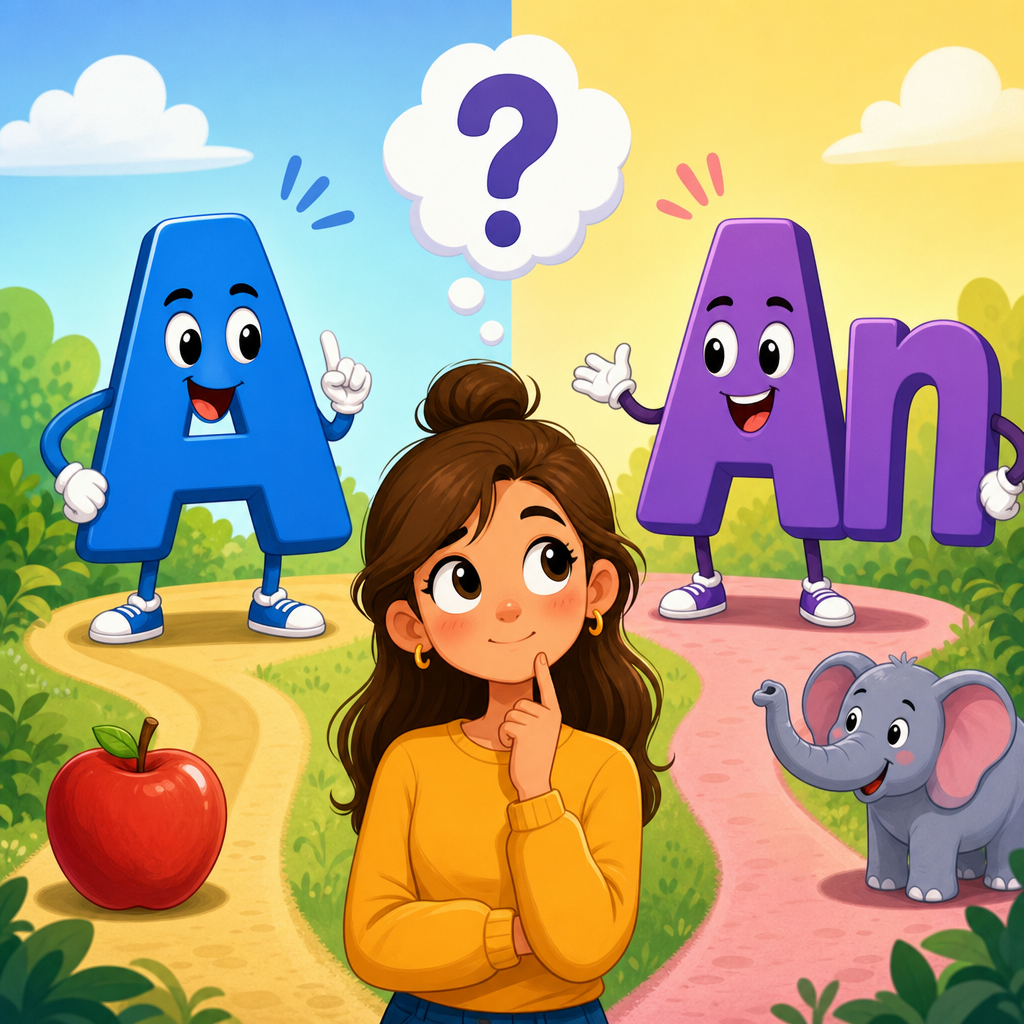
Question marks look simple, but in ESL grammar they carry more meaning, tone, and structure than many learners expect. This punctuation mark signals a direct question, guides sentence order, shapes written voice, and helps readers understand when information is being requested rather than stated. In teaching and editing English, I have seen strong vocabulary undermined by weak punctuation, and the question mark is one of the clearest examples. A sentence can be grammatically complete, yet still feel confusing or rude if the ending mark does not match the speaker’s intent.
For English learners, punctuation is not decoration. It is part of grammar. Question marks work together with word order, auxiliary verbs, intonation, capitalization, and quotation marks. They also connect to broader punctuation topics such as commas, periods, apostrophes, exclamation points, parentheses, and semicolons. That is why this article serves as a hub for punctuation within ESL grammar: understanding the question mark helps learners master many other marks as well. If you know when a sentence is truly a question, you are already improving sentence control across the board.
A question mark is the punctuation mark used at the end of a direct question. The key term is direct. “Where are you going?” takes a question mark because the writer asks something directly. “I asked where you were going” does not, because it reports a question instead of asking one. That distinction seems small, but it explains a large share of learner mistakes. Many students place question marks anywhere they see question words like who, what, where, when, why, or how. In practice, the mark depends on sentence function, not just vocabulary.
This matters because punctuation affects clarity, politeness, and credibility. In academic writing, business email, exam responses, and casual messaging, a misplaced question mark can change the tone. “You finished the report.” is a statement. “You finished the report?” expresses surprise, doubt, or a request for confirmation. “Did you finish the report?” is the standard direct question. Those differences are not minor. They change what the reader believes the writer means. For ESL learners, mastering question marks improves grammar accuracy, reading comprehension, and confidence in real communication.
What a Question Mark Does in English Sentences
The main job of a question mark is to end a direct question. Direct questions ask for information, confirmation, choice, or repetition. They usually appear in one of several common patterns: yes-no questions, wh- questions, tag questions, choice questions, and short echo questions. Examples include “Do you need help?”, “Why did the train stop?”, “You called her, didn’t you?”, “Would you like tea or coffee?”, and “Tomorrow?” Each asks something directly, so each correctly ends with a question mark.
In classroom writing, I often tell learners to test the sentence by asking, “Am I requesting an answer from the reader?” If the answer is yes, a question mark is usually correct. If the sentence only reports someone else’s question, gives indirect information, or makes a statement with a question word inside it, a period is usually correct. For example, “Can you tell me where the station is?” ends with a question mark because the whole sentence is a direct request. “Please tell me where the station is.” ends with a period because it is an imperative sentence, not a direct question.
Question marks also indicate tone. In speech, intonation rises or falls. In writing, punctuation carries part of that burden. “Really?” can show surprise, disbelief, or interest depending on context. “Really.” sounds flat or skeptical. Because English relies heavily on punctuation to signal meaning in short messages, social posts, and email, question marks influence not just grammar but also interpersonal tone. Used correctly, they make writing sound natural. Used carelessly, they can make a writer seem uncertain, aggressive, or unprofessional.
Direct Questions, Indirect Questions, and Common ESL Errors
The most important rule is straightforward: use a question mark after a direct question, but not after an indirect question. A direct question stands on its own. “What time does class start?” is direct. An indirect question is embedded inside another sentence. “I wonder what time class starts.” is indirect, so it ends with a period. Another example: “Do you know where my keys are?” uses a question mark because the full sentence asks the listener something. “She asked where my keys were.” reports the question and takes a period.
Many ESL learners overuse question marks because they focus on question words instead of sentence structure. “I don’t know why he left?” is a common mistake. The sentence is a statement about not knowing, so it should end with a period. Another frequent issue is inversion. Learners may write “Why you are late?” because they understand that it is a question. The punctuation is correct, but the grammar is not. Standard English requires “Why are you late?” Question marks do not repair incorrect word order; they only mark the sentence type.
Polite requests create another problem area. “Could you open the window?” is a direct question and needs a question mark. “Please open the window.” is a command and needs a period, even though the meaning is polite. “I wanted to ask if you could open the window.” is usually a statement and takes a period. These differences matter in professional English, where politeness often appears through indirect wording. Learners need to look at grammatical form, not just communicative intention.
| Sentence | Type | Correct End Mark | Why |
|---|---|---|---|
| Where do you live? | Direct question | Question mark | The writer asks for information directly. |
| I know where you live. | Statement | Period | The sentence gives information rather than asks for it. |
| Can you tell me where you live? | Direct question with embedded clause | Question mark | The whole sentence asks the listener something. |
| Please tell me where you live. | Imperative | Period | The sentence gives a command. |
| She asked where you live. | Reported speech | Period | The sentence reports a question. |
How Question Marks Work with Other Punctuation
Question marks do not exist alone. They interact with quotation marks, commas, parentheses, dashes, and exclamation points. In American English, if the questioned material is the quote itself, the question mark usually goes inside the closing quotation mark: “Who said ‘Practice makes perfect’?” If the entire sentence is a question but the quoted words are not, the question mark goes outside: Did she say “practice makes perfect”? This distinction is especially useful in academic and journalistic writing, where quoted material must be punctuated precisely.
With parentheses, the rule depends on what is being questioned. If the parenthetical part alone is a question, the mark stays inside the parentheses: We will meet on Tuesday (or was it Wednesday?). If the whole sentence is the question, the mark goes outside: Did they arrive before noon (after the traffic delay)? Learners often scatter question marks too freely around brackets and quoted speech, but strong punctuation follows the grammatical unit being questioned.
Writers sometimes combine a question mark with an exclamation point in informal writing to show shock or excitement, as in “You won the lottery?!” This is common in text messages and fiction dialogue, but it should be used carefully. In formal writing, choose the mark that matches the sentence function. A direct question usually needs only a question mark. Style guides such as The Chicago Manual of Style and APA-based academic conventions generally favor restraint because excessive emotional punctuation reduces clarity and credibility.
Special Cases: Tag Questions, Rhetorical Questions, and Uncertain Statements
Tag questions are short questions added to the end of a statement: “It’s cold today, isn’t it?” They usually take a question mark because the speaker seeks confirmation. In speech, the intonation may rise when the speaker genuinely asks and fall when the speaker mainly expects agreement. In writing, however, the standard end mark remains the question mark. Learners should also notice the grammar pattern: a positive statement usually takes a negative tag, and a negative statement usually takes a positive tag.
Rhetorical questions also take question marks even when no real answer is expected. “Who doesn’t want clearer English?” is still written as a question because its form is interrogative. This matters in persuasive writing, speeches, and advertising, where rhetorical questions are common. The reader may not answer aloud, but the punctuation reflects structure, not response likelihood. Overusing rhetorical questions, though, can make writing feel dramatic or repetitive, so they work best when used sparingly.
Another tricky case is the declarative question, sometimes called a rising statement in speech. In conversation and informal writing, English speakers may write “You’re coming?” or “This is your bag?” These sentences use statement word order but function as direct questions, usually expressing surprise or checking information. They therefore take question marks. ESL learners should understand them when reading messages or dialogue, but in formal writing the safer form is the standard interrogative: “Are you coming?” or “Is this your bag?”
Question Marks in Real-World ESL Writing
In email, customer service, school assignments, and workplace chat, question marks shape professionalism. Compare these two lines: “Can you send the invoice by Friday?” and “Can you send the invoice by Friday.” The first is clear and polite. The second feels careless because the sentence structure asks a question but the punctuation does not support it. In fast digital communication, that mismatch is common, and readers notice it. Correct punctuation signals competence, especially when English is not the writer’s first language.
In exams such as IELTS, TOEFL, and Cambridge English tests, question punctuation affects grammar and coherence scores indirectly because markers judge sentence control. A student who writes “I would like to know how transportation can be improved?” may lose accuracy because the sentence is an indirect question ending with the wrong mark. The better version is “I would like to know how transportation can be improved.” Small corrections like this create cleaner academic prose and reduce the impression of translated writing.
I have also seen question marks cause misunderstandings in team communication. A manager writes, “You updated the figures?” intending a quick confirmation. A nonnative colleague reads it as doubt or criticism. The clearer option is “Did you update the figures?” when the writer simply needs information. This is a practical lesson: punctuation is part of tone management. If your relationship with the reader matters, choose the form that leaves the least room for misreading.
Building Broader Punctuation Skills from This Hub
Because this article is a punctuation hub within ESL grammar, it helps to connect question marks to the larger system. Periods end statements. Exclamation points show strong feeling. Commas separate ideas, items, and introductory elements. Apostrophes mark possession and contractions. Quotation marks frame exact words. Colons introduce explanations or lists. Semicolons link closely related independent clauses. Parentheses add nonessential information. Learners improve faster when they study these marks together rather than as isolated symbols, because real sentences often require several punctuation decisions at once.
For example, consider: “Maria asked, ‘Why is the printer jammed?’” This sentence uses a comma before quoted speech, quotation marks around the exact words, and a question mark because the spoken words are a direct question. Now compare: “Maria asked why the printer was jammed.” Here the punctuation changes because the question becomes reported speech. These are the kinds of sentence pairs I use in editing practice because they show how punctuation and grammar work together.
The best way to master question marks is active noticing. When reading articles, emails, textbooks, or novels, pause at every question mark and ask why it is there. Is the sentence direct, rhetorical, quoted, tagged, or informal? Then write your own examples and compare them with trusted references such as Merriam-Webster usage notes, Cambridge Dictionary grammar pages, Purdue OWL, or major style guides. Consistent exposure builds intuition, but accurate rules keep that intuition reliable.
Question marks are small, but they do essential work in English. They mark direct questions, distinguish requests from statements, guide tone, and interact with quotation marks, parentheses, and other punctuation. For ESL learners, the biggest rule is also the most useful one: use a question mark when the full sentence directly asks something, and do not use one when the sentence only reports or embeds a question. Mastering that difference immediately improves sentence accuracy.
This punctuation mark also opens the door to stronger control of the entire punctuation system. Once you can identify direct questions, you start noticing inversion, auxiliary verbs, reported speech, polite requests, and quoted dialogue more clearly. That is why question marks belong at the center of punctuation study, not at the edges. They connect grammar, meaning, and style in a way learners can apply every day, from messaging and email to essays and exams.
If you want better written English, review your recent writing and check every sentence that ends with a question mark or should have one. Correct the form, then expand your study to commas, quotation marks, apostrophes, and periods so your punctuation works as one system. That habit will make your writing clearer, more natural, and easier for any reader to trust.
Frequently Asked Questions
What is a question mark, and when should I use one?
A question mark is the punctuation mark used at the end of a direct question. Its main job is to show the reader that information is being asked for rather than stated. In English, this matters because word order, tone, and meaning often change when a sentence becomes a question. For example, “You are ready.” is a statement, while “Are you ready?” is a direct question and needs a question mark. This punctuation helps readers immediately understand your purpose and interpret the sentence correctly.
You should use a question mark whenever you ask a direct question, whether the sentence begins with a question word such as who, what, when, where, why, or how, or whether it uses helping verbs such as do, is, can, or will. Examples include “Where do you live?” and “Can you help me?” In both cases, the writer is directly requesting an answer. Even short questions like “Really?” or “Why?” require a question mark because they function as complete direct questions in context.
What often confuses learners is that not every sentence containing a question idea takes a question mark. The key distinction is direct versus indirect questions. “Where is the station?” is direct, so it takes a question mark. “I want to know where the station is.” is indirect, so it ends with a period. Understanding this difference is one of the most important steps in using question marks accurately and sounding natural in written English.
What is the difference between a direct question and an indirect question?
A direct question asks something openly and expects or invites an answer, so it ends with a question mark. Examples include “What time is it?” and “Did she call you?” In these sentences, the writer or speaker is directly asking for information. The sentence structure also usually reflects question formation, especially in standard English, where the verb and subject may be inverted, as in “Are they coming?” instead of “They are coming.”
An indirect question, by contrast, reports or introduces a question without asking it directly. These sentences usually appear inside larger statements, and they end with a period, not a question mark. For example, “Do you know what time it is?” is a direct question overall, so it takes a question mark. But “I wonder what time it is.” is a statement about wondering, so it takes a period. Likewise, “She asked whether they were coming.” does not need a question mark because the sentence itself is reporting a question rather than asking one.
This distinction matters because punctuation follows the function of the full sentence, not just the presence of question words. Many ESL learners see words like why or how and assume a question mark must follow, but that is not always true. In “Please explain why the meeting was canceled,” the sentence is a command, not a direct question, so it ends with a period. If you focus on what the whole sentence is doing, you will choose the correct punctuation much more consistently.
How does a question mark affect sentence structure in English?
A question mark does more than sit at the end of a sentence. It usually signals that the sentence has been built as a direct question, and in English that often means the grammar changes. In many yes-no questions, the auxiliary verb comes before the subject: “She is working.” becomes “Is she working?” “They have finished.” becomes “Have they finished?” This change is not optional in standard written English, and the question mark confirms that the sentence is functioning as a question.
With main verbs in the present simple or past simple, English often adds do, does, or did to form questions. For example, “You like coffee.” becomes “Do you like coffee?” and “He went home.” becomes “Did he go home?” The question mark works together with this structure. If the grammar stays in statement form but the writer adds a question mark, the result can sound informal, uncertain, or incorrect depending on context. For learners, this is important because punctuation and grammar must support each other.
Question marks also influence voice and readability. A correctly formed question helps the reader hear the intended tone clearly. “You finished the report?” may appear in dialogue or very informal writing, but in formal or standard writing, “Did you finish the report?” is clearer and stronger. In other words, the question mark is not just decoration. It is part of a larger system that tells readers how the sentence should be understood, spoken, and answered.
Can I use a question mark in polite requests, rhetorical questions, or uncertain statements?
Yes, but the reason matters. Polite requests often take the form of direct questions, so they use question marks. For example, “Could you open the window?” and “Would you mind sending the file?” are requests, but grammatically they are still direct questions because they ask the listener to respond or act. In English, this is a common way to sound polite, and the question mark helps signal that softer, less forceful tone.
Rhetorical questions also take question marks because they are structured as direct questions even when no real answer is expected. For example, “Who doesn’t want to succeed?” or “Isn’t that obvious?” These sentences may be used to make a point, create emphasis, or guide the reader toward a conclusion. Even though the writer may not expect a literal reply, the form is still interrogative, so the question mark is appropriate.
Uncertain statements are more complicated. In very informal writing, people sometimes use a question mark to show doubt, surprise, or hesitation, as in “You finished already?” or “Maybe Tuesday?” These uses appear in conversation, text messages, and creative dialogue, but they should be handled carefully in formal writing. If the sentence is not truly a direct question, a period may be more appropriate, or the sentence may need to be rewritten for clarity. In professional or academic writing, it is usually best to use question marks only when the sentence is clearly functioning as a question.
What are the most common mistakes ESL learners make with question marks?
One of the most common mistakes is using a question mark with indirect questions. A learner may write “I don’t know where he is?” because the sentence contains a question idea. However, the full sentence is a statement, so the correct punctuation is a period: “I don’t know where he is.” This error is extremely common because the sentence feels question-like, but punctuation must match the sentence’s actual function.
Another frequent problem is keeping statement word order and simply adding a question mark. For example, “You are coming?” may appear in speech or casual writing, but standard written English usually requires “Are you coming?” Similarly, “She likes it?” should normally be “Does she like it?” The mistake is not only punctuation; it is the combination of incorrect structure and punctuation. Strong question writing depends on both grammar and the question mark working together.
ESL learners also sometimes overuse question marks for tone, especially in emails or informal writing. Multiple question marks such as “Can you send it???” may sound impatient, emotional, or unprofessional unless used very intentionally in casual contexts. Another issue is mixing punctuation, as in “How could you!?” While combinations like that may appear in creative or expressive writing, they are usually not suitable for formal English. The best practice is simple: use one question mark for one direct question, make sure the grammar matches the question form, and choose a period whenever the sentence reports a question instead of asking one directly.