Understanding cultural references in English is essential for anyone who wants to move from textbook accuracy to real-world fluency. In everyday conversation, films, news, podcasts, and social media, native and proficient speakers constantly use shorthand drawn from shared stories, celebrities, brands, history, sports, politics, and internet culture. These references carry meaning beyond the literal words. When someone says a plan is “a Titanic situation,” calls a colleague “the Sherlock of the office,” or jokes that a meeting became “The Hunger Games,” they are using cultural references to communicate quickly, vividly, and often humorously.
In my work with advanced English learners, I have seen that grammar mistakes rarely block understanding as much as missing references do. A learner may know every word in a sentence and still miss the point because the sentence depends on a movie, meme, song lyric, or historical event. That gap matters because cultural references shape tone, signal group identity, and reveal whether a speaker is being serious, ironic, affectionate, or critical. For learners focused on pop culture English, this topic is especially important because modern English relies heavily on entertainment media and digital platforms.
This hub article explains what cultural references are, why they matter in spoken and written English, and how learners can understand them without feeling overwhelmed. It also maps the main categories you will encounter across pop culture English: film and television, music, celebrity culture, sports, internet language, advertising, and historical references that still appear in current speech. The goal is practical comprehension. By the end, you should be able to identify a reference, infer its meaning from context, and decide when it is appropriate to use one yourself.
What cultural references mean in English
A cultural reference is a word, phrase, image, quote, or comparison that points to something widely recognized within a community. In English, that community may be local, national, generational, or online. The reference works because speakers assume other people already know the source. If that assumption is correct, one short phrase can communicate a complex idea. Calling a difficult choice “a Sophie’s Choice” invokes an extreme moral dilemma. Describing a powerful company as “the Goliath” frames it as overwhelmingly strong, while the smaller competitor becomes “David.”
These references are efficient because they compress background knowledge into a few words. They also create social connection. When two people recognize the same line from Friends, Marvel films, or Taylor Swift lyrics, they confirm shared cultural knowledge. In conversation analysis, this functions as a bonding signal. In practical ESL terms, it means references are not decorative extras. They are part of how meaning and relationships are built in natural English.
Not all references are equally useful for learners. Some are global and durable, such as Shakespeare, the Bible, Star Wars, or the Olympics. Others are short-lived, such as meme formats on TikTok or a joke tied to one awards show. A strong strategy is to learn the durable references first, then track current ones in the media you actually consume.
Why pop culture English is different from textbook English
Textbooks usually teach direct meaning: vocabulary, grammar, pronunciation, and standard idioms. Pop culture English adds implied meaning. A phrase can suggest attitude, status, irony, nostalgia, or criticism without stating any of that directly. If someone says, “He thinks he’s the main character,” the meaning is not about a literal story. It criticizes self-centered behavior using the language of film and online discourse. If a friend says, “This party is giving Great Gatsby,” they mean the event feels glamorous, excessive, and performative, drawing on the cultural image of F. Scott Fitzgerald’s novel and its film adaptations.
I often tell learners to treat pop culture English as a system of shortcuts. It helps speakers move fast, but only if listeners know the map. That is why this subtopic works best as a hub. Learners need a structured overview before diving into specific areas like movie quotes, music slang, or meme language. Once you know the categories and patterns, unfamiliar references become easier to decode.
Another difference is speed of change. Textbook English changes slowly. Pop culture English changes constantly because streaming platforms, fandoms, influencers, and social media trends produce new shared references every week. However, the underlying mechanism stays stable: a familiar source is used to explain a new situation. If you understand that mechanism, you can keep learning independently.
Major categories of cultural references learners meet most often
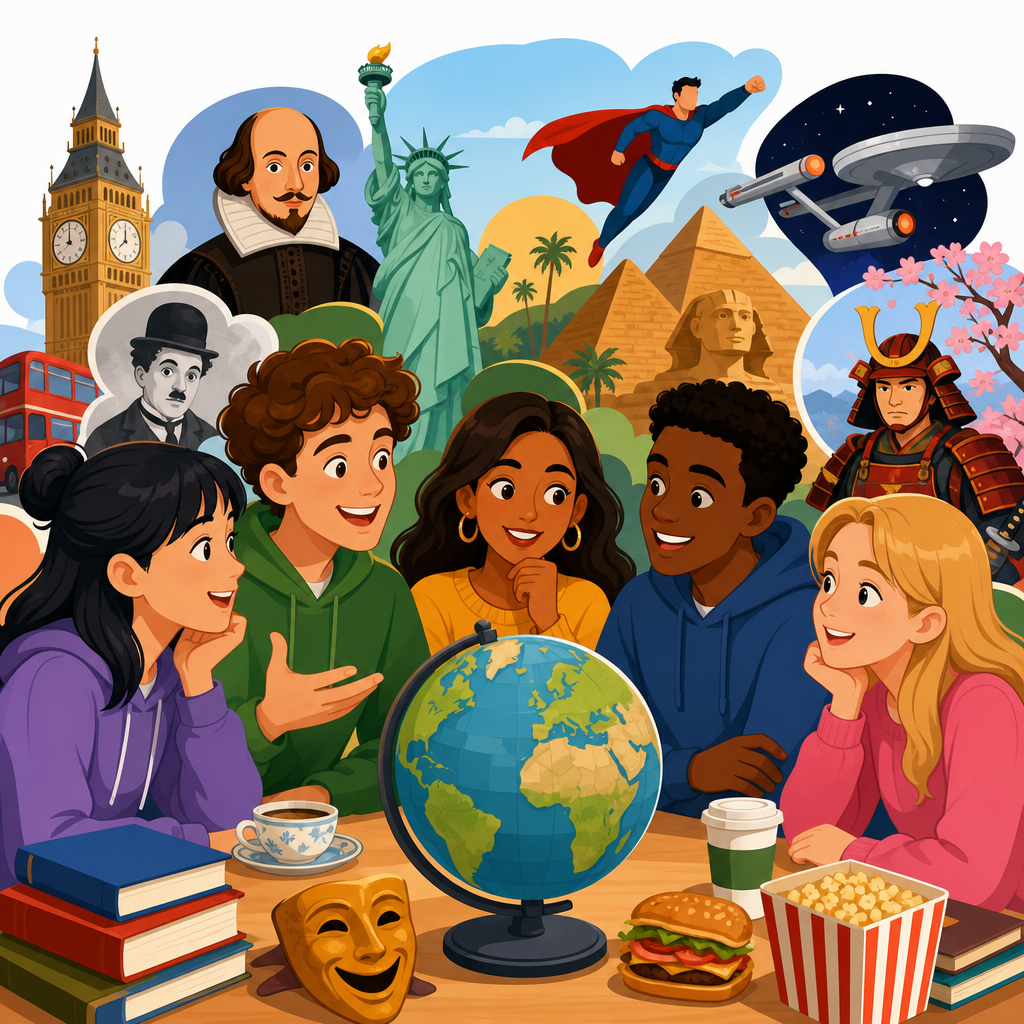
The most common cultural references in English come from a predictable set of sources. Films and television contribute character names, catchphrases, and scene types. Music contributes lyrics, artist personas, and genre associations. Sports contribute metaphors about competition, teamwork, and failure. Advertising contributes slogans and brand symbols. News and politics contribute names that become shorthand for scandals, leadership styles, or public controversies. Internet culture contributes memes, reaction images, and phrases that spread rapidly across platforms.
Historical and literary references also remain powerful, even in modern pop culture English. People still describe an admired helper as a “guardian angel,” a hidden weakness as an “Achilles heel,” or a betrayal as “Et tu, Brute?” These references survive because they are repeatedly reused in media, journalism, and education. Learners often assume pop culture means only recent entertainment, but in real English usage, older references remain active because they continue to circulate through headlines, scripts, and online commentary.
| Category | Common English example | What it usually means |
|---|---|---|
| Film and TV | “This is a Titanic project” | Ambitious and likely disastrous |
| Music | “She entered like Beyoncé” | Confident, polished, high-status presence |
| Sports | “We need a Hail Mary” | A desperate last attempt |
| Internet culture | “That comment passed the vibe check” | It felt socially acceptable or positive |
| Literature and myth | “That’s his Achilles heel” | His critical weakness |
| News and politics | “Another Watergate” | A serious scandal and cover-up |
For learners building pop culture English, these categories offer a practical study plan. Start with the categories that appear most in your media environment, then expand outward. If you watch streaming dramas, prioritize film and television references. If you use X, Instagram, Reddit, or TikTok, spend more time on internet references and celebrity discourse.
How to decode an unfamiliar reference in context
When you hear a cultural reference you do not know, do not stop at the unknown word. First, identify the target. Ask: what person, thing, or situation is being described? Second, identify the emotional direction. Is the speaker praising, mocking, warning, or joking? Third, check whether the reference points to a person, story, event, or brand. Context usually reveals at least one of those. If someone says, “Our new manager is a real Miranda Priestly,” the surrounding tone will usually suggest demanding, stylish, intimidating leadership, even if you have never seen The Devil Wears Prada.
This is the same inference process strong readers use with idioms, but with one extra step: you infer from shared culture, not just language structure. In class and coaching sessions, I recommend learners build a “reference log.” Write the phrase, source if known, literal meaning, implied meaning, tone, and where you heard it. After twenty to thirty entries, patterns become obvious. You start noticing how often English uses fictional characters as personality labels and major events as metaphorical templates.
Reliable tools help. Cambridge Dictionary and Merriam-Webster explain idiomatic extensions. Genius can clarify lyrics that become social references. Know Your Meme is useful for internet phrases, though it should be cross-checked. IMDb helps with film and television context. Wikipedia is often effective for first-pass orientation, especially for historical scandals, literary characters, and franchise timelines. The key is verification. A viral explanation is not always accurate.
Examples from film, music, celebrity culture, and the internet
Film and television references often reduce a complex character into one trait. “He’s such a Chandler” suggests sarcastic humor. “Don’t go full Joker” warns against chaos or emotional breakdown, though the exact meaning depends on the speaker. “This office is basically The Office” can signal awkward humor, incompetence, or documentary-style observation. Because these meanings are approximate, learners should focus on the trait being highlighted, not every detail of the source text.
Music references work differently. They often express mood, identity, or era. Saying “It has big 2000s Britney energy” points to a specific aesthetic and confidence level. “This breakup turned him into an Adele album” is humorous shorthand for emotional sadness expressed dramatically. In social media English, artists become verbs and adjectives. Someone can “Taylor-Swift” an experience by turning private emotion into a polished narrative. These uses are creative but understandable once you know the public image attached to the artist.
Celebrity references are especially common because public figures become symbols. Calling a founder “the Elon Musk of fitness apps” suggests ambition, visibility, and disruption, but it may also imply volatility. Saying a performer “handled that like Oprah” suggests exceptional interviewing, empathy, or audience connection. These references can age quickly because celebrity reputations change. A comparison that sounded flattering five years ago may sound critical now.
Internet references move fastest. Terms like “main character,” “NPC,” “delulu,” or “soft launch” spread from platform culture into mainstream speech. Their meanings depend heavily on community norms. “Main character energy” can praise confidence or criticize self-absorption. “Soft launch” now commonly means revealing a relationship gradually online. Learners should notice that internet references often begin as niche slang, then expand into news articles, brand marketing, and workplace conversation.
How to use cultural references naturally without sounding forced
Understanding a reference is easier than using one well. The safest rule is to use references you have heard multiple times in authentic contexts. Repetition matters because it shows current meaning, tone, and audience fit. I advise learners not to force references into formal situations unless they are confident the audience shares the background knowledge. A Shakespeare reference may work in an academic discussion. A TikTok meme probably will not work in a job interview unless the role is in youth media or marketing.
Timing also matters. The best references clarify something already being discussed. They should function like a spotlight, not a performance. If a group is discussing a chaotic project, saying “It turned into Fyre Festival” works because the analogy is immediate: overpromised, underdelivered, publicly embarrassing. If you insert an unrelated meme just to sound current, native speakers usually notice the strain.
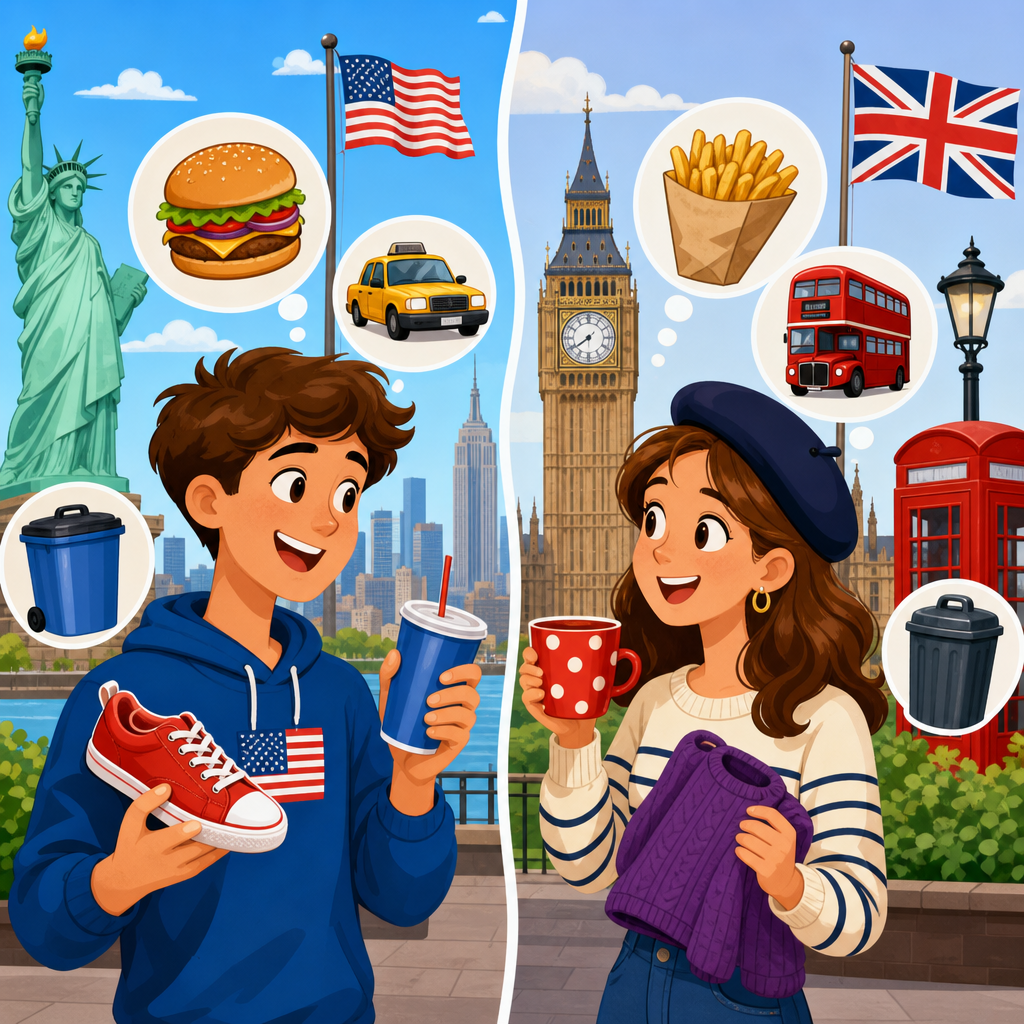
There are also regional and generational limits. British English, American English, and global online English overlap, but not perfectly. A US sports reference such as “Monday morning quarterback” may confuse listeners outside North America. A reference tied to a children’s show from the 1990s may fail with younger speakers. Good communicators adjust. They choose references their audience is likely to recognize, or they make the comparison explicit enough that even unfamiliar listeners can follow it.
Building long-term comprehension through media habits
The most effective way to learn cultural references is sustained exposure with active noticing. Choose a few media sources and follow them consistently. A balanced mix works best: one mainstream news outlet, one popular television series, one conversational podcast, and one social platform where current phrases appear early. Turn on subtitles, pause when a reference appears, and check whether the phrase is literal or allusive. Over time, you will see the same names and stories reappear across formats.
Internal linking across your own study topics helps retention. If you are also studying idioms, humor, phrasal verbs, and workplace English, connect references to those categories. “Hail Mary” belongs to sports English and business English. “Glass ceiling” belongs to social issues and professional language. “Kafkaesque” belongs to literature and bureaucracy. This networked approach mirrors how fluent speakers store meaning: not as isolated vocabulary items, but as connected cultural frames.
Keep expectations realistic. No speaker knows every reference, and even native speakers regularly miss ones tied to different age groups, subcultures, or countries. The goal is not total coverage. It is strong inference, selective learning, and confident clarification. If needed, ask directly: “I know that’s a reference, but I don’t know the source. What does it suggest here?” Most speakers will explain it, and the explanation itself becomes part of your cultural fluency.
Cultural references in English are not optional extras for advanced learners; they are a core part of how real meaning travels in conversation, entertainment, journalism, and online communication. They allow speakers to compress stories, attitudes, and judgments into short phrases that feel natural to insiders. For anyone studying pop culture English, this hub topic matters because it connects multiple areas of real-world usage: movie language, music language, celebrity discourse, sports metaphors, internet slang, and enduring historical references.
The practical lesson is clear. First, learn how references function: they point beyond literal words to shared knowledge. Second, study the categories you meet most often in your media life. Third, decode unfamiliar references through tone, context, and source clues. Finally, use them carefully and only after you have heard them used naturally. This approach builds comprehension faster than memorizing disconnected lists, because it trains you to recognize patterns across English environments.
If you want stronger listening, sharper reading, and more natural conversation, make cultural references part of your regular study routine. Track them, verify them, and revisit them in authentic media. Start with the examples in this hub, then explore the deeper subtopics under pop culture English one by one. That is how learners stop translating words and start understanding what English speakers really mean.
Frequently Asked Questions
What are cultural references in English, and why do they matter so much in real-life communication?
Cultural references are words, phrases, names, events, characters, brands, or shared stories that carry extra meaning beyond their literal definition. In English, people constantly refer to films, TV shows, celebrities, historical moments, politics, sports, literature, internet memes, and well-known companies as a kind of shortcut. Instead of explaining an idea in full, a speaker may say something is “a Titanic situation,” call someone “the Sherlock of the office,” or describe a comeback as “very Rocky.” Each reference instantly suggests a bundle of meanings such as failure, intelligence, persistence, drama, ambition, or irony.
They matter because real-world fluency is not just about grammar and vocabulary. It is also about understanding the social and cultural layer of language. Native and highly proficient speakers often assume this shared background knowledge, especially in casual conversation, media, advertising, journalism, and online content. If you miss the reference, you may still understand the sentence grammatically but miss the speaker’s tone, humor, criticism, or emotional message.
Cultural references also help you interpret attitude. A person who says “Don’t go full Frankenstein on this project” is not only talking about science fiction; they may be warning against creating something complicated and uncontrollable. A headline that says a politician had “a Waterloo moment” implies not just defeat, but a decisive and symbolic collapse. These references add depth, speed, and personality to communication, which is exactly why they can be difficult for learners and so important to master.
What kinds of cultural references appear most often in English?
The most common cultural references usually come from a few major areas. Popular entertainment is one of the biggest sources. Films, television series, music, and streaming culture produce endless references that become part of everyday speech. People compare situations to scenes from famous movies, describe personalities using TV characters, or quote song lyrics and catchphrases. These references are especially common in informal conversation and social media.
History and literature are another major category. English speakers often refer to historical figures, famous battles, myths, and classic books to make a point quickly. Terms like “Achilles’ heel,” “Trojan horse,” “Big Brother,” or “a Dickensian scene” all come from older cultural material but remain active in modern English. Some of these are so common that many speakers use them without thinking about their original source.
Sports references are also extremely frequent, especially in countries where sports are deeply tied to everyday language. Expressions such as “move the goalposts,” “step up to the plate,” “drop the ball,” and “out of left field” all come from sports but are used in business, politics, and daily conversation. Similarly, politics and current events create references that may become widely understood for a period of time, especially when a scandal, election, or public figure dominates the news.
Brands, technology, and internet culture are increasingly important as well. Someone might say a product is “the Apple of its industry,” call a viral moment “peak internet,” or compare online behavior to a meme format everyone recognizes. Because internet culture changes quickly, these references can be highly current but also short-lived. That is why learners should focus not only on traditional references from literature and history, but also on contemporary references from media and digital life.
How can I understand a cultural reference when I hear or read one and do not know it?
The first step is to use context. Even if you do not recognize the reference itself, the surrounding words often tell you whether the speaker means something positive, negative, funny, sarcastic, or dramatic. For example, if someone says, “We thought the launch would be smooth, but it turned into a Titanic situation,” the word “but” and the general topic of failure tell you the reference suggests disaster. Context clues are often enough to help you catch the main message, even if you do not know every detail behind the reference.
The second step is to identify what type of reference it might be. Ask yourself whether it sounds like a person, a movie title, a historical event, a brand, or a sports term. This helps you research it more efficiently. If you hear “the Sherlock of the team,” you can infer that Sherlock is probably a person known for intelligence or investigation. Once you know that, the sentence becomes much easier to understand.
It is also very useful to pause and look up references regularly, especially if they repeat across different sources. If you keep seeing the same name, phrase, or comparison in podcasts, YouTube videos, articles, or comments, it is worth learning it properly. Over time, these references build into a knowledge network. One reference often leads to another, and your comprehension improves much faster than if you only memorize isolated vocabulary.
Finally, do not be afraid to ask. In conversation, a simple question such as “I know what you mean generally, but what’s that a reference to?” is completely natural. Most speakers will be happy to explain. In fact, asking about references can lead to excellent cultural learning because people often reveal how that phrase is used, whether it sounds old-fashioned or modern, and whether it is humorous, serious, or ironic.
What is the best way to learn cultural references in English without feeling overwhelmed?
The most effective approach is to learn them through themes and repeated exposure rather than trying to memorize long random lists. Start with the kinds of English you actually use. If you watch films and TV series, focus on entertainment references. If you work in an English-speaking office, prioritize business, politics, and sports-related expressions that appear in meetings, articles, and workplace conversation. If you spend a lot of time online, pay attention to internet slang, memes, and viral references that shape digital communication.
A strong method is to keep a cultural reference notebook or digital list. Each time you notice a reference, write down the phrase, where you found it, what you think it means, the original source, and one or two example sentences. This turns passive exposure into active learning. It also helps you remember not just the definition, but the tone and context in which the reference is used.
Another smart strategy is to consume media with explanation in mind. News analysis, pop culture commentary, annotated articles, learner-friendly podcasts, and videos that explain idioms and references can be especially helpful. Instead of only watching entertainment for the plot, pay attention to recurring names, metaphors, jokes, and comparisons. If a reference appears in multiple places, that is usually a sign that it is culturally important enough to learn.
Most importantly, aim for recognition before production. In the beginning, your main goal should be to understand references when other people use them. Later, once you are confident about meaning, tone, and appropriateness, you can begin using them yourself. This prevents awkward mistakes and helps you sound more natural. Learning cultural references is a gradual process, but it becomes manageable when you treat it as part of everyday exposure rather than a separate, impossible subject.
Should English learners use cultural references themselves, and how can they do it naturally?
Yes, but carefully. Using cultural references can make your English sound more fluent, expressive, and socially aware, but only if you understand them well. A reference is not just a vocabulary item; it carries tone, timing, audience expectations, and sometimes even generational or regional associations. If you use one incorrectly, people may still understand you, but it can sound forced, outdated, or slightly unnatural.
The best way to start is with very common references that have become part of mainstream English. Phrases like “Achilles’ heel,” “Trojan horse,” “Big Brother,” or “Sherlock” are widely recognized in many contexts. These are generally safer than highly specific references from niche fandoms, politics, or fast-changing internet culture. Before using any reference, ask yourself whether you have heard several native or proficient speakers use it in a similar way. If the answer is yes, it is probably a good candidate for your active vocabulary.
You should also match the reference to the audience and situation. A playful movie reference might work well with friends but feel out of place in a formal presentation. A meme reference may be effective with younger online audiences but confusing in international professional settings. Some references are culturally dense and may not work well with people from different countries, even if everyone is speaking English. Natural use depends not only on knowing the phrase, but also on knowing when it helps communication and when it gets in the way.
A practical rule is this: use references to clarify or enrich your point, not to show off. If saying a project became “a Titanic situation” instantly communicates the scale of the failure, that is useful. If the reference makes people stop and decode what you mean, it is probably the wrong choice. The most natural speakers use cultural references lightly and appropriately. As a learner, if you focus first on understanding them deeply and then use only the ones you truly control, your English will sound more confident and authentic.