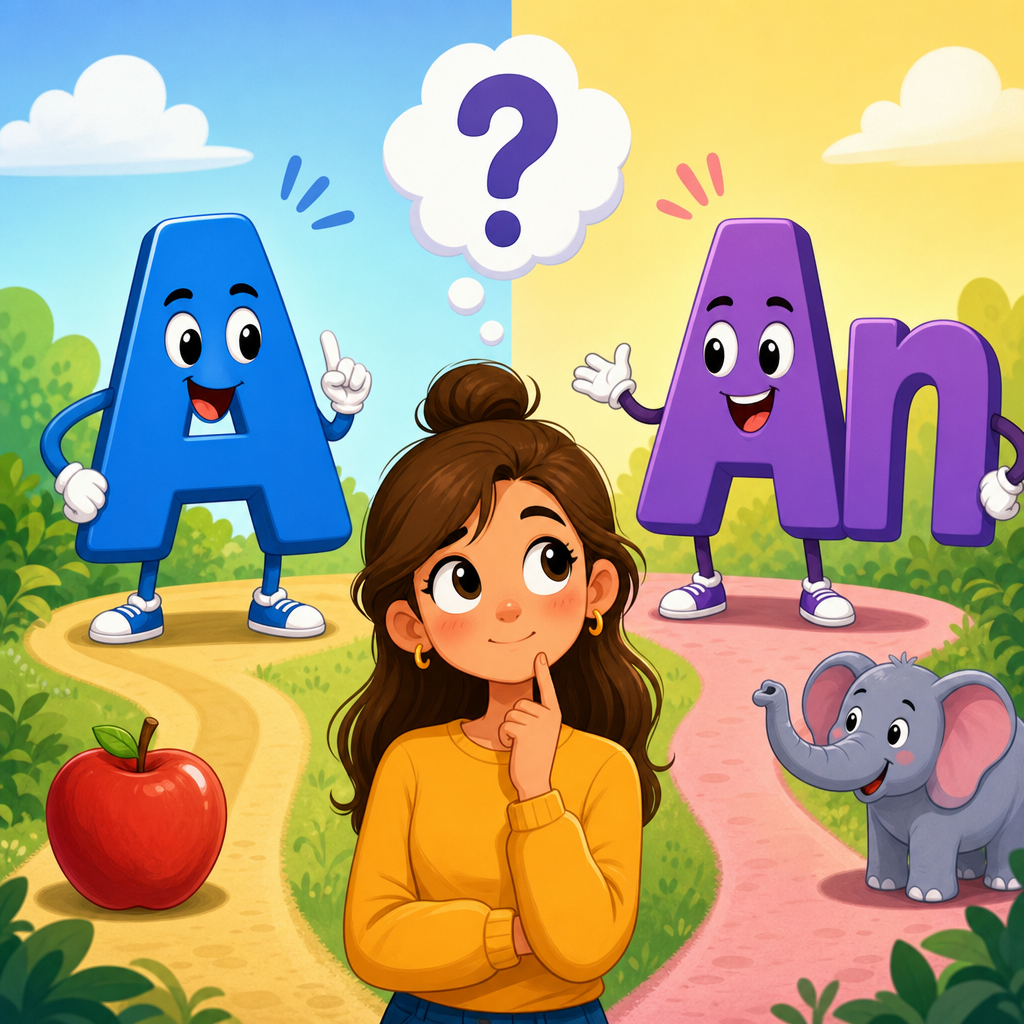
Countable and uncountable nouns are one of the first grammar contrasts ESL learners meet, and they shape how English handles articles, quantity, agreement, and everyday meaning. A noun names a person, place, thing, idea, or substance, but English does not treat every noun the same way. Some nouns can be counted as separate units: one book, two books, three books. Others are treated as mass or noncount nouns: water, furniture, advice. This difference affects whether you can use a or an, whether a noun has a plural form, and which quantifiers sound natural. If a learner says an advice, many breads, or much apples, the sentence signals a grammar problem immediately, even when the meaning is still understandable.
In my own ESL teaching and editing work, this topic comes up constantly because it sits at the center of practical communication. Learners need it for shopping, travel, academic writing, test preparation, and workplace English. It also connects directly to the wider study of parts of speech. Nouns interact with determiners such as some, many, much, this, and those. They affect verb agreement in sentences like The information is helpful and These reports are helpful. They also influence how adjectives and prepositional phrases are interpreted, as in a piece of useful advice or three bottles of cold water. Understanding countable and uncountable nouns gives learners a framework that supports nearly every other grammar lesson built on noun phrases.
As a hub within ESL grammar and parts of speech, this article explains the core difference, shows the grammar patterns that follow from it, and points toward related topics learners should study next. Parts of speech refers to the major word classes in English, including nouns, verbs, adjectives, adverbs, pronouns, prepositions, conjunctions, determiners, and interjections. Nouns are central because they often function as subjects, objects, and complements. When learners master how nouns behave, they build stronger sentences overall. The key idea is simple: countable nouns refer to items that English sees as individual units, while uncountable nouns refer to substances, materials, abstract ideas, collections, or activities that English usually measures rather than counts directly.
Why does this matter so much? Because English quantity words depend on noun type. We say many students but much homework, a few mistakes but a little time, fewer cars but less traffic. We also choose different question forms: How many chairs are there? versus How much rice do we need? Small errors in this area can spread across a sentence, affecting articles, plurals, pronouns, and agreement at once. The good news is that the system is learnable. Once you know the main patterns, the most common exceptions, and the measurement structures English uses, you can make faster and more accurate choices in speaking and writing.
What countable and uncountable nouns mean
A countable noun is a noun that can be counted as one unit, two units, three units, and so on. It usually has both singular and plural forms. Examples include apple/apples, idea/ideas, chair/chairs, mistake/mistakes, and country/countries. Countable nouns can appear with a, an, one, each, every, many, several, few, and a number of. In a sentence, you can say an apple, three ideas, or several countries because English treats those nouns as separate items. This is true even for abstract nouns when the meaning is individualized, as in an idea or several suggestions.
An uncountable noun, by contrast, is not normally counted directly in separate units. It is treated as a mass, substance, abstract concept, field, or general category. Common examples include water, milk, sugar, air, furniture, equipment, information, advice, traffic, research, and homework. These nouns usually do not take a plural form in standard usage, and they do not normally appear with a or an. Instead, they appear with much, little, less, some, a lot of, or measurement phrases such as a piece of advice, a glass of water, or a bit of information. The sentence I need some information is correct; I need an information is not.
This distinction is semantic, but it is also conventional. In other words, the difference is partly about meaning and partly about how English has historically categorized nouns. For example, luggage is uncountable in English, even though many languages use a countable equivalent similar to bag or suitcase. News is uncountable and takes a singular verb: The news is surprising. Furniture is uncountable although it refers to multiple objects. Learners improve faster when they stop asking whether the real-world object can be counted and start asking how standard English grammar treats the noun.
Grammar patterns that change with noun type
The most important grammar pattern is article use. Singular countable nouns normally need a determiner: a book, the book, my book, this book. A singular countable noun usually cannot stand alone, so Book is on table sounds incomplete in standard English. Uncountable nouns can stand alone when used generally: Water is essential, Information helps, Music relaxes me. They can also take the when the reference is specific: The water in this bottle is cold. This rule explains many common learner errors more clearly than memorizing isolated examples.
Plural marking is the second major pattern. Countable nouns usually form plurals, often with -s or -es, though irregular forms such as children, men, women, and mice are common. Uncountable nouns generally do not pluralize. We say much equipment, not many equipments; some research, not researches, unless research means separate studies in a specialized academic context. Agreement follows the same pattern. Singular countable nouns and uncountable nouns usually take singular verbs, while plural countable nouns take plural verbs. The equipment is ready, but The tools are ready. The information was useful, but The documents were useful.
Quantifiers provide the clearest test. Some quantifiers strongly prefer countable nouns, others prefer uncountable nouns, and a few work with both.
| Use | Countable nouns | Uncountable nouns |
|---|---|---|
| Singular article | a car, an idea | not used: a furniture |
| Plural form | cars, ideas | usually none: furnitures |
| Quantity words | many, few, several | much, little, less |
| Shared quantifiers | some books, a lot of books | some water, a lot of water |
| Questions | How many chairs? | How much sugar? |
| Measurement phrases | three chairs | three bags of rice |
Measurement phrases are essential because they let speakers count what is otherwise uncountable. Native speakers use them constantly: a cup of tea, two slices of bread, a loaf of bread, a piece of luggage, a sheet of paper, an item of clothing, a grain of rice, a drop of oil. In class, I have found that learners gain confidence quickly when they memorize high-frequency pairings rather than trying to invent them in real time. A piece of advice and a bit of information are especially useful because advice and information are among the most frequently misused uncountable nouns in ESL writing.
Common categories and high-frequency examples
Countable nouns often include people, animals, objects, places, and individual events: teacher, dog, bottle, city, meeting, problem, email. They are easy to visualize as separate units. Uncountable nouns commonly fall into recurring categories. First are substances and materials: water, coffee, sand, rice, gold, wood, plastic. Second are abstract ideas: knowledge, honesty, patience, luck, progress. Third are activities and school or work products: homework, training, reading, writing, research. Fourth are collective or category nouns that English treats as mass: furniture, equipment, baggage, mail, money. These category patterns help learners predict noun behavior even when they meet new vocabulary.
Some examples deserve special attention because they are frequent and often surprising. Bread is uncountable, but roll and loaf are countable. Work is usually uncountable when it means labor in general, but a work can mean a painting, book, or piece of music in formal contexts. Hair is usually uncountable when referring to all the hair on someone’s head, but hairs becomes possible when discussing individual strands. Chicken can be uncountable when it means food and countable when it means the animal. Paper is uncountable as a material, but countable when it means a newspaper, essay, or academic article. These are not random exceptions; they reflect changes in meaning.
Because this page serves as a parts of speech hub, it is worth linking the noun system to nearby grammar topics learners should study next. Determiners explain why we use a, an, some, any, this, that, these, and those with nouns. Adjectives modify both countable and uncountable nouns, but they do not change noun countability. Pronouns connect through reference words like one, ones, some, any, much, and many. Verbs matter because subject-verb agreement depends on whether the noun phrase is singular or plural. Prepositions appear in measurement phrases such as a bottle of water and a piece of cake. Once learners see these connections, parts of speech becomes a practical system rather than a list of separate rules.
Nouns that can be both countable and uncountable
Many English nouns are both countable and uncountable, depending on meaning. This is where advanced accuracy develops. Coffee is uncountable when referring to the substance: I drink coffee every morning. It becomes countable in service contexts when it means a cup or serving: We ordered two coffees. Experience is uncountable when referring to general life or job knowledge: She has experience in sales. It is countable when referring to a specific event: It was an amazing experience. Time is uncountable in the abstract, but countable when meaning occasions: I visited Rome three times. Room is uncountable when meaning space and countable when meaning an area in a building.
For learners, the safest strategy is to learn noun meaning together with a sample phrase, not as a single dictionary word. Instead of memorizing paper alone, learn paper as a material and a paper for an essay. Instead of learning chicken as one item, learn eat chicken and raise chickens. Corpus-based dictionaries such as the Longman Dictionary of Contemporary English and the Cambridge Dictionary are especially useful here because they label nouns as countable, uncountable, or both and provide authentic examples. In writing support sessions, I often show learners how one dictionary entry can answer article, plural, and collocation questions at the same time.
Context usually signals the intended meaning. Compare these pairs: There is glass on the floor means the material is scattered there, while There are three glasses on the table refers to drinking containers. I need more light asks for illumination, while There are two lights in the kitchen counts fixtures. The company invested in business software uses software as an uncountable category, while several software packages identifies individual products through a countable unit noun. These shifts are common in news, retail, hospitality, and academic English, so learners who notice them gain a more natural command of real-world usage.
Typical learner mistakes and how to fix them
The most common mistake is using a singular article with an uncountable noun: an advice, a furniture, an information, a homework. The fix is simple but must become automatic: remove the article or add a unit phrase. Say some advice, a piece of advice, some furniture, some information, or a homework assignment only if assignment is the countable noun. The second common mistake is overpluralizing uncountable nouns: informations, advices, luggages, equipments. Standard edited English rejects these forms. Replace them with information, advice, luggage, equipment, or use countable units such as items of equipment.
A third mistake is choosing the wrong quantifier. Many money, much people, few research, and less cars are all incorrect in standard use. The correct forms are much money, many people, little research, and fewer cars. This distinction is widely taught, though modern signage often uses less with count nouns in informal contexts, such as 10 items or less. For learners aiming at academic or professional accuracy, fewer with countable plurals remains the better choice. A fourth mistake is misunderstanding singular agreement with uncountable nouns. We say The furniture is old, The news was shocking, and This research shows a trend. Even though the ideas may involve many items, the grammar is singular.
The best correction method is not memorizing long exception lists in isolation. Instead, group nouns by pattern, practice them in full noun phrases, and notice them in reading. Keep a vocabulary notebook with columns for countable, uncountable, and both. Add a model phrase, such as a useful suggestion, some useful advice, or two useful examples. During revision, check every noun phrase for three things: article, plural form, and quantifier. That editing habit catches most countability errors quickly. Over time, repeated exposure makes the distinction feel less like a rule to remember and more like a rhythm of natural English.
How to master countable and uncountable nouns in real communication
To master countable and uncountable nouns, focus on frequency and function. Start with the nouns you use every day: food, travel, school, work, shopping, and technology vocabulary. Learn which quantifiers pair with them, then practice in questions and answers. For example: How much time do we have? How many emails did you send? Is there any rice left? Are there many options? In speaking classes, short drills built around real situations work better than abstract explanation alone. Ordering food, discussing schedules, describing data, and writing emails all force learners to choose noun forms under realistic pressure.
Reading and listening also accelerate progress because they show noun phrases in context. News articles provide examples like economic growth, severe weather, and several companies. Product pages show units clearly: two bottles of juice, one piece of furniture, three packs of batteries. Academic texts reinforce uncountable forms such as evidence, research, and literature. If you are building your ESL grammar foundation, continue from this hub into focused lessons on determiners, articles, quantifiers, plural nouns, subject-verb agreement, pronouns, adjectives, verbs, adverbs, prepositions, conjunctions, and sentence patterns. Countable vs uncountable nouns is not an isolated rule. It is a gateway into clearer, more accurate English across the whole parts of speech system.
The difference between countable and uncountable nouns is ultimately a difference in how English organizes meaning into units or mass. Once you recognize that system, article choice, plural forms, quantifiers, and agreement become much easier. Countable nouns can be counted directly and usually have singular and plural forms. Uncountable nouns are treated as mass or abstract categories and usually need measurement phrases when speakers want exact amounts. Some nouns can be both, depending on meaning, so context matters. Mastering this topic improves grammar accuracy fast because one correct noun choice often fixes several parts of a sentence at once.
For ESL learners, the biggest benefit is confidence. You stop guessing between much and many, a and some, is and are. You write more natural sentences, ask clearer questions, and sound more precise in everyday conversation, academic work, and professional communication. Use this article as your hub for the noun branch of parts of speech, then build outward into articles, determiners, quantifiers, pronouns, and agreement. Review your high-frequency noun list, learn useful unit phrases, and check a learner’s dictionary when a noun seems uncertain. With steady practice, countable and uncountable nouns become a reliable grammar skill rather than a recurring problem.
Frequently Asked Questions
What is the main difference between countable and uncountable nouns?
The main difference is whether the noun can be treated as separate, countable units. Countable nouns refer to things you can count one by one, such as book, apple, chair, or idea. These nouns have singular and plural forms, so you can say one book, two books, or several ideas. Uncountable nouns, by contrast, are treated as a mass, substance, concept, or collection that is not usually divided into individual units in everyday grammar. Examples include water, furniture, information, and advice. You would not normally say an advice or two furnitures in standard English.
This difference matters because it affects several core grammar patterns. Countable singular nouns usually need an article or determiner, such as a book, the chair, or my idea. Uncountable nouns do not use a or an, so we say some water, the information, or a piece of advice. It also affects verb agreement and quantity expressions. For example, we say many books but much water, and fewer apples but less sugar. For ESL learners, this is one of the most important grammar contrasts because it influences articles, plural forms, quantifiers, and natural-sounding everyday English.
How can I tell if a noun is countable or uncountable?
A practical way to test a noun is to ask whether it can naturally be counted as individual items. If you can say one, two, or three plus the noun, it is probably countable: one car, two cars, three cars. If that sounds unnatural and the noun is usually thought of as a substance, material, abstract idea, or general mass, it is probably uncountable: milk, rice, traffic, knowledge. Another clue is whether the noun has a regular plural form in the meaning you want. Countable nouns usually do; uncountable nouns typically do not.
That said, context is important because some nouns can be countable in one meaning and uncountable in another. For example, chicken is uncountable when it means food, as in We ate some chicken, but countable when it means the animal, as in There are three chickens in the yard. Likewise, paper can be uncountable for the material, but countable when it refers to a newspaper, document, or academic article. Because English has many nouns like this, learners often need to learn not just the word itself, but also the common meaning and structure that go with it. A good learner’s dictionary will usually mark whether a noun is countable, uncountable, or both.
Why can’t I use “a” or “an” with uncountable nouns?
The articles a and an are used with singular countable nouns because they refer to one individual item: a pen, an orange, a problem. Uncountable nouns are not normally viewed as single items in grammar, so they do not take a or an. That is why standard English uses water, milk, equipment, and information without those singular articles. Saying an information or a furniture sounds incorrect because those nouns are not grammatically treated as individual units.
When you need to express one unit of an uncountable noun, English usually adds a measure word or container phrase. For example, instead of an advice, you say a piece of advice. Instead of a bread, you might say a loaf of bread or a piece of bread. Instead of a water, you could say a bottle of water or, in some service contexts, a water may appear informally to mean a bottle/glass of water. This is an important distinction because it shows that the article belongs to the countable unit phrase, not to the uncountable noun itself. Learning these unit expressions makes your English far more accurate and natural.
What quantifiers are used with countable and uncountable nouns?
Countable and uncountable nouns often use different quantity words, and this is one of the clearest places where the contrast shows up. With countable nouns, common quantifiers include many, few, a few, several, and a number of. For example: many students, few mistakes, a few questions, and several options. With uncountable nouns, the usual choices are much, little, a little, and expressions such as a great deal of. For example: much time, little money, a little help, and a great deal of information.
Some quantifiers work with both types, which is helpful for learners. You can use some, any, a lot of, lots of, plenty of, and enough with both countable and uncountable nouns: some apples, some rice, a lot of books, a lot of traffic. It is also important to notice the difference between fewer and less. In standard usage, fewer goes with countable nouns, as in fewer people, while less goes with uncountable nouns, as in less pollution. Mastering these patterns improves both grammar accuracy and overall fluency because quantity words appear constantly in speaking and writing.
Can a noun be both countable and uncountable?
Yes, many English nouns can be both countable and uncountable, depending on meaning. This is extremely common and often confusing at first, but it follows recognizable patterns. A noun is usually uncountable when it refers to a material, substance, or general concept, and countable when it refers to an item, type, occasion, or instance. For example, coffee is uncountable in I drink coffee every morning, where it means the substance in general. But it can be countable in We ordered two coffees, where it means two cups or servings. Similarly, experience is uncountable in She has a lot of experience, but countable in That was an interesting experience.
Other common examples include hair, work, room, light, and time. Hair is usually uncountable when talking about all the hair on someone’s head, but countable when referring to individual strands. Work is uncountable in I have too much work, but countable in certain contexts like the works of Shakespeare. Room can mean space, which is uncountable, or a part of a building, which is countable. These shifts are not random; they reflect how English speakers conceptualize the noun in context. For learners, the key is to study nouns in real phrases and sentences rather than memorizing isolated rules. Once you start noticing the meaning behind the grammar, the countable-uncountable distinction becomes much easier to understand and use correctly.