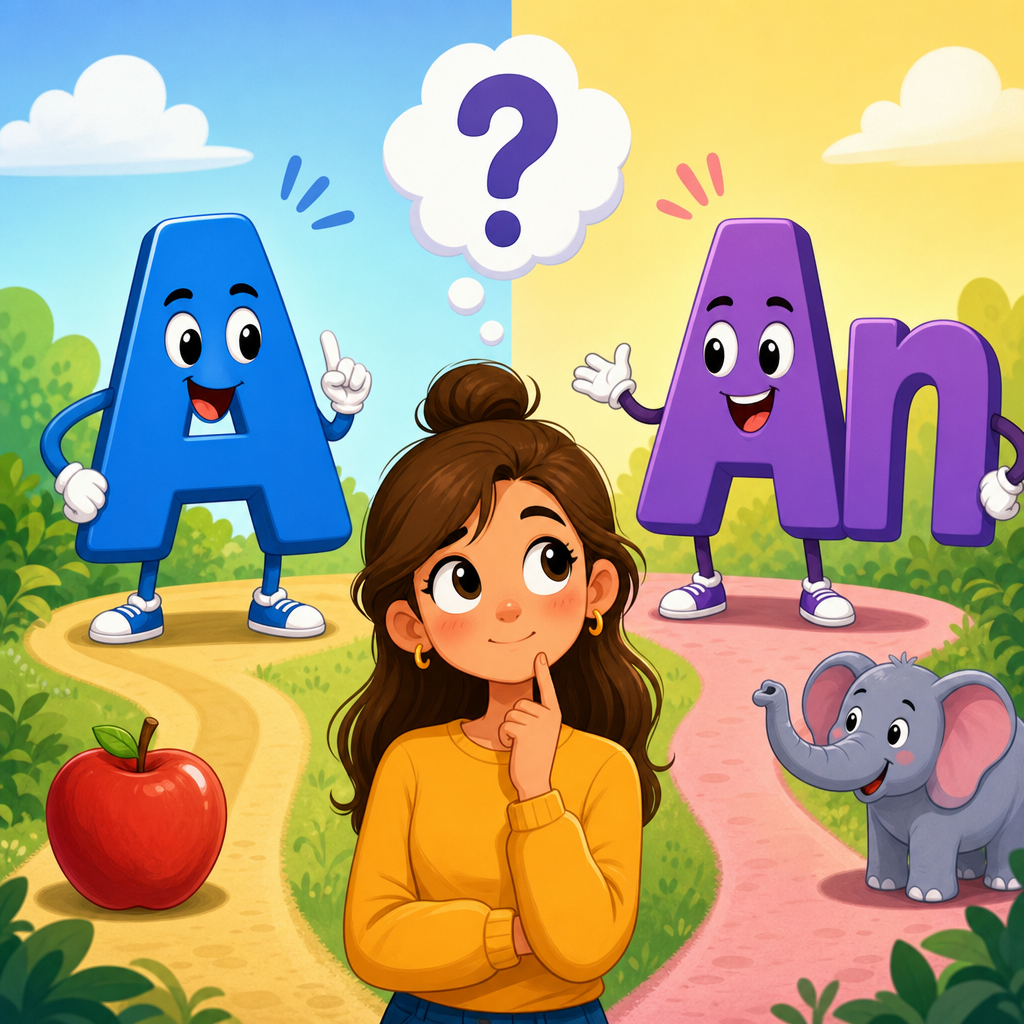
Singular and plural nouns in English are one of the first grammar patterns every learner meets, but they also connect to the wider system of parts of speech in ways that matter for accuracy, fluency, and comprehension. A noun names a person, place, thing, idea, or event, and number tells us whether that noun refers to one or more than one. Singular means one item: book, teacher, city. Plural means more than one: books, teachers, cities. On the surface, this looks simple. In real ESL teaching, however, noun number affects articles, verbs, pronouns, quantifiers, possessives, and sentence structure. When I work with learners, errors with noun number usually spread across a sentence, not just a single word. A student who says “She have two child” is showing issues with noun pluralization, subject-verb agreement, and determiner choice at the same time.
This is why singular and plural nouns deserve a hub article within ESL grammar and the broader study of parts of speech. Nouns do not work alone. They interact with verbs, adjectives, articles, pronouns, prepositions, and conjunctions. Understanding noun number helps learners choose between this and these, much and many, a and some, is and are, or it and they. It also supports reading accuracy, because texts often signal meaning through small number changes. Compare “The manager approved the report” with “The managers approved the reports.” The core vocabulary stays the same, but the message changes sharply. For ESL students, mastering singular and plural nouns builds a foundation for writing clear sentences, understanding authentic English, and moving confidently into related grammar topics such as countable and uncountable nouns, subject-verb agreement, determiners, and pronoun reference.
In this hub, the goal is to cover the system comprehensively and plainly. You will learn the regular rules for forming plurals, the most important irregular patterns, the difference between countable and uncountable nouns, and the common grammar links between nouns and other parts of speech. You will also see where English breaks its own patterns, because reliable grammar teaching requires both rules and exceptions. English noun number is not difficult because it has too many rules; it is difficult because learners must apply the right rule while coordinating the rest of the sentence. Once that system becomes visible, common errors become easier to fix and advanced grammar becomes easier to learn.
What singular and plural nouns are, and how they fit into parts of speech
A noun is one member of the parts of speech, the categories that describe how words function in sentences. In practical ESL grammar, the core groups are nouns, pronouns, verbs, adjectives, adverbs, prepositions, conjunctions, articles or determiners, and interjections. Nouns are central because other word classes often point to them, describe them, or agree with them. Adjectives modify nouns, articles introduce nouns, pronouns replace nouns, and verbs often change form depending on whether a noun subject is singular or plural.
Singular nouns refer to one person, place, thing, or idea: student, bus, apple, problem. Plural nouns refer to more than one: students, buses, apples, problems. English usually marks plural nouns with an ending, most commonly -s or -es. That visible ending helps readers and listeners process quantity quickly. In speech, however, pronunciation matters too. The plural ending can sound like /s/ in cats, /z/ in dogs, or /ɪz/ in buses. I have found that learners who only memorize spelling often miss these sound patterns, which then affects listening and speaking.
Within the wider topic of parts of speech, noun number has a structural role. Determiners such as a, an, this, that, each, every, many, several, and these depend on whether a noun is singular or plural. Verbs in the present tense change after singular third-person subjects: “The child plays,” but “The children play.” Pronouns also track number: “The book is on the desk. It is new,” versus “The books are on the desk. They are new.” As a result, when learners study singular and plural nouns, they are not just learning word endings. They are learning one of the organizing systems of English grammar.
Regular plural rules and the spelling patterns learners need most
The standard plural rule is straightforward: add -s to a singular noun. Book becomes books, teacher becomes teachers, and table becomes tables. This pattern covers a large share of everyday vocabulary, which is why teachers introduce it first. The next most common pattern is adding -es after nouns ending in s, ss, sh, ch, x, or z: bus becomes buses, class becomes classes, dish becomes dishes, watch becomes watches, box becomes boxes. The extra syllable in pronunciation makes these forms easier to hear in connected speech.
Another key pattern involves nouns ending in consonant + y. In these cases, change y to i and add -es: city becomes cities, baby becomes babies, country becomes countries. If the noun ends in vowel + y, simply add -s: boy becomes boys, key becomes keys, toy becomes toys. This distinction matters because learners often overgeneralize and produce forms like “toies” or “keies,” which are incorrect.
Nouns ending in f or fe sometimes change to -ves: leaf to leaves, knife to knives, wife to wives. But not all of them do. Roof becomes roofs, belief becomes beliefs, and chef becomes chefs. Because this pattern is inconsistent, the safest classroom approach is to teach high-frequency examples instead of pretending there is a perfect rule. Nouns ending in o also vary. Many take -es, such as tomato to tomatoes and hero to heroes, while others often take -s, such as photo to photos, piano to pianos, and kilo to kilos. Dictionaries such as Cambridge, Merriam-Webster, and Oxford are useful checks when a form looks uncertain.
| Singular noun | Plural noun | Rule or pattern | Example sentence |
|---|---|---|---|
| book | books | Add -s | These books are for beginners. |
| bus | buses | Add -es after s | The buses stop here every hour. |
| city | cities | Consonant + y changes to -ies | Many cities have metro systems. |
| boy | boys | Vowel + y takes -s | The boys are playing outside. |
| knife | knives | Some f/fe nouns change to -ves | Sharp knives need careful storage. |
| photo | photos | Some o nouns take -s | Her travel photos are online. |
For spelling, learners should also notice capitalization and punctuation do not create plurals. Apostrophes are not used for standard plural nouns. The correct form is “three cars,” not “three car’s.” This error appears often in signs and informal writing, but it remains incorrect in standard English. Accurate plural spelling is especially important in academic writing, workplace communication, and exams such as IELTS and Cambridge English assessments.
Irregular plurals, zero plurals, and nouns with unusual number behavior
Irregular plural nouns do not follow the common -s or -es pattern, so they must be learned as vocabulary items with grammar attached. The most important examples are child to children, man to men, woman to women, foot to feet, tooth to teeth, goose to geese, and mouse to mice. Because these words are frequent in conversation and reading, learners need repeated exposure rather than a single memorization list. In class, I usually pair them with pronouns and verbs: “The children are ready,” “Her feet hurt,” “The mice were in the kitchen.” That practice helps students remember the whole agreement pattern.
Some nouns have the same singular and plural form, often called zero plurals. Common examples include sheep, deer, and fish. “One sheep is in the field” and “Ten sheep are in the field” are both correct. Fish is interesting because fishes can appear in scientific or species-based contexts, but fish is the normal plural in everyday English. Aircraft and series also keep the same form in singular and plural. These nouns can confuse learners because the verb, not the noun itself, may be the clearest signal of number.
Another special group includes nouns that look plural and usually take plural verbs, such as scissors, pants, trousers, glasses, and clothes. We say “My scissors are on the desk” and “These pants are too long.” When counting them, English often uses partitives: a pair of scissors, two pairs of pants. By contrast, some nouns end in -s but are treated as singular in meaning, such as news, mathematics, economics, or linguistics, depending on context. “The news is surprising” is standard. Academic subject names often take singular verbs when referring to fields of study: “Mathematics is difficult for some learners.”
There are also collective nouns such as team, family, staff, and government. In American English, these usually take singular verbs when the group is seen as one unit: “The team is winning.” In British English, singular and plural verbs are both possible depending on meaning: “The team are wearing their new shirts” emphasizes members, while “The team is successful” emphasizes the unit. Learners should follow the regional standard expected in their exam, workplace, or school.
Countable and uncountable nouns: the rule behind many plural mistakes
Many plural errors happen because learners have not fully separated countable and uncountable nouns. Countable nouns can be counted as individual items and have singular and plural forms: one apple, two apples; one idea, several ideas. Uncountable nouns refer to substances, abstract concepts, fields of study, or mass items that English does not usually count directly: water, rice, furniture, advice, information, homework, research. These nouns normally do not take standard plural forms in everyday usage.
This difference affects articles and quantifiers. We say “an apple” but not “an advice.” We say “some information” and “much research,” but “many books” and “few students.” To count uncountable nouns, English uses units or containers: a piece of advice, a bottle of water, a grain of rice, an item of furniture, a bit of information. These combinations are essential for natural English. Students often transfer directly from their first language and say “advices,” “informations,” or “furnitures.” In standard English, those forms are generally incorrect.
Some nouns can be countable or uncountable depending on meaning. Chicken can mean the animal, a countable noun, or the meat, usually uncountable. Paper can mean the material, uncountable, or a newspaper, article, or academic paper, countable. Experience can mean general life knowledge, often uncountable, or a specific event, countable. This flexible behavior explains why noun number is not just a memorized ending. It is tied to meaning and usage.
For learners building a strong ESL grammar foundation, this topic links directly to determiners, articles, and quantifiers. If a student understands why “many students” is correct but “much students” is not, that student is seeing how parts of speech work together. This also improves accuracy in speaking exams and writing tasks where noun phrase control is closely assessed.
How noun number affects verbs, pronouns, articles, and modifiers
Singular and plural nouns shape the grammar around them. The most obvious connection is subject-verb agreement. In the present simple, singular third-person subjects usually take a verb ending in -s: “The teacher explains the rule.” Plural subjects use the base form: “The teachers explain the rule.” With be, the contrast is clearer: “The room is quiet” versus “The rooms are quiet.” If learners choose the wrong noun number, they often choose the wrong verb automatically.
Pronouns also depend on noun number. Singular countable nouns may be replaced by he, she, or it, while plural nouns are replaced by they. Possessive forms shift too: its versus their, his versus their, her versus their. In longer writing, consistent noun-pronoun agreement makes texts easier to follow. For example: “The company released its report” treats company as a unit. “The employees released their reports” refers to multiple people and multiple documents.
Articles and determiners are another major connection. Singular countable nouns usually need a determiner: a teacher, the teacher, this teacher, my teacher. Plural nouns can appear with zero article in general statements: “Teachers need planning time.” Demonstratives also change by number: this and that for singular, these and those for plural. Quantifiers split by countability and number: each and every are singular, while several, many, and few are plural.
Adjectives themselves do not change for singular or plural in English, which is simpler than in many languages. We say “a red car” and “red cars,” not “reds cars.” Still, adjectives often appear inside noun phrases where number matters elsewhere: “these expensive books,” “that useful tool.” Prepositional phrases and conjunctions then connect these noun phrases into complete sentences. In other words, noun number is a small feature with sentence-wide consequences, which is why it belongs at the center of any serious parts of speech overview.
Common learner errors and practical ways to master plural noun usage
The most common ESL mistakes with singular and plural nouns are predictable. Learners omit plural endings after numbers, producing “three book” instead of “three books.” They add plural endings to uncountable nouns, as in “many informations.” They confuse irregular forms, saying “childs” or “womans.” They mix agreement patterns, as in “These problem is serious.” They also overuse apostrophes in plurals, writing “apple’s” when they mean apples. Each error points to a teachable rule, and each rule becomes easier when practiced in full noun phrases and full sentences rather than isolated word lists.
Effective practice is specific. Read short texts and underline every noun, then mark whether it is singular, plural, countable, or uncountable. Rewrite sentences by changing singular nouns to plural and adjusting the whole sentence: article, verb, pronoun, and demonstrative. Build vocabulary in pairs, such as one shelf/two shelves, one person/two people, one datum/two data where relevant in technical contexts, though data now often functions as a mass noun in general English. Use learner dictionaries that show countability labels like [C] and [U], because those labels prevent many mistakes before they happen.
This hub article should lead naturally to deeper study across ESL grammar. The next useful topics are countable and uncountable nouns, common irregular plurals, subject-verb agreement, articles, determiners, pronouns, and noun phrases. Together, these topics explain how English parts of speech create meaning through form. Mastering singular and plural nouns will not solve every grammar problem, but it will remove one of the most common barriers to clear, accurate English. Start by noticing noun number in every sentence you read, then practice changing one to many and many to one until the surrounding grammar changes automatically.
Frequently Asked Questions
What is the difference between a singular noun and a plural noun in English?
A singular noun refers to one person, place, thing, idea, or event, while a plural noun refers to more than one. For example, book, teacher, and city are singular because each names one item. Their plural forms are books, teachers, and cities, which show that there is more than one. This contrast is one of the most basic grammar patterns in English, but it affects many other parts of a sentence as well.
Number is important because it influences agreement. Singular nouns often go with singular verbs, and plural nouns go with plural verbs. For example, we say The student is ready but The students are ready. Articles and determiners also change depending on number. We say a cat or one cat for singular, but two cats, many cats, or some cats for plural. Understanding singular and plural nouns helps learners build clearer, more accurate sentences and supports reading comprehension, speaking fluency, and writing accuracy.
How do you usually form plural nouns in English?
In many cases, English forms plurals by adding -s to the singular noun. This is the most common pattern, and learners see it early: book/books, teacher/teachers, car/cars. Another very common pattern is adding -es to nouns that end in sounds like s, sh, ch, x, or z. Examples include bus/buses, dish/dishes, watch/watches, and box/boxes. These endings help pronunciation and make the plural easier to say.
There are also spelling changes learners need to notice. Nouns ending in a consonant + y usually change y to i and add -es: city/cities, baby/babies. However, if the noun ends in a vowel + y, you usually just add -s: boy/boys, key/keys. Some nouns ending in -f or -fe change to -ves, such as leaf/leaves and wife/wives, though this is not true for every word. Because English mixes regular patterns with exceptions, the best approach is to learn the main rules first and then build familiarity through reading, listening, and repeated exposure.
What are irregular plural nouns, and why are they important?
Irregular plural nouns are nouns that do not follow the usual pattern of simply adding -s or -es. These forms are important because they are common in everyday English and can cause confusion if learners expect every plural to look regular. Examples include man/men, woman/women, child/children, foot/feet, tooth/teeth, and mouse/mice. These nouns must be learned individually because their plural forms are based on older language patterns rather than modern spelling rules.
Some irregular nouns have the same form in both singular and plural, such as sheep, deer, and sometimes fish in general use. Others come from Latin or Greek and may keep special plural forms, such as analysis/analyses, criterion/criteria, or phenomenon/phenomena. These forms appear often in academic and formal English. Learning irregular plurals matters not only for grammar tests but also for accurate communication. If a learner says childs instead of children or informations instead of information, the message may still be understandable, but it sounds unnatural and can reduce confidence and credibility. Mastering irregular plurals is a key step toward more natural English.
Why do some nouns not have a plural form, or not use singular and plural in the usual way?
Not all nouns behave like countable items such as apple/apples or chair/chairs. Some nouns are uncountable, which means they are usually not used in the plural because they refer to substances, abstract ideas, or general concepts rather than separate individual units. Common examples include water, information, advice, furniture, and music. In standard English, we do not usually say informations or advices. Instead, we use expressions like a piece of information, some advice, or items of furniture.
There are also nouns that appear plural in form but function in special ways. Words like scissors, pants, and glasses are often treated as plural because they describe items with two connected parts, so we say The scissors are on the table. If we want to count them, we often use a pair of scissors or two pairs of pants. In addition, some collective nouns, such as team, family, or government, may be treated as singular or plural depending on whether the speaker sees the group as one unit or as individuals within the group. These special noun types show that number in English is not only about adding endings; it is also about meaning, usage, and grammar patterns across the sentence.
How can English learners master singular and plural nouns more accurately?
The most effective way to master singular and plural nouns is to combine rule learning with real language practice. Start with the core patterns: add -s for most nouns, add -es for common special endings, and learn the major spelling changes such as city/cities. Then make a separate list of high-frequency irregular plurals like children, men, women, and teeth. It is also useful to study nouns in phrases rather than alone. For example, learn a child, two children, this tooth, and these teeth. This helps learners remember not just the noun form, but also how number affects articles, demonstratives, and verbs.
Reading and listening are especially helpful because they show how singular and plural nouns work naturally in context. Learners should pay attention to patterns such as There is a problem versus There are problems, or much information versus many books. Writing practice also matters. Short exercises, sentence rewriting, dictation, and error correction can train learners to notice number agreement more quickly. Finally, learners should expect some complexity. English noun number is simple at the beginner level, but more advanced use includes irregular forms, uncountable nouns, collective nouns, and subject-verb agreement. The goal is not just to memorize endings, but to understand how noun number connects to the wider grammar system and supports clear, fluent communication.