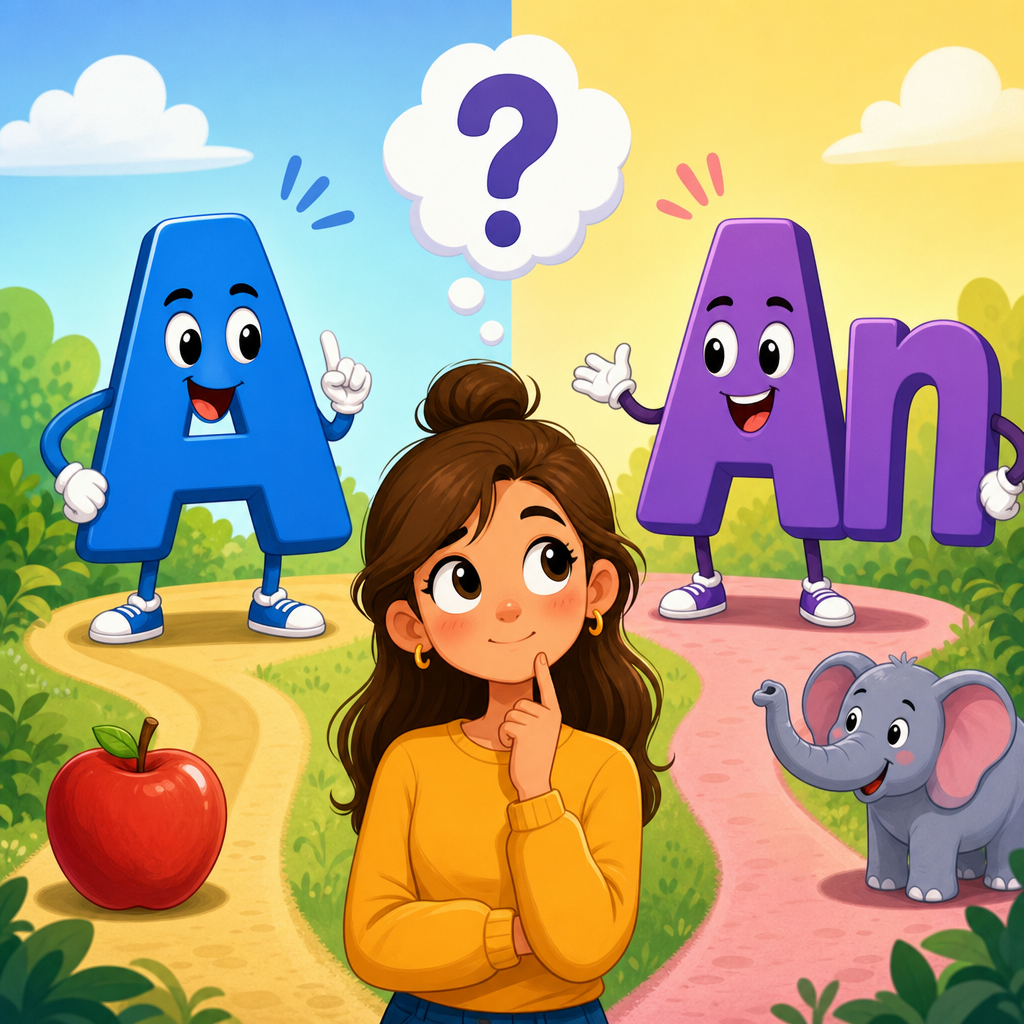
Plural and possessive mistakes are among the most common grammar errors in English, especially for ESL learners who already manage tense, word order, and articles at the same time. A plural noun names more than one person, place, thing, or idea, while a possessive form shows ownership, connection, origin, or association. The confusion usually appears around the letter s and the apostrophe: learners write apple’s when they mean several apples, or students when they mean something belonging to the students. I have corrected this issue in beginner worksheets, business emails, university essays, and website copy, and the pattern is always the same: people understand the meaning they want, but they have not yet built a reliable editing rule. This matters because apostrophe mistakes affect clarity, credibility, and exam scores. In workplace writing, a small punctuation error can make a report look careless. In academic contexts, it can lower marks for language control. In digital publishing, these errors distract readers and weaken trust. This guide explains the difference clearly, shows the standard rules, and connects plural and possessive errors to the wider group of common grammar mistakes that ESL learners need to master. If you want a practical reference point for this part of ESL grammar, start here and use each section as a checklist when you write or edit.
What plural and possessive forms actually mean
The fastest way to avoid plural vs possessive mistakes is to separate meaning before punctuation. A plural answers the question “How many?” If there is more than one item, the noun is plural: one book, two books; one class, three classes; one child, four children. A possessive answers the question “Whose?” or “What belongs to what?” Examples include the teacher’s desk, the company’s policy, and the children’s toys. In plain terms, plural is about number, and possessive is about relationship. They are not interchangeable.
Many ESL learners overuse apostrophes because they notice that apostrophes appear near final s sounds, but sound is not the rule. Meaning is the rule. Compare these pairs: The dogs are barking means several dogs. The dog’s collar means one dog owns one collar. The dogs’ owner means one owner belongs to several dogs. Once learners pause and ask whether the noun shows quantity or ownership, most errors disappear. I teach students to make that decision before they think about punctuation, because punctuation follows grammar, not the other way around.
This distinction also applies beyond literal ownership. Possessives often show association, time, measurement, authorship, or part-whole relationships. We say today’s meeting, a week’s notice, Shakespeare’s plays, and the car’s engine. None of these examples describe simple possession in the narrow sense, but all use the possessive structure correctly. That is why memorizing only “apostrophe means ownership” is not enough. You need to understand that possessive forms mark a grammatical relationship, and plural forms simply mark more than one.
The core rules for regular and irregular nouns
For regular plural nouns, English usually adds s or es: cats, rooms, buses, watches. For singular possessive nouns, add apostrophe plus s: the cat’s toy, the room’s window, the bus’s route. For plural possessive nouns that already end in s, add only an apostrophe: the cats’ toys, the rooms’ windows, the buses’ routes. This is the rule that solves most day-to-day errors.
Irregular plurals need special attention because they do not already end in s. Words such as children, men, women, and mice become possessive by adding apostrophe plus s: children’s books, men’s shoes, women’s leadership network, mice’s habitat. Learners often write childrens or womens when they need children’s or women’s, especially because the plural forms already feel marked. The key is simple: if the plural does not end in s, the possessive still needs apostrophe plus s.
Style guides sometimes differ on pronunciation-based cases such as boss’s versus boss’. In modern edited English, major references such as The Chicago Manual of Style and APA generally support apostrophe plus s for most singular nouns, including names ending in s: James’s laptop, the boss’s office. Some journalism styles simplify certain forms, but ESL learners should first master the most widely accepted standard. Once that base is secure, you can adapt to house style if a school, company, or publication requires it.
Common grammar mistakes ESL learners make with apostrophes
The most frequent error is using an apostrophe to form a plural. Signs like banana’s, photo’s, and idea’s are wrong in standard English. A noun does not need an apostrophe just because it ends in s in the plural. The correct forms are bananas, photos, and ideas. This mistake is sometimes called the greengrocer’s apostrophe because it often appears on shop signs, but it is not limited to informal writing. I see it in slide decks, LinkedIn posts, and exam practice essays.
A second common problem is omitting the apostrophe in possessives: the teachers lounge, my parents house, the company policy goals. These examples are ambiguous because the reader has to guess the relationship. The corrected forms are the teachers’ lounge if the lounge belongs to multiple teachers, my parents’ house if both parents own it, and the company’s policy goals if the goals belong to one company. Writers often skip apostrophes when typing quickly, but in edited writing they matter.
A third issue appears with contractions. Apostrophes also mark missing letters in forms like it’s, don’t, and they’re. Because of that, learners confuse its and it’s, your and you’re, their and they’re. These are not plural vs possessive errors only, but they sit in the same family of punctuation and word-form mistakes. Its is possessive: The company changed its logo. It’s means it is or it has: It’s changing rapidly. Treat these as separate vocabulary items, and proofread them one by one.
A quick-reference table for the patterns that cause most errors
When students need a fast correction method, I give them a short pattern chart. It turns abstract rules into decisions they can apply while writing emails, essays, and reports.
| Meaning | Correct form | Example |
|---|---|---|
| More than one regular noun | add s or es | three teachers, two classes |
| One owner | apostrophe + s | the teacher’s notes, the class’s schedule |
| More than one owner, plural ends in s | add apostrophe only | the teachers’ room, the classes’ results |
| More than one owner, irregular plural | apostrophe + s | the children’s games, the men’s jackets |
| Contraction, not possession | apostrophe marks missing letters | it’s late, they’re ready |
| Simple plural, never possession | no apostrophe | apple prices, video games, 1990s |
Notice one especially useful pattern: if you can replace the phrase with “belonging to,” you probably need a possessive. If you cannot, you probably need a simple plural or a different structure. For example, student opinions means opinions from students in general, while the student’s opinion means the opinion belonging to one student. This small test works surprisingly well during revision.
How plural and possessive errors connect to other common grammar mistakes
This topic sits at the center of many other ESL grammar problems. Subject-verb agreement often breaks down after a plural mistake. If a learner writes The student’s are tired, the apostrophe error also hides the real agreement pattern, because students are takes a plural subject and a plural verb. Noun phrase errors also overlap here. Compare customer service policies with customer’s service policies. The first means policies about customer service; the second suggests policies belonging to one customer’s service, which changes the meaning completely.
Article use can become confusing too. A learner may write The teachers room is large when the intended phrase is The teachers’ room is large. Without the apostrophe, some readers may initially process teachers as an adjective-like noun. Similar confusion appears in compounds such as farmers market versus farmer’s market. In practice, usage varies because some established expressions become fixed compounds, but learners should understand the underlying structure before copying signs or brand names.
Pronoun reference is another linked area. Writers who confuse its and it’s often also confuse whose and who’s, or their and there. These errors reduce precision and make editing harder because they create chains of misunderstanding across a paragraph. That is why a strong grammar study plan treats apostrophes as part of a larger hub of common grammar mistakes, including agreement, articles, count and noncount nouns, sentence fragments, run-ons, and pronoun choice. Fixing one category often improves the others.
Real-world examples from academic, business, and everyday writing
In academic writing, plural and possessive choices affect argument clarity. Consider these sentences: The researchers findings were significant. The corrected version is The researchers’ findings were significant if several researchers produced the findings. If only one researcher is involved, write The researcher’s findings were significant. In citation-heavy prose, this distinction matters because it tells the reader exactly how many people are connected to the source or claim.
In business writing, apostrophe mistakes can create a poor impression faster than many larger grammar issues. A line such as All manager’s must submit their report by Friday suggests carelessness in a policy memo. The correct sentence is All managers must submit their reports by Friday. If you mean one manager, then write The manager’s report is due Friday. During document reviews, I have seen clients spend hours refining strategy slides while leaving basic noun form errors untouched, even though those are the first things many readers notice.
Everyday examples are everywhere: Your package is in the neighbors mailbox should be your package is in the neighbor’s mailbox if one neighbor owns it, or the neighbors’ mailbox if several do. On social media, people often write We love our customer’s, which is incorrect unless something belongs to one customer. The intended message is usually We love our customers. Frequent exposure to these mistakes online makes them feel normal, but standard written English still follows clear rules.
Editing strategies that work for ESL learners
The most effective editing strategy is to check nouns in a separate pass. Do not try to fix every grammar issue at once. First, underline each noun ending in s or containing an apostrophe. Then ask two questions: Is this about more than one, or does it show a relationship? If it is plural only, remove the apostrophe. If it is possessive, identify whether the owner is singular, a regular plural ending in s, or an irregular plural. This method is mechanical, which is exactly why it works under exam pressure.
Reading aloud helps, but only to a point. Spoken English does not always distinguish clearly between students, student’s, and students’, so sound alone cannot confirm correctness. A better approach is sentence expansion. Turn the phrase into a fuller test sentence: the students’ books becomes the books belonging to the students. If that expansion sounds right, the possessive is justified. If it does not, choose a plural or a different noun phrase.
Digital tools can support learning, but they should not replace understanding. Microsoft Editor, Grammarly, and LanguageTool catch many apostrophe errors, yet they miss context-sensitive cases and sometimes accept awkward alternatives. Corpora such as the Corpus of Contemporary American English can show authentic usage patterns, and learner dictionaries like Cambridge or Longman provide clear examples. Use tools to confirm decisions, not to make them blindly. The goal is accurate self-editing, not dependence on automation.
Building long-term accuracy and knowing the exceptions
Long-term improvement comes from pattern recognition and repeated correction. Keep a personal error log with three columns: incorrect form, corrected form, and rule. If you repeatedly write peoples instead of people or teachers when you mean teacher’s, collect those examples and review them weekly. In my experience, learners improve faster when they study their own mistakes than when they complete random drills. Their writing becomes more fluent because the correction is tied to real communication.
It also helps to know where English allows variation. Decades as plurals usually take no apostrophe: the 1990s, the early 2000s. Abbreviations can vary by style, but standard modern usage usually prefers DVDs, NGOs, and FAQs without apostrophes. Possessives of names ending in s may follow a house style, yet apostrophe plus s remains a strong default in formal writing. Joint possession is another nuance: Jack and Maria’s business means they share one business, while Jack’s and Maria’s businesses means each has a separate business.
The big lesson is that plural vs possessive mistakes are not random punctuation slips. They are meaning errors that show up in punctuation. Once you decide whether a noun expresses number or relationship, the correct form becomes much easier to see. Mastering this area strengthens your entire control of common grammar mistakes because it improves noun phrases, agreement, pronoun choice, and editing discipline. Review your recent writing, mark every final s and apostrophe, and correct each form using the rules in this guide. That small habit will make your English cleaner, clearer, and more professional.
Frequently Asked Questions
What is the difference between a plural noun and a possessive noun?
A plural noun refers to more than one person, place, thing, or idea, while a possessive noun shows ownership, relationship, origin, or association. This is the core distinction that helps prevent many common writing mistakes. For example, apples is plural because it means more than one apple. In contrast, apple’s color is possessive because it refers to the color of one apple. Likewise, students means more than one student, but student’s book means the book belonging to one student.
The confusion often happens because both plurals and possessives may involve the letter s, but they are not formed the same way. Most plural nouns are made simply by adding s or es, such as book/books, class/classes, and teacher/teachers. Possessive nouns, however, use an apostrophe to show a connection. For singular nouns, that usually means adding ‘s, as in the teacher’s desk. For regular plural nouns already ending in s, the possessive is usually formed by adding only an apostrophe, as in the teachers’ lounge.
A helpful way to check yourself is to ask what the noun is doing. If it is naming more than one item, you probably need a plural. If it is showing that something belongs to someone or is associated with someone, you probably need a possessive. This simple question can quickly clarify whether you need s, ‘s, or s’.
Why do writers often confuse words like “apples,” “apple’s,” and “apples’”?
These forms look similar, but they serve different grammatical functions. Apples is the plural form, meaning more than one apple. Apple’s is the singular possessive form, meaning something belongs to one apple or is associated with one apple. Apples’ is the plural possessive form, meaning something belongs to multiple apples. The apostrophe changes the job of the word, which is why placing it correctly matters so much.
Writers often confuse these forms because English uses a small punctuation mark to express an important meaning difference. For learners who are already managing spelling, sentence structure, and vocabulary, the apostrophe can feel like a minor detail. In reality, it changes the meaning of the sentence. Compare these examples: The apples are on the table means there are several apples. The apple’s skin is shiny refers to the skin of one apple. The apples’ skins are shiny refers to the skins of several apples.
Another reason for the confusion is that many people mistakenly associate apostrophes with any word ending in s. That is not correct. Apostrophes do not make nouns plural. Their main role in this context is to mark possession. If you mean “more than one,” do not add an apostrophe. If you mean “belonging to,” then use one. Keeping that rule in mind will help you avoid one of the most widespread grammar mistakes in English writing.
How do you form singular and plural possessives correctly?
To form a singular possessive noun, add ‘s to a singular noun. For example, the child’s toy, the manager’s office, and the company’s policy are all singular possessives. Even if a singular noun already ends in s, many style guides still recommend adding ‘s, as in the boss’s decision or James’s car. Some style preferences vary, but the most important thing is to be consistent within your writing.
To form a plural possessive noun, first make the noun plural. Then decide where the apostrophe goes. For regular plural nouns ending in s, add only an apostrophe after the final s. For example, the students’ classroom means the classroom belonging to the students, and the players’ uniforms means the uniforms belonging to the players. This is a very common structure in English, and learning it well can eliminate many errors.
Irregular plural nouns require special attention because they do not end in s. In these cases, add ‘s just as you would with a singular noun. For example, children’s books, men’s shoes, and women’s rights are all correct. Since these plurals are irregular, they do not follow the s’ pattern. A good strategy is to identify whether the plural already ends in s. If it does, add only an apostrophe. If it does not, add ‘s.
What are the most common plural and possessive mistakes ESL learners make?
One of the most common mistakes is using an apostrophe to create a plural, such as writing book’s when the meaning is simply more than one book. This error appears often in signs, notes, and informal writing, but it is still considered incorrect in standard English. The correct plural is books. The apostrophe should appear only when the noun shows possession, as in the book’s cover.
Another frequent mistake is leaving out the apostrophe in possessive forms. For example, a learner may write the students room instead of the student’s room or the students’ room. In this case, the missing apostrophe makes the phrase unclear. Is there one student or several students? The apostrophe helps readers understand both the number and the relationship. This is why punctuation is not just decorative in grammar; it carries meaning.
ESL learners also struggle with irregular plurals and plural possessives. Words like children, people, men, and women do not end in s, so their possessive forms are children’s, people’s, men’s, and women’s. Another challenge is knowing whether a noun is acting as a simple plural adjective-like noun or a true possessive. For instance, car dealer and cars may look related, but only possessive forms need apostrophes. Careful reading and repeated practice with examples are the best ways to build confidence and accuracy.
What is the easiest way to check whether I need an apostrophe or just an “s”?
The easiest method is to stop and ask two questions: “Am I talking about more than one?” and “Am I showing ownership or connection?” If you are only talking about more than one person or thing, you need a plural, not a possessive. That means no apostrophe. For example, three teachers, many ideas, and several boxes are all plain plurals. If the noun shows that something belongs to someone or is connected to someone, then you need a possessive form. For example, the teacher’s lesson or the teachers’ meeting.
You can also test the phrase by rewriting it with of. If the student’s notebook can become the notebook of the student, then the possessive form makes sense. If you cannot naturally rewrite the phrase that way, you may only need a plural. For example, students arrived early does not become arrived early of the students, so no possessive is needed there. This is a practical editing trick that works well in both academic and everyday writing.
Finally, proofread carefully for any noun ending in s or containing an apostrophe. These are common error points. If you see ‘s, confirm that it truly expresses possession. If you see a plural noun, confirm that you did not accidentally insert an apostrophe. Over time, this checking process becomes faster and more natural. With enough exposure and practice, recognizing the difference between plural and possessive forms becomes much easier.