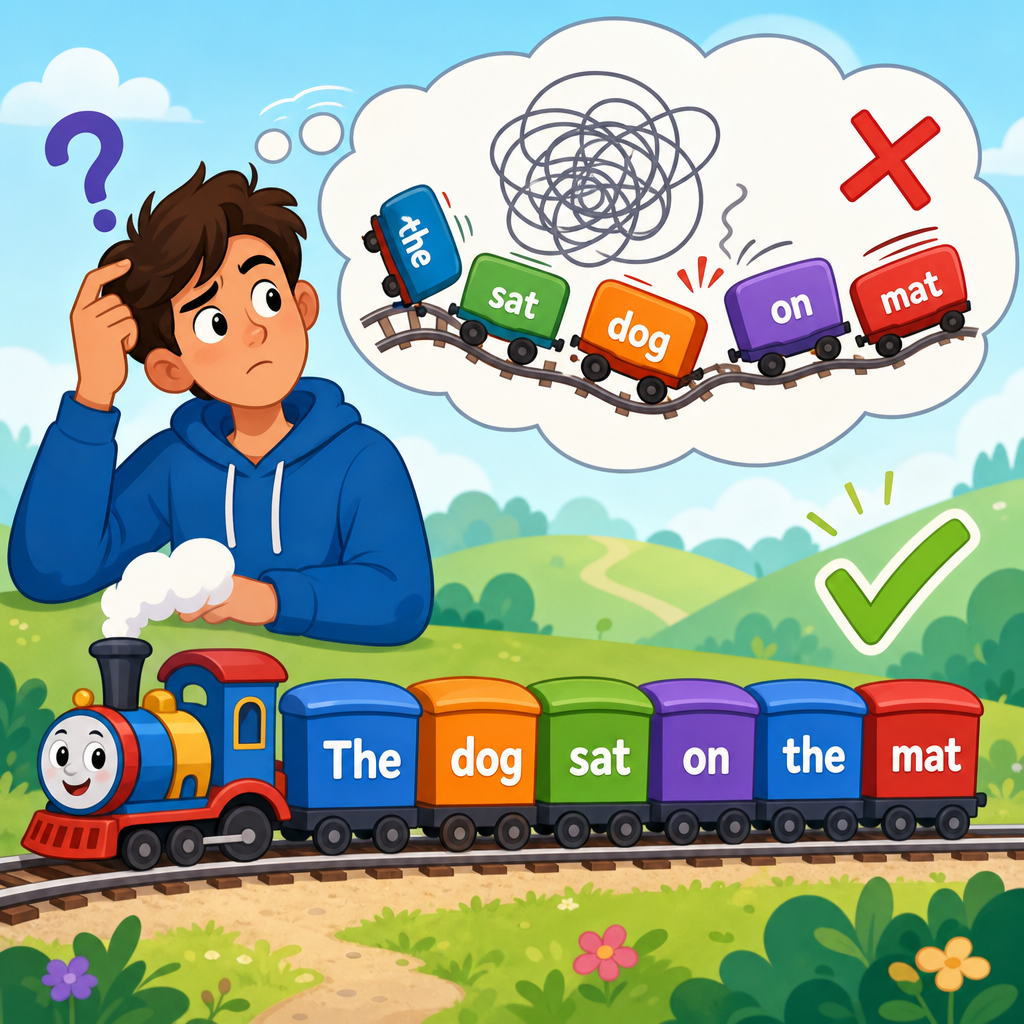
Incorrect word order mistakes are among the most persistent problems in ESL grammar because learners may know the right words, tenses, and meanings, yet still produce sentences that sound unnatural, confusing, or plainly wrong. In English, word order refers to the standard arrangement of sentence elements such as subject, verb, object, adjective, adverb, auxiliary verb, and question word. The default pattern is subject-verb-object, but that simple rule expands into many smaller rules involving adverb placement, question formation, negatives, indirect objects, phrasal verbs, modifiers, and clauses. I have taught and edited English for multilingual teams, and word order errors are often the difference between writing that is technically understandable and writing that sounds fluent, precise, and professional. This matters in academic essays, customer emails, job interviews, presentations, and exams because English relies heavily on position to signal meaning. A misplaced word can change emphasis, create ambiguity, or make a sentence seem nonnative even when every vocabulary item is correct. As a hub within common grammar mistakes, this article explains the core patterns behind incorrect word order mistakes, shows why they happen, and connects them to the broader ESL grammar issues learners repeatedly face.
Many word order problems come from first-language transfer. In some languages, adjectives follow nouns, adverbs move more freely, or questions do not require auxiliary verbs. Learners naturally map those patterns onto English. Another cause is partial learning: a student memorizes “always before the main verb” but then writes “I always am tired,” not realizing that the verb be follows different placement rules. Word order also interacts with meaning. Compare “Only she told me” with “She told only me” and “She only told me.” The grammar seems similar, but the focus changes sharply. For that reason, mastering word order is not just about avoiding mistakes; it is about controlling tone, clarity, and emphasis. This hub article covers the most common trouble areas, including basic sentence structure, adverbs, questions, negatives, modifiers, and practical correction strategies, so readers can diagnose errors quickly and build more natural English across every skill area.
Basic English Sentence Order and Why Learners Get It Wrong
The foundation of English sentence structure is the subject-verb-object pattern: “The manager approved the budget,” “Students completed the assignment,” and “Our team launched the product.” When learners break this order, they often produce sentences like “Approved the manager the budget” or “Completed students the assignment.” These errors usually appear when a learner’s first language allows flexible word order through case endings or context. English does not usually permit that flexibility. Position carries grammatical function. The subject normally comes before the verb, and the object follows it. Once learners internalize that principle, many other grammar decisions become easier.
Still, basic order is not enough. English also uses predictable positions for time, place, and manner expressions. A clear sentence might be “She finished the report at home last night” or “She carefully finished the report at home last night.” The sentence becomes awkward when elements are scrambled without purpose: “She at home finished carefully last night the report.” Native speakers may still decode the meaning, but the structure sounds broken. In business writing, I often see this issue in status updates written by advanced learners who have strong vocabulary but uncertain syntax. Reordering just a few elements usually makes the writing sound immediately more credible and readable.
Another common mistake involves complements after linking verbs. English says “The meeting was difficult,” not “The meeting difficult was” and “He became angry,” not “He angry became.” Linking verbs such as be, seem, become, feel, look, and appear connect the subject to a complement, and the complement generally follows the verb. Learners should also watch for indirect objects and prepositional phrases. “She gave her colleague the file” and “She gave the file to her colleague” are both correct, but “She gave to her colleague the file” is less natural in everyday English. Understanding these core arrangements gives learners a map for more complex sentences.
Adverb Placement: The Small Change That Makes Sentences Sound Natural
Adverb placement creates some of the most frequent incorrect word order mistakes because English adverbs move according to type and verb structure. Frequency adverbs such as always, usually, often, sometimes, rarely, and never typically come before the main verb: “I usually arrive early,” “They often work late.” However, with the verb be, the adverb follows the verb: “She is usually early,” “We are often busy.” This distinction causes errors like “I am usually drink coffee” or “She usually is late” in contexts where “She is usually late” is expected. The rule is simple, but applying it consistently requires practice.
Adverbs also appear after auxiliary verbs and before main verbs: “He has never seen the film,” “They will probably attend,” “You can definitely improve.” In negative structures, position matters even more because the adverb interacts with emphasis. “I do not really agree” differs slightly from “I really do not agree.” In the first, the disagreement is somewhat soft; in the second, it is stronger. Learners who place adverbs mechanically may produce grammatical but unintended meanings. That is why correction should focus on both accuracy and emphasis.
There are also adverbs of manner, place, and time, which often follow the verb or object. A standard order is manner-place-time: “She spoke clearly at the conference yesterday.” While not every sentence must follow that exact sequence, it is a reliable guideline. Compare “He completed the task بسرعة” translated directly by a learner into “He completed quickly the task.” In English, “He completed the task quickly” sounds more natural. The more advanced challenge is knowing when fronting an adverb is acceptable for style or emphasis, as in “Yesterday, she spoke clearly at the conference.” Learners should master neutral order first, then marked order later.
| Mistake Type | Incorrect Example | Correct Example | Why It Is Wrong |
|---|---|---|---|
| Frequency adverb with main verb | I always am tired after work. | I am always tired after work. | With be, the adverb comes after the verb. |
| Frequency adverb with lexical verb | She goes often by train. | She often goes by train. | Frequency adverbs usually come before the main verb. |
| Question word order | Why you are late? | Why are you late? | English questions require inversion. |
| Negative word order | I not understand this rule. | I do not understand this rule. | Most verbs need do-support in negatives. |
| Modifier position | She almost drove her kids to school every day. | She drove her kids to school almost every day. | Almost modifies frequency, not the verb drove. |
Questions, Negatives, and Auxiliary Verbs
Question formation is one of the clearest places where English word order differs from many other languages. In a statement, we say, “You are ready.” In a question, English usually inverts the subject and auxiliary verb: “Are you ready?” Learners often write “Why you are late?” or “Where he went?” because they know the meaning words but not the structural rule. If there is no auxiliary verb in the statement, English adds do, does, or did: “You like coffee” becomes “Do you like coffee?” and “She worked yesterday” becomes “Did she work yesterday?” This is not optional in standard English. Omitting the auxiliary is one of the fastest ways to sound grammatically inaccurate.
Wh-questions follow the same logic. “What do you need?” “Where does she live?” “Why did they leave early?” A useful way to teach this is to separate the question into parts: question word, auxiliary, subject, main verb. In my editing work, even advanced speakers sometimes write “How I can solve this?” in emails because they are thinking faster than they are monitoring grammar. A quick mental checklist fixes the problem: if it is a direct question, the auxiliary usually comes before the subject.
Negatives create similar issues. English generally forms negatives with auxiliary verbs: “I do not know,” “She does not agree,” “They did not finish,” “We cannot stay,” “He is not available.” Learners often produce forms like “I no understand,” “She not likes it,” or “They not finished.” These reflect understandable transfer patterns, but standard English needs the auxiliary structure. Position also matters with negative adverbs and limiting expressions. “I never said he stole the money” can shift nuance depending on stress, while “Never have I seen such confusion” uses inversion for formal emphasis. For most learners, the safest target is the neutral pattern before experimenting with stylistic inversion.
Modifiers, Emphasis, and Meaning Changes
Modifiers are words or phrases that describe, limit, or intensify other parts of a sentence, and their placement can dramatically change meaning. Consider “She nearly failed every test” versus “She failed nearly every test.” The first means she came close to failing each test but may not have failed; the second means she did fail most of them. This is why incorrect word order mistakes are not merely cosmetic. They can reverse the intended message. Words like only, almost, even, just, nearly, and still are especially sensitive to position.
One classic example is only. “Only Maria called the client” means nobody else called. “Maria only called the client” suggests she called but did not email or visit. “Maria called only the client” means she did not call anyone else. Many learners place only wherever it feels natural, but English readers interpret it narrowly based on position. In professional contexts, this can create serious misunderstanding. A sentence such as “We only discussed pricing with the supplier” may imply that pricing was the sole topic, while “We discussed pricing only with the supplier” identifies the supplier as the sole party involved.
Dangling and misplaced modifiers are another category. “Driving to the office, the rain started” is incorrect because the introductory phrase appears to modify the rain. The intended sentence is “Driving to the office, I noticed that the rain started” or better, “While I was driving to the office, it started to rain.” ESL learners are not the only writers who make this mistake; native speakers do it often. The practical rule is straightforward: place modifiers as close as possible to the word they describe. When a sentence sounds ambiguous, move the modifier and read it again for meaning, not just grammar.
Clauses, Long Sentences, and Common Error Patterns Across ESL Grammar
As sentences become longer, word order mistakes multiply because learners must manage clauses, connectors, and embedded structures at the same time. A sentence like “The report that the consultant prepared for the board was approved yesterday” contains a main clause and a relative clause, yet the order remains controlled. Problems arise when learners stack ideas in the order they think them rather than the order English expects: “The report for the board prepared the consultant was approved yesterday.” The meaning is still recoverable, but the syntax is unstable. Relative pronouns such as who, which, that, and where help keep long sentences organized.
Subordinate clauses also create trouble. English commonly uses patterns like “Although he was tired, he finished the presentation,” “If you need help, call me,” and “When the meeting ended, we reviewed the notes.” Learners may produce “Although was tired he, he finished the presentation” or “If need you help, call me.” These are not random errors; they show uncertainty about keeping normal subject-verb order inside a dependent clause. In English, the conjunction introduces the clause, but the clause itself usually keeps standard statement order unless it is a question.
Word order links closely to other common grammar mistakes, which is why this article serves as a hub page. Articles, prepositions, verb tense, subject-verb agreement, pronouns, and punctuation all interact with sentence structure. For example, a learner may write “Yesterday went she to the store and buyed a milk,” which combines word order errors, tense mistakes, and article misuse. Effective correction should isolate each problem without losing the whole sentence. I recommend checking in layers: first subject-verb order, then auxiliary verbs, then modifiers, then smaller grammar points. This method reduces overwhelm and helps learners see patterns rather than memorizing isolated corrections.
How to Fix Incorrect Word Order Mistakes Consistently
The fastest way to improve word order is to build an editing routine based on sentence patterns, not intuition. First, identify the verb. Then find the subject. Next, check whether the sentence is a statement, question, or negative, because each has a predictable structure. After that, place objects and complements, then review adverbs and modifiers. This sequence mirrors how I train writers who need rapid improvement for exams or workplace communication. It works because English syntax is more rule-based than many learners assume.
Useful tools can support this process. Corpora such as the Corpus of Contemporary American English and the British National Corpus show how real sentences are arranged. Learner dictionaries from Cambridge, Oxford, and Longman provide example sentences that reveal natural word order, not just definitions. Grammar checkers such as Grammarly or LanguageTool can catch obvious issues, but they miss subtle meaning shifts caused by words like only or almost. Reading aloud is also effective. If a sentence feels heavy or oddly sequenced, it often contains a placement problem. Rewriting the sentence in a shorter form can expose the core structure.
The long-term solution is pattern acquisition through focused practice. Study high-frequency structures: adverbs with be, do-support in questions and negatives, adjective position before nouns, and standard clause order after conjunctions. Compare your sentence with a reliable model, then rewrite it three ways. For example: “She often visits clients,” “Does she often visit clients?” and “She does not often visit clients.” That small drill reinforces three systems at once. Incorrect word order mistakes become easier to fix when learners stop treating sentences as loose collections of words and start seeing them as ordered frameworks. Review the common grammar mistakes linked from this ESL grammar hub, practice one pattern at a time, and turn accurate order into a habit.
Frequently Asked Questions
1. What is an incorrect word order mistake in English?
An incorrect word order mistake happens when the words in a sentence are arranged in a way that breaks standard English patterns. Even if every individual word is correct, the sentence can still sound unnatural, confusing, or grammatically wrong because English depends heavily on position. In most basic statements, English follows a subject-verb-object pattern, such as “She reads books.” When learners change that order without a valid reason, the result may be unclear or incorrect, such as “She books reads.”
Word order mistakes are especially common in ESL writing and speaking because many learners naturally transfer sentence patterns from their first language into English. Some languages allow much more flexibility in word placement, but English usually does not. This means learners may know the right vocabulary and verb tense yet still produce awkward sentences because adverbs, adjectives, auxiliary verbs, negatives, question words, or objects are placed incorrectly. In short, incorrect word order is not just a style issue; it affects grammar, meaning, and how natural a sentence sounds to native speakers.
2. Why is word order so important in English grammar?
Word order is important in English because it carries a large part of the meaning. Unlike some languages that use endings or markers to show grammatical relationships, English often relies on the position of words to show who is doing the action, what is receiving the action, and how the sentence should be interpreted. For example, “The dog chased the cat” and “The cat chased the dog” use the same words, but the meaning changes completely because the order changes.
Word order also affects sentence type and tone. Statements, questions, negatives, and emphasis patterns all depend on specific arrangements. For instance, “You are coming” is a statement, but “Are you coming?” is a question. Likewise, adverb placement changes how natural a sentence sounds: “She always arrives early” is standard, while “She arrives always early” sounds incorrect. Because of this, strong word order helps learners sound clearer, more fluent, and more confident. It is one of the key features that separates a sentence that is technically understandable from one that sounds truly natural in English.
3. What are the most common types of incorrect word order mistakes ESL learners make?
Some of the most common incorrect word order mistakes involve adverbs, questions, negatives, adjectives, and auxiliary verbs. Adverbs are a major trouble spot because their position depends on the type of adverb and the structure of the sentence. Learners often say things like “I go always to school” instead of “I always go to school.” Questions are another frequent problem, especially when learners forget inversion and say “Why you are late?” instead of “Why are you late?” Negatives also create confusion, particularly when learners misplace “not” or forget the helping verb, producing forms such as “I not understand” instead of “I do not understand.”
Adjective order is another area where learners struggle, especially when multiple adjectives appear before a noun. English prefers a natural sequence, so “a beautiful small old house” sounds more natural than a randomly ordered version. Learners may also place adjectives after nouns because that is normal in their first language. In addition, auxiliary verbs and main verbs are often mixed up in tenses and passive structures, leading to sentences like “She going is home” instead of “She is going home.” These mistakes are persistent because they involve patterns rather than isolated rules, so learners need repeated exposure and practice to make correct word order automatic.
4. How can I improve my English word order and avoid these mistakes?
The best way to improve English word order is to learn sentence patterns, not just individual grammar rules. Start with the most common structure: subject + verb + object. Then build outward by studying where time expressions, adverbs, auxiliaries, negatives, and question words usually go. For example, learn patterns such as “subject + auxiliary + not + main verb,” “question word + auxiliary + subject + main verb,” and “subject + frequency adverb + main verb.” When you treat these as fixed models, you reduce the chance of arranging words randomly.
It also helps to read and listen to natural English regularly. Pay attention to how native speakers form everyday sentences, especially in common situations like asking questions, giving opinions, describing routines, and using adverbs. Repetition is essential. Sentence transformation exercises are particularly effective: turn statements into questions, positives into negatives, or scrambled words into correct sentences. Another useful strategy is to compare your sentence with a standard English model and ask whether each word is in the normal position. Over time, this pattern-based practice trains your ear, and correct word order starts to feel natural instead of forced.
5. Are word order mistakes serious if people can still understand me?
Yes, they can be serious, even when the general meaning is still understandable. In casual conversation, listeners may guess what you mean from context, but repeated word order errors can make your speech harder to follow and your writing less professional. They may also create unintended meanings, confusion, or an impression that your grammar is weaker than it really is. This is frustrating for many ESL learners because they may have strong vocabulary and good ideas, yet word order mistakes make their English sound less accurate than it actually is.
In academic, workplace, and exam settings, word order matters even more. Teachers, employers, examiners, and readers often judge fluency and grammatical control by how naturally sentences are structured. A sentence with incorrect word placement may lose marks, reduce clarity, or sound awkward in formal communication. The good news is that word order is highly learnable once you focus on sentence patterns and repeated correction. So while these mistakes are common and understandable, they are worth fixing because doing so has a direct impact on clarity, confidence, and overall English fluency.